
150 years of signaling and railway automation technology
"Made in Lower Saxony": Industry’s largest and oldest rail infrastructure site develops and produces signaling and rail automation technology for the world.
Made in Lower Saxony
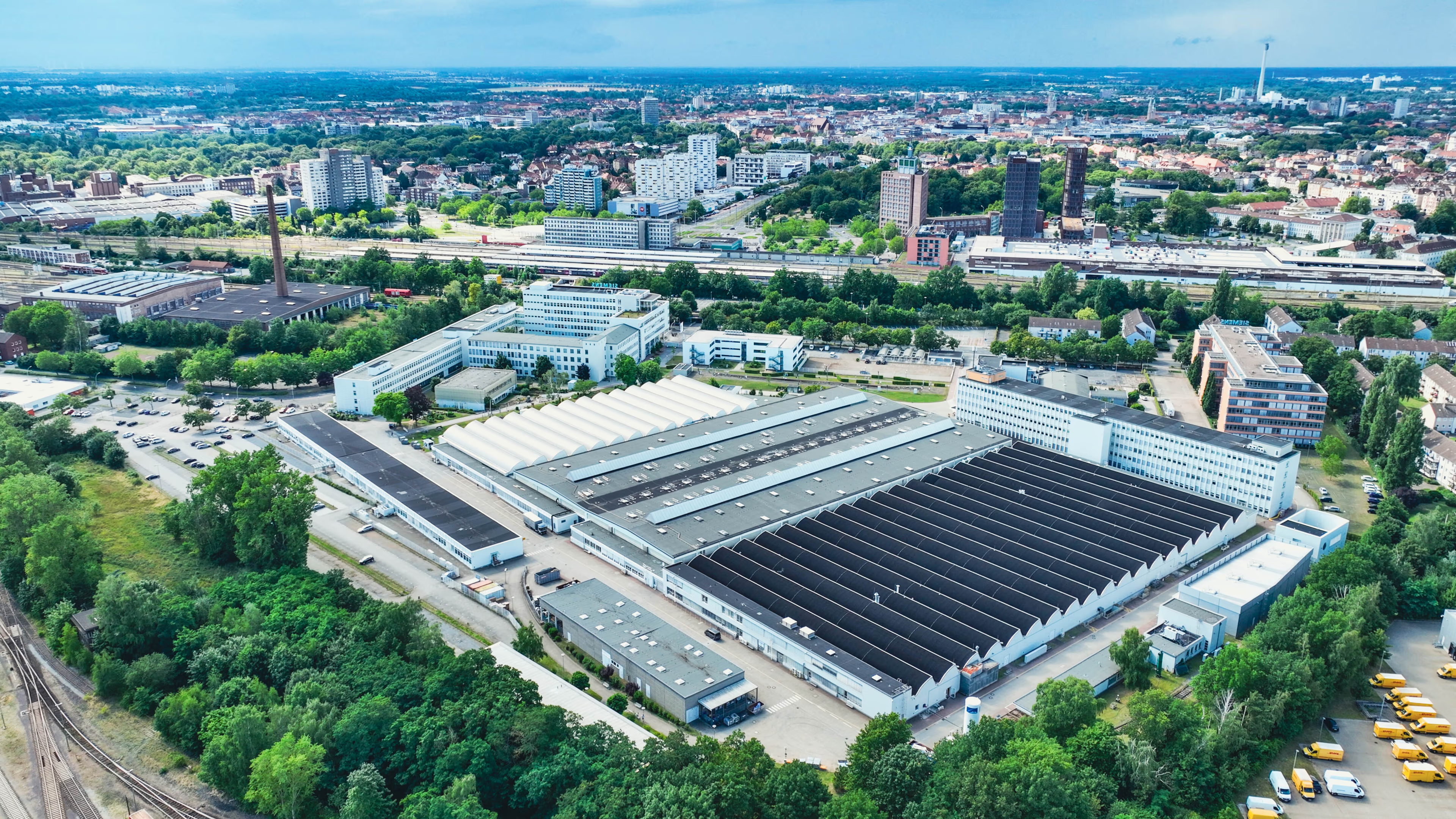
The Braunschweig site of Siemens Mobility, the world’s largest and oldest development and production site for signaling and rail automation technologies, is celebrating its 150th anniversary. Guests attending the event include Dr. Volker Wissing, the Federal Minister for Digital Affairs and Transport, Olaf Lies, the Lower Saxony Minister for Economic Affairs, Transport, Housing and Digitalization, and Dr. Roland Busch, CEO of Siemens AG. Founded by Braunschweig businessman Max Jüdel and mechanical engineer Heinrich Büssing in 1873, the factory was taken over in stages by Siemens in the following decades. Innovations from Braunschweig have consistently shaped the development of railway infrastructure worldwide. Today, Siemens Mobility continues to research and develop technology at its Braunschweig facility that makes rail infrastructure more efficient, sustainable, and reliable.
We are ready and eager to play a major role in shaping the mobility of tomorrow with our innovations from Braunschweig.”
Siemens Mobility: An employer with a future in the region
Worldwide, investments are increasingly being made in rail as an environmentally friendly means of transport. In Germany, the federal government has launched a plan for the comprehensive modernization of the country’s rail network with the Digital Rail Germany (DSD) program. The Braunschweig site is well equipped to contribute. Around €60 million has been invested in the site and production facilities over the past five years.
Siemens Mobility currently employs around 4,000 highly qualified employees from 46 countries at its Braunschweig plant, including approximately 1,100 in production and assembly, around 900 in research and development, and roughly 1,500 in global project management. In fiscal year 2023 alone, 130 new employees were hired, and 54 apprentices began their training. 98 percent of the apprentices here now work for the company after they completed their training.
For 150 years: Cutting-edge technology for rail infrastructure
They are considered pioneers of their day: Max Jüdel and Heinrich Büssing founded the Braunschweig company 150 years ago with the goal of revolutionizing railway technology. In the company’s first 20 years alone, it registered over 90 patents and built more than 1,000 interlockings that controlled over 12,000 switches and signals. The extremely rapid spread of railways in the 19th century was inseparably linked to the ongoing development of signaling technology. From the very beginning, innovations from Braunschweig have shaped railway infrastructure in Germany – and throughout the world. Siemens’ invention of the legendary K 50 signal relay in the 1950s transformed the market just as much as did Europe’s first digital interlocking in 2018 and the shift of interlocking logic to the cloud just four years later.
Braunschweig's product innovations
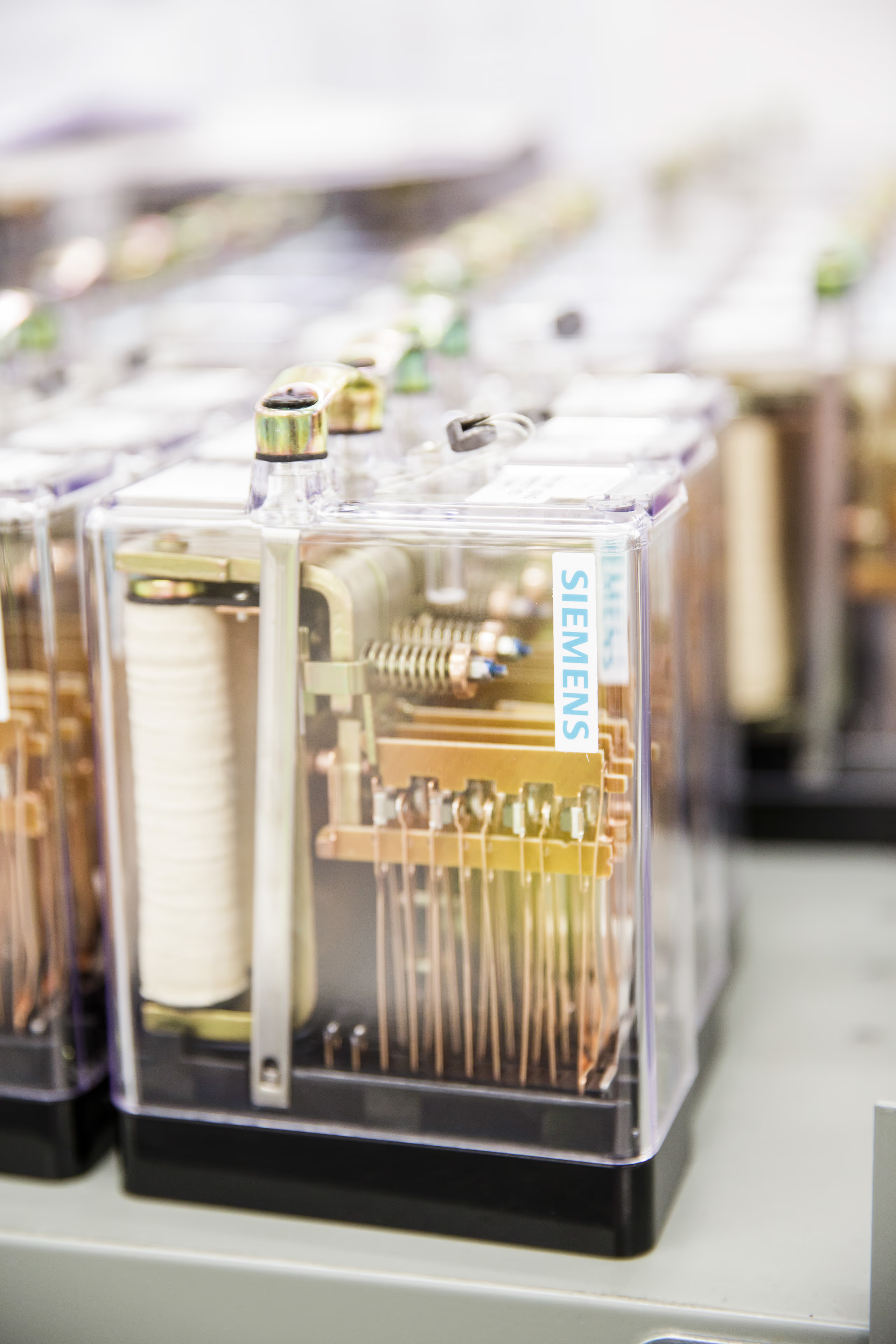
Proven technology: the K 50 relay
One of the biggest breakthrough developments following the war was the switch from mechanical interlocking systems often operated with muscle power to electromechanical solutions. Among experts, the K 50 signal relay is legendary: It was the basis for relay interlockings, which marked the first step taken towards automating rail traffic before the computer age. In fact, relay expertise continues to be relevant for Siemens today since 50 percent of the relay interlockings are still in use in Germany’s rail network.

Outlook: DS3 – Connecting the real and digital worlds
Guests at the ceremony were also able to experience a live demonstration of the future of rail transport: A turnout was controlled - via the patented DS3 platform developed by Siemens Mobility – from the cloud at the simple click of a mouse. The interlocking of the future enables centralized, cloud-based control and safety technology for rail operations and is already being used in Austria and Spain. This development marks a major evolutionary advance that offers enormous advantages for operators and modes of transport; since it relies on state-of-the-art, high-performance processors and can be controlled centrally from one rather than many separate interlockings.