How a hydrogen drive works – the innovative components of Mireo Plus H
With Mireo Plus H, innovative, next-generation hydrogen trains are already being developed. And so are the components of a new drive system that makes this train as powerful as conventional electric multiple-unit trains. To find out what’s new and how the components in the Mireo Plus H drive system work together, read this brief explanation of how a hydrogen drive works.
Efficient interaction of all components
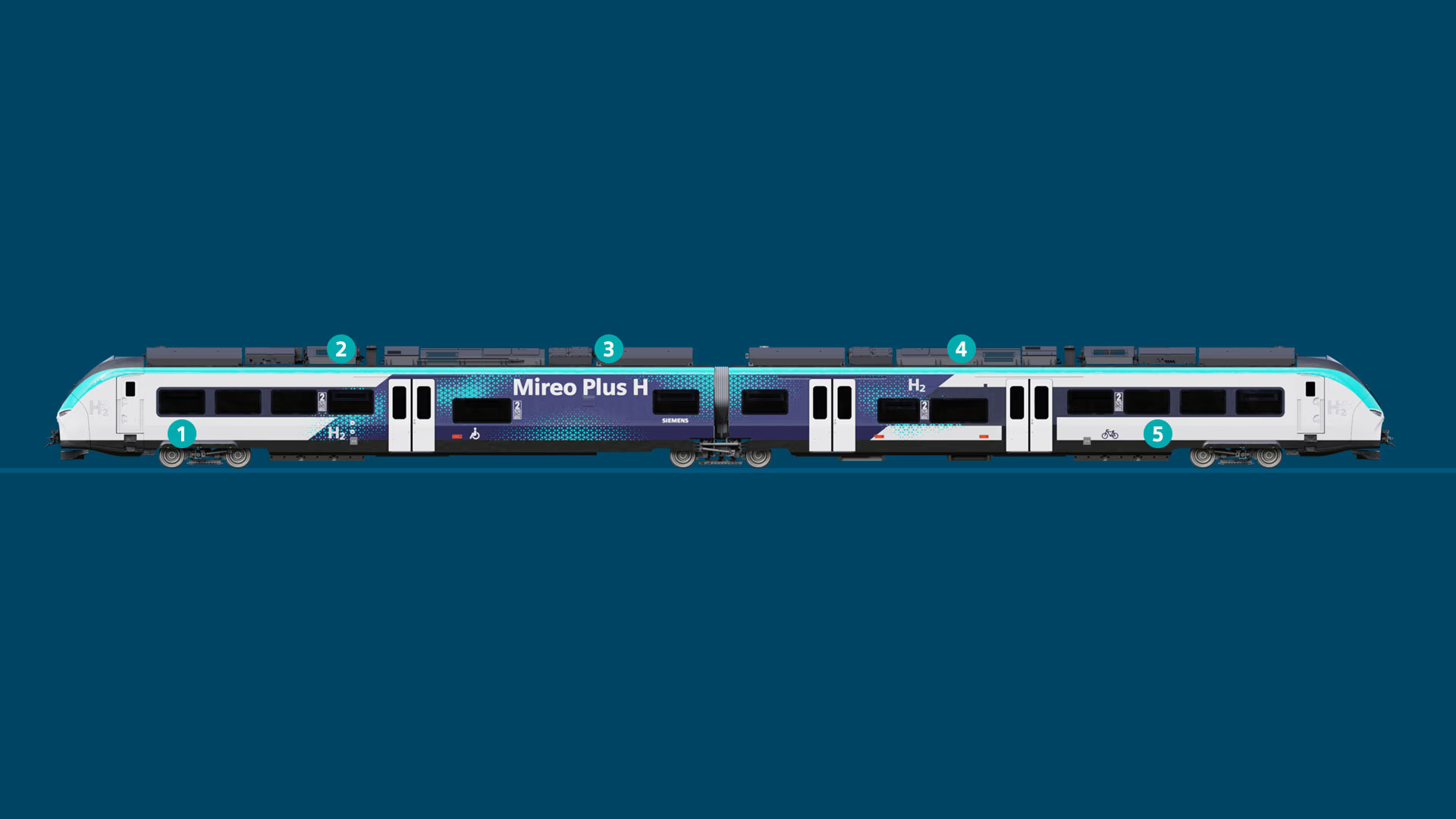
Mireo Plus H uses innovative new developments that work together to provide extraordinary performance capability, starting with the fuel cell and its high power density. For Mireo Plus H’s innovative fuel cell system, Siemens Mobility collaborates with its experienced partner Ballard Power. The hydrogen tank has also been optimized. It’s absorption capacity has been increased by 10 percent, thus bolstering its long range credentials. The hybrid control software optimizes operation through predictive energy management. The family of powerful batteries boasts of a long life. Together, the new components make Mireo Plus H suitable for deployments up to 1,200 km.
Discover the components and their benefits using our interactive graphic.
Powerful overall system – from the drive to the train design
The principle behind the hydrogen drive was optimized for Mireo Plus H down to the smallest detail. With its individual components working together efficiently, Mireo Plus H is every bit as powerful as conventional electric multiple-unit trains. But the drive system isn’t the only thing that affects range and performance. The vehicle itself, from the components of its car shell to its aerodynamic design, also helps deliver optimized performance.
Hydrogen train: how the technology works
A hydrogen train, also known as a hydrogen fuel cell train, uses hydrogen as an energy source to generate electrical power to propel the train. The operation of a hydrogen train is based on the use of a fuel cell, which uses the chemical process of electrochemical reaction between hydrogen and oxygen from the air to generate electrical energy.
Are trains with hydrogen the future?
Hydrogen plays a crucial role in achieving the goal of a sustainable mobility. Particularly on longer secondary routes, where electrification of the route network is not possible or too costly in the foreseeable future, and the range of battery-powered vehicles is insufficient, hydrogen trains can replace diesel vehicles. That is why we are continuing to drive forward the development and testing of hydrogen fuel cell trains and refueling stations together with Deutsche Bahn.