Trackguard retarders
For precise and efficient speed control in humping operations and marshaling yards. Siemens Mobility Trackguard TW-F/TW-E retarders for humping operations and Trackguard TKG piston retarders for marshaling yards not only provide efficient retarding – they are also simple to deploy and maintain.
Trackguard TW-F/TW-E retarders
A variety of models and possible combinations ensures optimum retarding for very yard
Retarders have various applications and are subject to very different requirements. Conditions at humps also vary considerably. That is why, in terms of performance, retarders need to be of modular design. The basic elements remain should identical while their number and the length-dependent components can vary. This design principle is consistently applied to Trackguard Retarder TW-F/TW-E retarders. Both lower main retarders and classification track retarders feature the same basic elements. They can be fitted to one or two rails and vary in their overall length. These possibilities combine to make up a wide range of performance features – simplifying the planning procedure and enabling optimally-dimensioned systems to be implemented. The modular system also considerably cuts down on costs related to storing spare parts and maintenance.

The main advantages for you:
- Broad range of performance capabilities
- Low operating costs
- Good controllability and regulation
- Low maintenance
- Elimination of hazardous workplaces
The main functions:

Hydraulic controller
At the Trackguard Retarder plant in Duisburg, the central oil hydraulic system is installed in a prefabricated building. After a trial run, it is then delivered to the intended site ready for connection. A special benefit is the fact that the pump building can be easily removed and, if necessary, erected at another hump.

Low-level noise emissions
During retarding, very unpleasant squealing is sometimes caused by the wheels. After years of research and optimization, we have developed new retarding segments, called PUCK segments, which offer the following benefits:
- Considerable reduction in high-frequency retarding noise (benefiting staff and local residents)
- Reliable retarding effect with excellent sliding properties
- Increase in the average friction coefficient and thus, increased retarding capacity

Active water protection
The piping between the retarders and the central hydraulic system is housed in oil-tight ducts. This minimizes the risk of leakage and thus contributes to effective environmental protection.
How do Trackguard TW-F/TW-E retarders operate?
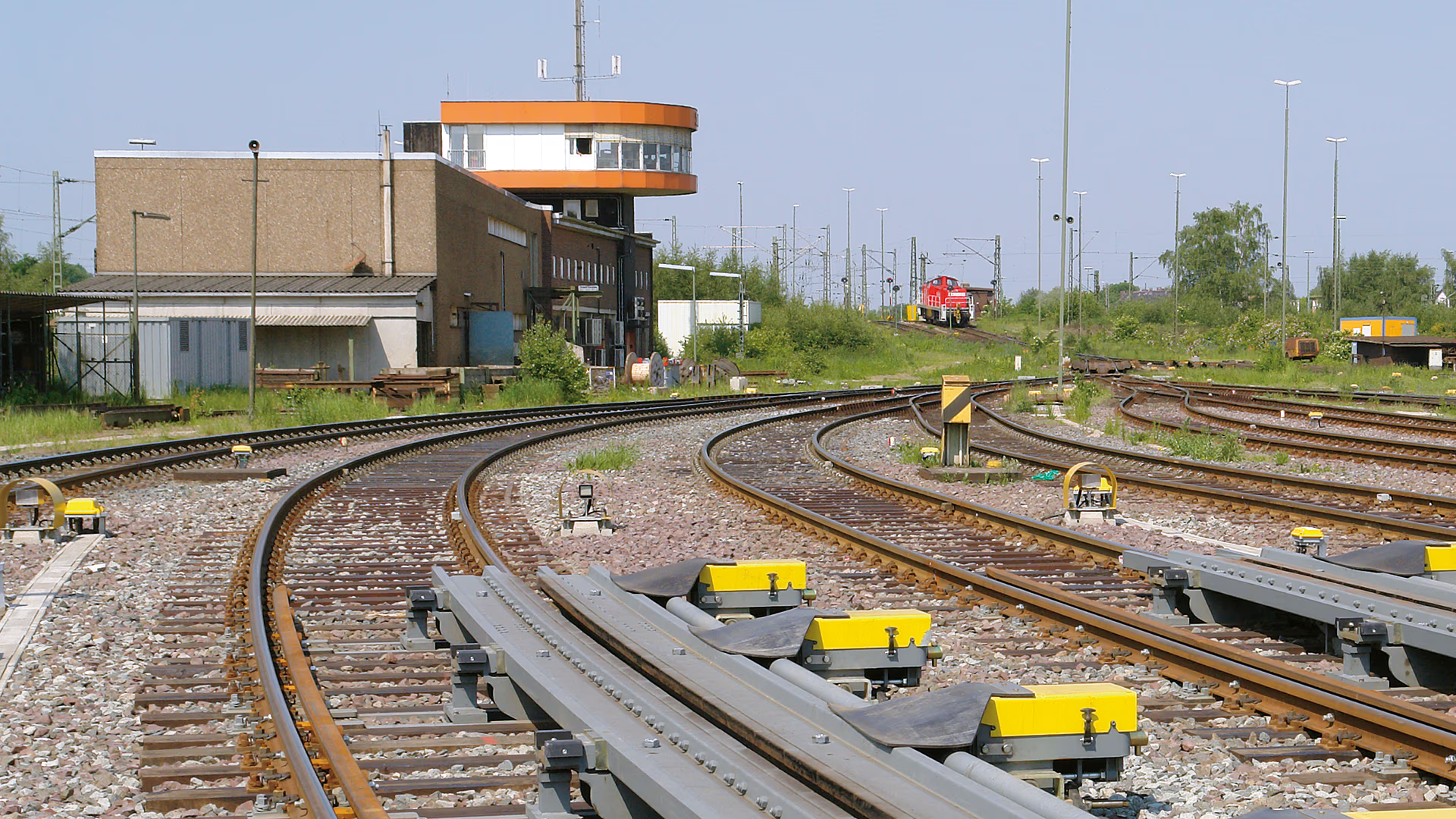
In combination with a computer control system, clasp retarders are key when it comes to the accurate and efficient movement and sorting of wagons across humps, classification zones, and shunting routes.

Principle of operation
With the Trackguard Retarder TW-F/TW-E clasp retarders, rolled retarding beams are mounted on individual power units. Facing the rail head, the retarding segments are bolted on as wear parts. The power units subject the retarding beams to a controllable pressing force which is created by rubber-spring assemblies. These parts only need to be replaced or reconditioned after they have been traversed by ~ 5 to 7 million axles.
Optimum controllability
Trackguard Retarder TW-F/TW-E retarders provide short response times of 100 ms between stages. When used in combination with the Trackguard Cargo MSR32 control system – these optimum conditions for good controllability within the entire adjustment range ensure exact control of the retarder's exit speed. The electronic controller electromagnetically operates the valves of the control plate, which are integrated into a closed control loop.
TKG piston retarders
For economical maintenance and installation
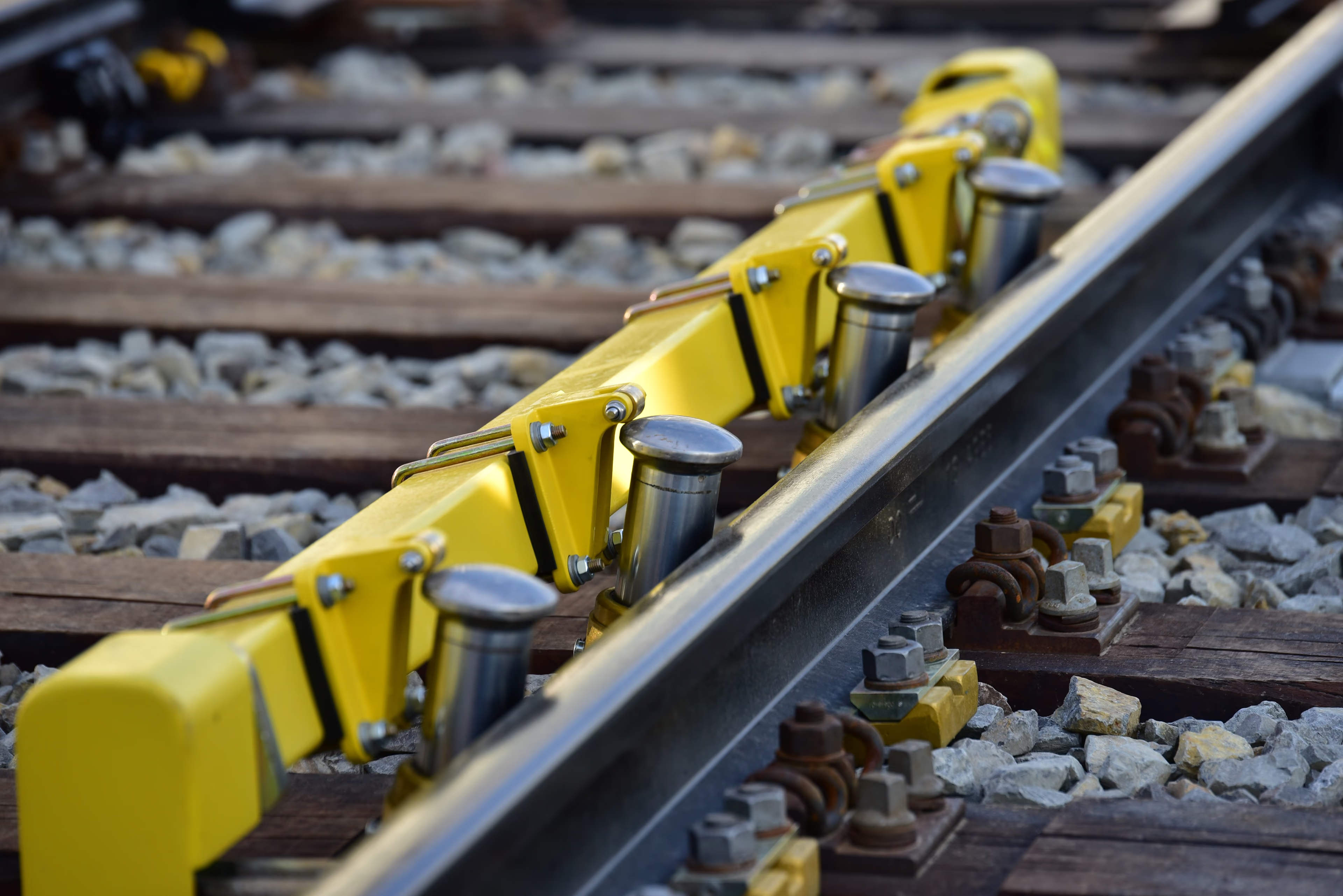
TKG piston retarders by Siemens Mobility are known for their long life spans and favorable cost of ownership. They feature a high-quality build and a unique, maintenance-friendly design. For example, worn-out pistons can be replaced separately.
The main advantages for you:
- Low operating costs and low emission levels
- Good operational on-site adjustability
- Maintenance-friendly as worn-out pistons can be replaced without having to dismount the entire retarder
- Specific speed control
- Retractable for locomotive runs
The main functions:

Constant retarding
A special application of the Trackguard TKG piston retarder is its usage on a deceleration run, with the objective of retarding the car until it comes to a standstill or keeping stabled cars in a particular position.

Variable retarding
When a car traverses the retarder, the wheel flange presses against the piston tube and, thus, forces down the piston rod of the damper. The speed-dependent valve system in the damper then decides whether the car continues to roll retarded or unretarded.

Gradient compensation retarding
Also available are Trackguard TKG gradient compensation retarders which can be actively or inactively positioned without interrupting operations. In the inactive position, a car can run along the track unobstructed. This prevents bad runners from being retarded prematurely – thus impeding any further shunting.
Climate conditions and ambient temperature range
The retarding elements function constantly at climate conditions prevailing in Central Europe. The ambient temperature range extends from –25 ºC to +40 ºC.

Dimensioning
The piston retarders used are dimensioned on the basis of each track's height and dimensioning is confirmed during humping simulation.
Active water protection
The guide cylinder of a Trackguard TKG piston retarder surrounds the damper at its lower end like a pot. It is designed as an oil drip pan that safely collects any oil which might escape in the event of damage.
How do TKG piston retarders operate?
Piston retarders have, for a long time, been a reliable way to control speed on sidings and in marshaling yards.
Piston retarders are primarily used in speed control systems for deceleration and coasting runs. Trackguard TKG piston retarders are automatically controlled by a hydraulic valve system in the damper and need not be supplied with power. The hydraulic damper is the active retarding element and is based on a speed-controlled valve system. Hydraulic dampers can be permanently set to different response rates and damper forces.

Installation and fitting
Trackguard TKG piston retarders can be used in combination with all rail profiles, rail fastening accessories, and sleeper types. They are not subject to any restrictions with regard to distances between track centers, curves, and gradients. The installation and fitting can easily be adjusted to rail wear levels of up to 7 mm.
Operation, maintenance, inspection
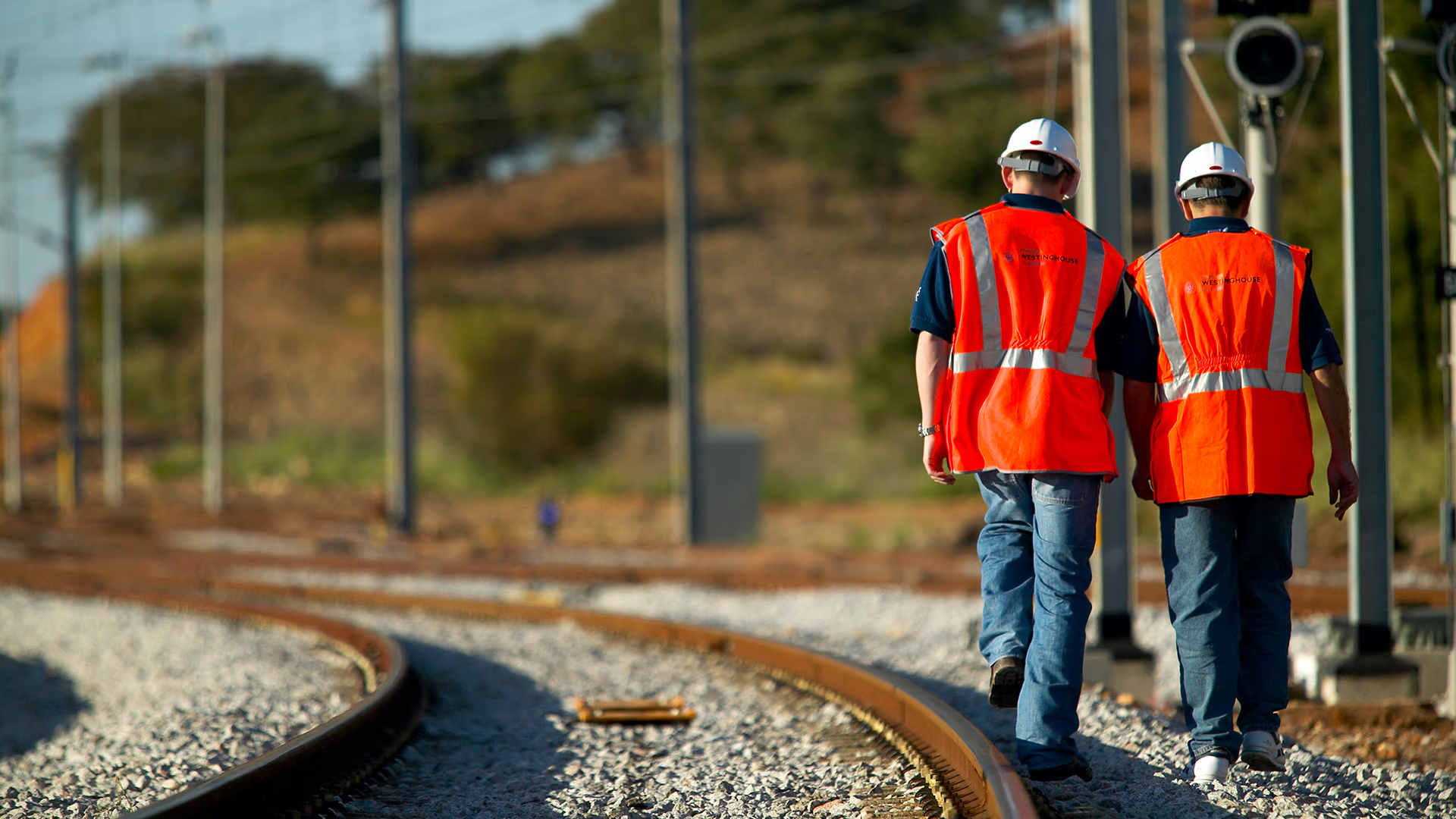
No special tools are required for operation, maintenance, and inspection. In the majority of cases, trackside maintenance and inspection work can be performed by one person without having to connect up to a power supply. A grease gun is required for greasing the retarding elements.