Spare parts – 3D printing for railways
Reduction of CO₂ emissions by more than 10% through additive manufacturing. More than 110 customers – more than 2,100 different parts in our virtual stock – more than 31,000 printed and sold customer parts and far more 3D printed solutions for our maintenance and production facilities, such as production aids, templates, or fixtures.
Reduction of CO₂ emissions by more than 10% through additive manufacturing. More than 110 customers – more than 2,100 different parts in our virtual stock – more than 31,000 printed and sold customer parts and far more 3D printed solutions for our maintenance and production facilities, such as production aids, templates, or fixtures.
Optimized rail spare parts thanks to additive manufacturing
Benefits of additive manufacturing for rail industry

Greater flexibility
- Improved components
- Individual parts
- Freedom of design

Higher availability
- Reduction of delivery time by up to 90%
- Solutions when components become obsolete
- Fast repairs

Lower costs
- Reduction of non-recurring costs
- Reduction of costs per part

Reduced CO2 footprint by 3D printing of complex parts*
- Reduction of CO2-emissions by up to 75%*
- Reduced depletion of fossil resources by up to 74%*
* Compared to conventional manufacturing; Based on LCA 2024 for coupling cover of Avenio tramway
Additive manufacturing services for rail industry
- Consulting and training from our experts for your projects
- Measuring, scanning, and digitalizing your spare parts
- Engineering and re-engineering
- Spare parts 3D printing on demand and series manufacturing
- Testing, approval, and certification in compliance with all standards, laws, and regulations governing the rail industry
Our customers value the use of 3D printing in the spare parts business
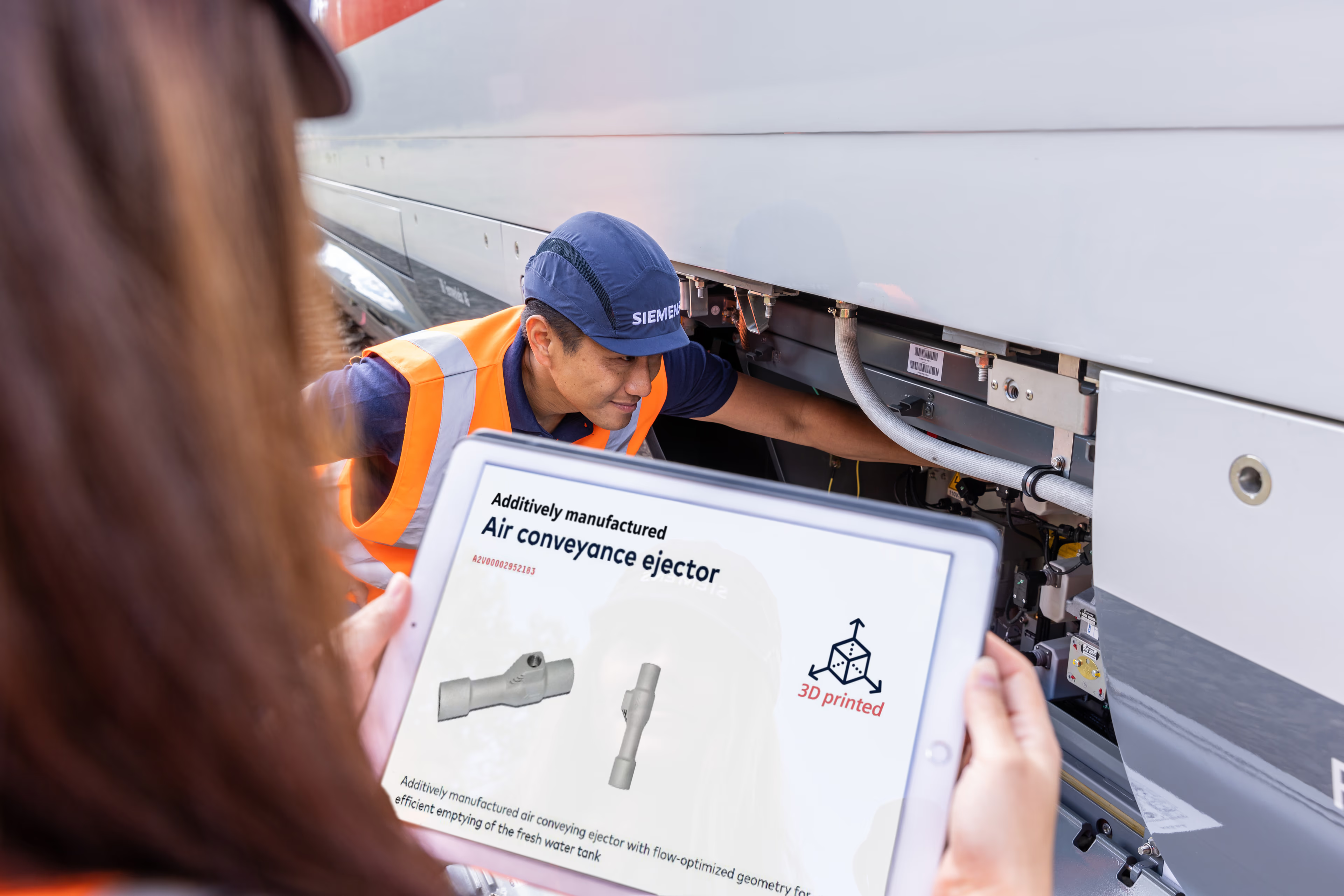
With Easy Sparovation Part from Siemens Mobility Rail Services, spare parts are manufactured as required in co-creation: based on our competence in rail vehicles, engineering, and additive manufacturing, and together with our customers. Even complex geometries can be manufactured quickly, reliably, and flexibly – even with the smallest quantities. This enables the creation of new "improved spare parts" that can incorporate new insights, improvements, and additional functions.
Datasets are available at any time when future modifications are desired, as complete, end-to-end digital documentation is created as a by-product of the process. And that, in turn, ensures you fast, streamlined manufacturing processes in the future as well – even for obsolete parts. On top, Easy Sparovation Part is a sustainable way to replace your needed spare parts. Not only by a more material efficient production and integrated recycling concepts but also through shorter delivery ways – created at the manufacturer’s competence center, 3D printed where you need it. Quick and easy.
Spare parts 3D printing – unbroken data chain from designing to a high-quality 3D-printed part

1. Designing and optimizing in the CAD program
Siemens Mobility has been archiving 3D data models of every delivered rail vehicle and its components already since 2006. Yet, it’s also possible to convert the design data of a decades-old part from old drawings or even an original component into digital CAD data, and then optimize the design if needed. This provides the basis for additive manufacturing by spare parts 3D printer.

2. Using the available CAD data for the printing process
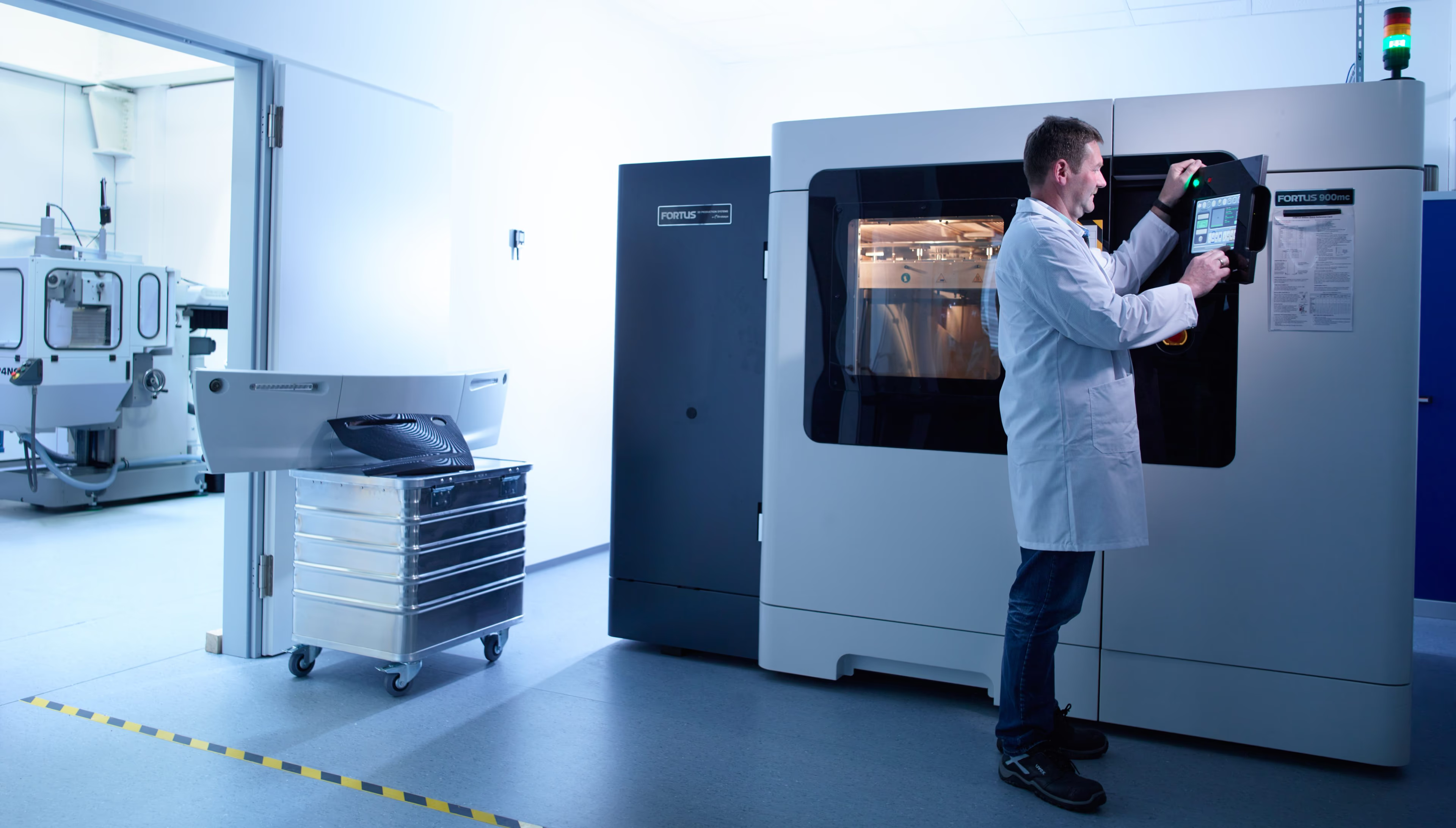
The computer-controlled spare parts 3D printers at Siemens Mobility use the prepared CAD data files to build the spare part layer by layer – whether by photopolymerization, extrusion, or powder bed fusion by laser. These layers subsequently melt to form a single unit.

3. Follow-up machining in the workshop
After their 3D printing, the printed parts are subsequently finished by undergoing machining in the workshop to get ready to use. Whether it’s cutting, milling, grinding, assembly, or another post-processing task, the workshop is equipped for every requirement.
The perfect finish for every railway spare part!

4. Quality control
In addition to continuous process monitoring and documentation, finished components are checked by means of a high-resolution 3D scanner. Comparative analysis of the printed part against the 3D model may reveal deviations. Such scanners are also used for re-engineering of complex, free-form parts – work that can even be performed in the field on your rail vehicle.