
Austria‘s Rail Network goes digital with ETCS Level 2
To further enhance punctuality and speed of rail transport, Siemens Mobility and ÖBB are modernizing the rail network in Austria with the digital train control system ETCS Level 2.
What is the long-term plan of ÖBB and Siemens Mobility?
ÖBB and Siemens Mobility have concluded a framework agreement for the successive expansion of the Austrian rail network with ETCS Level 2. To achieve this, approx. 20 Radio Block Centers are planned by 2038. Accordingly, all high-performance lines and main connections in Austria are to be equipped with ETCS Level 2. A total of €900 million has been allocated for the project.

What is ETCS Level 2?
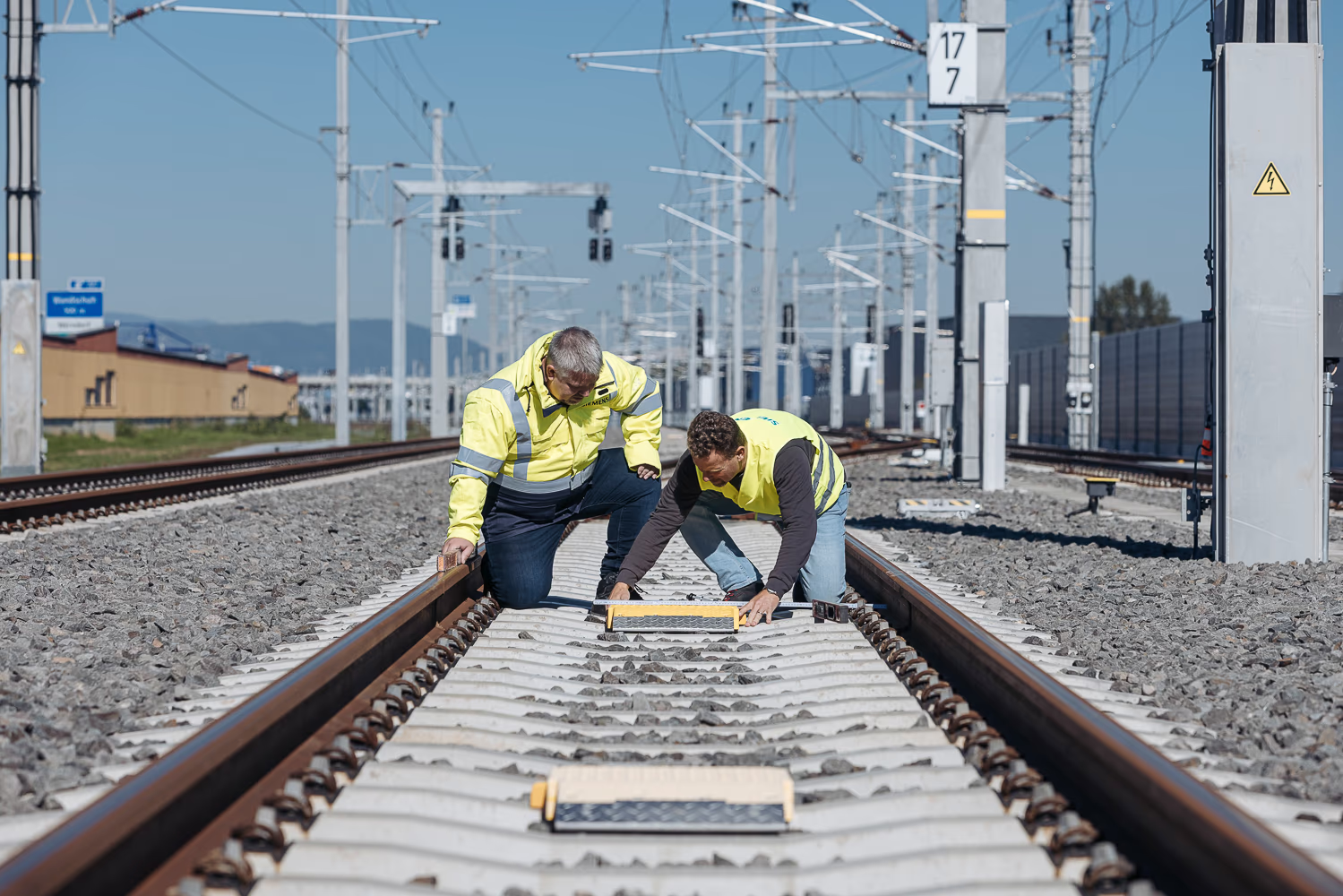
The European Train Control System (ETCS) is a train control system that monitors the position, direction, and speed of trains in real time. Unlike older systems, where train drivers and trains relied on light signals along the track, ETCS Level 2 operates purely digitally. For this purpose, data balises in the tracks transmit the train's position to the Radio Block Center (RBC) via the On Board Unit (OBU) in the train using GSM-R radio. The RBC, which stores the route data, then grants electronic movement authorities (e.g., distances and speeds) and sends the data back to the OBU in the train via GSM-R radio. The OBU monitors the received data and displays it on the Driver Machine Interface (DMI), allowing the train driver to view the information.
What are the advantages of ETCS Level 2?
Tracks equipped with ETCS Level 2 enable trains to run at significantly closer intervals thanks to precise high-tech positioning and mobile radio communication. This increased capacity allows more people and goods to be transported in less time, while simultaneously enhancing safety and punctuality.
In contrast, conventional tracks without ETCS require longer braking distances between trains, limiting scheduling flexibility and operational speed.

