
Transform mobility for Wellington
KiwiRail manage the metropolitan rail networks for Auckland and Wellington in New Zealand to support 36 million commuter trips each year. With Siemens Mobility, KiwiRail have transformed aging rail signalling infrastructure in Wellington to improve service reliability, safety, and increase capacity for future growth.
Modernizing rail infrastructure for the future
Until 2024, train operations in a city of over 400,000 residents were managed from a trackside signal box known as “A‑Box.” This facility, together with its 1930s era manually operated lever frame, relied on a team of skilled signallers keep trains moving. While a testament to its time, the system was obsolete and no longer met the rigorous safety standards of a modern metropolitan railway.
KiwiRail, which owns and operates New Zealand’s national rail network, faced the critical task of improving the safety performance of its signalling system and introducing technology that would support the railway’s long‑term growth aspirations. However, in partnership with Siemens Mobility, the Wellington Station Resignalling project has transformed the system into a modern, efficient, and future-ready system, laying the groundwork for advanced technologies like ETCS.
Wellington station sits at the South end of the North Island. It's the busiest junction in New Zealand and up until very recently it was controlled by a signal box.
Challenge: Transforming an entire city’s signalling system without impacting passengers
The Wellington A-Box Signalling system had reached its operational limits, creating significant challenges for KiwiRail and commuters alike. Regulatory restrictions and frequent issues in the area were raising serious safety concerns, including documented near misses. The life-expired assets did not have the safety systems required of a modern signalling system, preventing any further timetable changes. Crucially, the outdated infrastructure hindered KiwiRail's progression towards modern technologies like ETCS Level 2. All of this necessitated a vital upgrade to ensure operational efficiency, enhance safety, and future-proof the rail network, all while ensuring minimal disruption to daily commuter services.
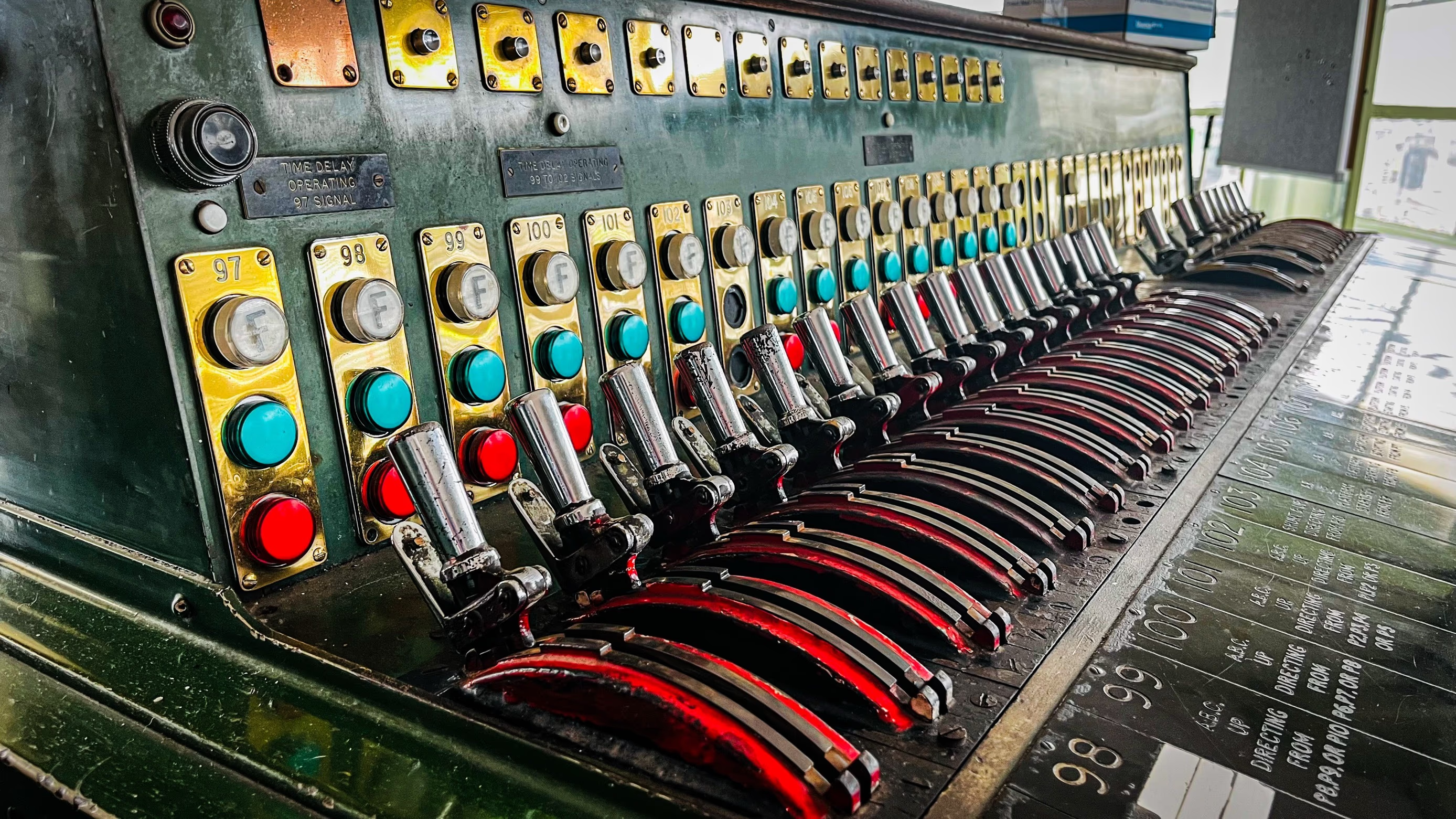
Wellington A Box moving into this computer-based interlocking system, the Siemens WESTRACE Mark II, it brings about a significant change and evolution from what was in the electromechanical levers to how we control railways in the modern age.
A successful city-shaping solution for the future
By implementing the Westrace Mark II interlocking system and upgrading the legacy signalling assets to a modern, resilient, and highly adaptable platform, the customer achieved substantial safety improvements, eliminated key regulatory limitations, and established a signalling environment capable of supporting long‑term growth and expansion.
The project's success stemmed from a "best practice" approach, characterized by collective team expertise, a systems-thinking project management methodology, and collaborative communication with KiwiRail. This included meticulous principle testing, achieving sub-60 PT logs for such complexity, early data acquisition, and strategic commissioning over the Christmas period to minimize commuter disruption. This forward-thinking execution not only delivered immediate operational benefits but also established the essential foundation for KiwiRail's seamless transition to future ETCS Level 1 or 2 technologies, ensuring long-term flexibility and adaptability for the network.
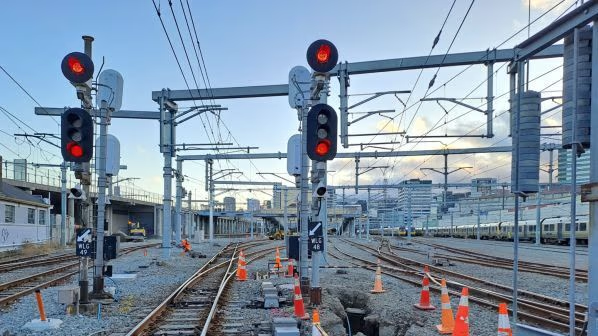
Project delivery achieved through strong customer collaboration
A key aspect to the success of this project laid in the strong collaborative relationship we have with the customer, KiwiRail. The relationship was built on trust and open communication, ensuring that the teams not only met but exceeded their operational needs and goals. Our commitment to high-quality products and project management meant the upgrade was delivered on time and within budget, a perfect formula of modern technology, meticulous planning, an experienced team, and agile change management. Furthermore, the combined expertise-informed performance of both Siemens Mobility and KiwiRail teams allowed for effective management of complex engineering challenges and stakeholder communications at every stage of the project.
By applying comprehensive systems thinking, the team implemented immediate operational improvements for KiwiRail, showcasing our ability to deliver innovative solutions that drive progress, efficiency, and safety in critical infrastructure projects.
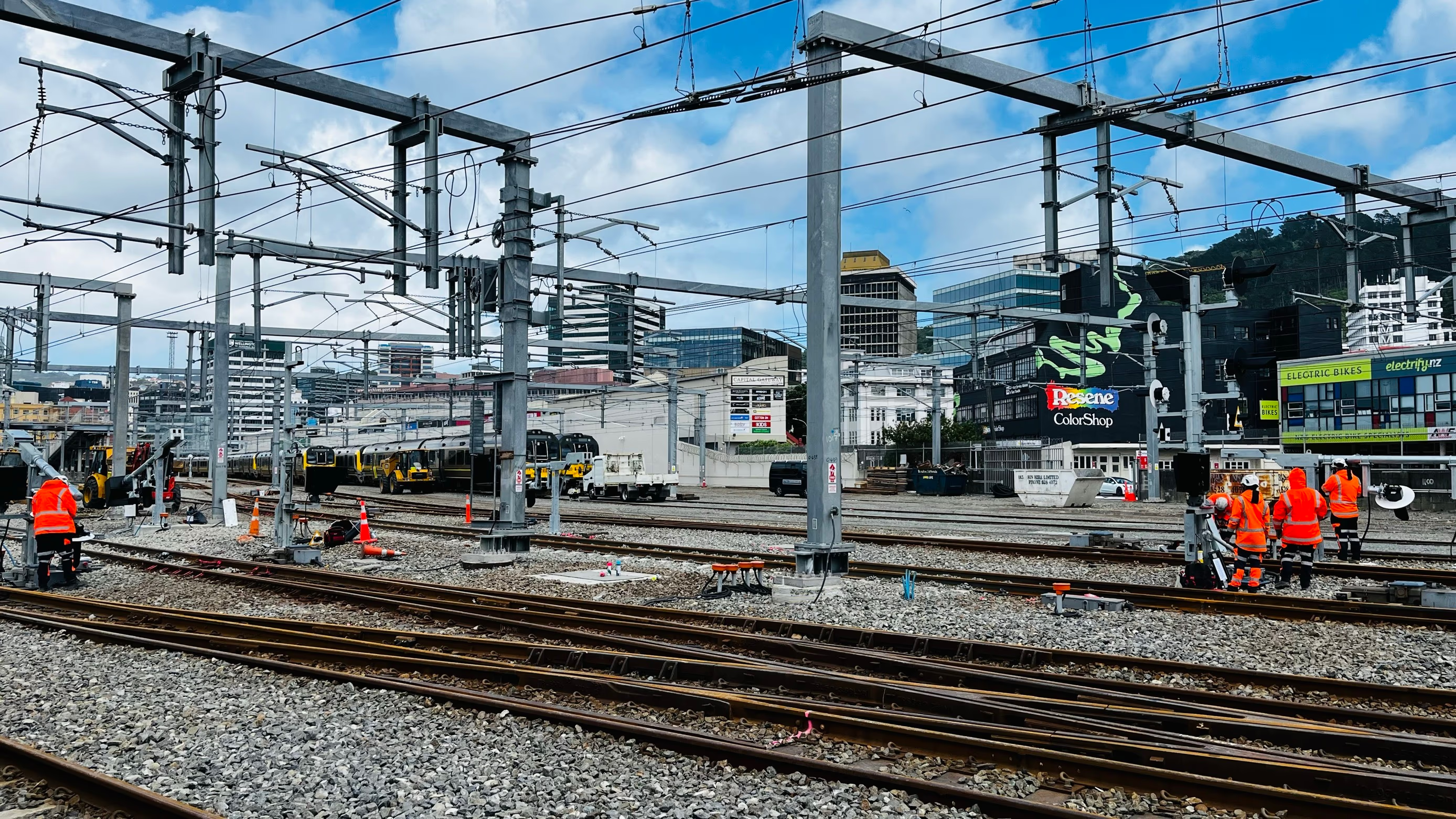
The biggest benefit of collaborating with Siemens is really it unlocks a wealth of technical knowledge across the world that we can tap into.
Introduction to the project’s scope and solution

Trackguard Westrace MKII Interlocking System
Trackguard Westrace Mk II is a highly flexible, microprocessor-based interlocking system suitable for urban and mainline applications. With its straightforward configuration using ladder logic to deliver almost any vital functionality, the system provides real benefits to railway authorities in terms of cost of ownership, capability and flexibility. In addition, Trackguard Westrace Mk II offers high maintainability and availability proven by installations worldwide.

Rail Infrastructure Components
The key to maximum availability, sustainability – and safety. Improve the operations of your entire railway network with our railway automation solutions. Tried and tested throughout the world, these solutions ensure maximum innovation, speed, reliability and sustainability.
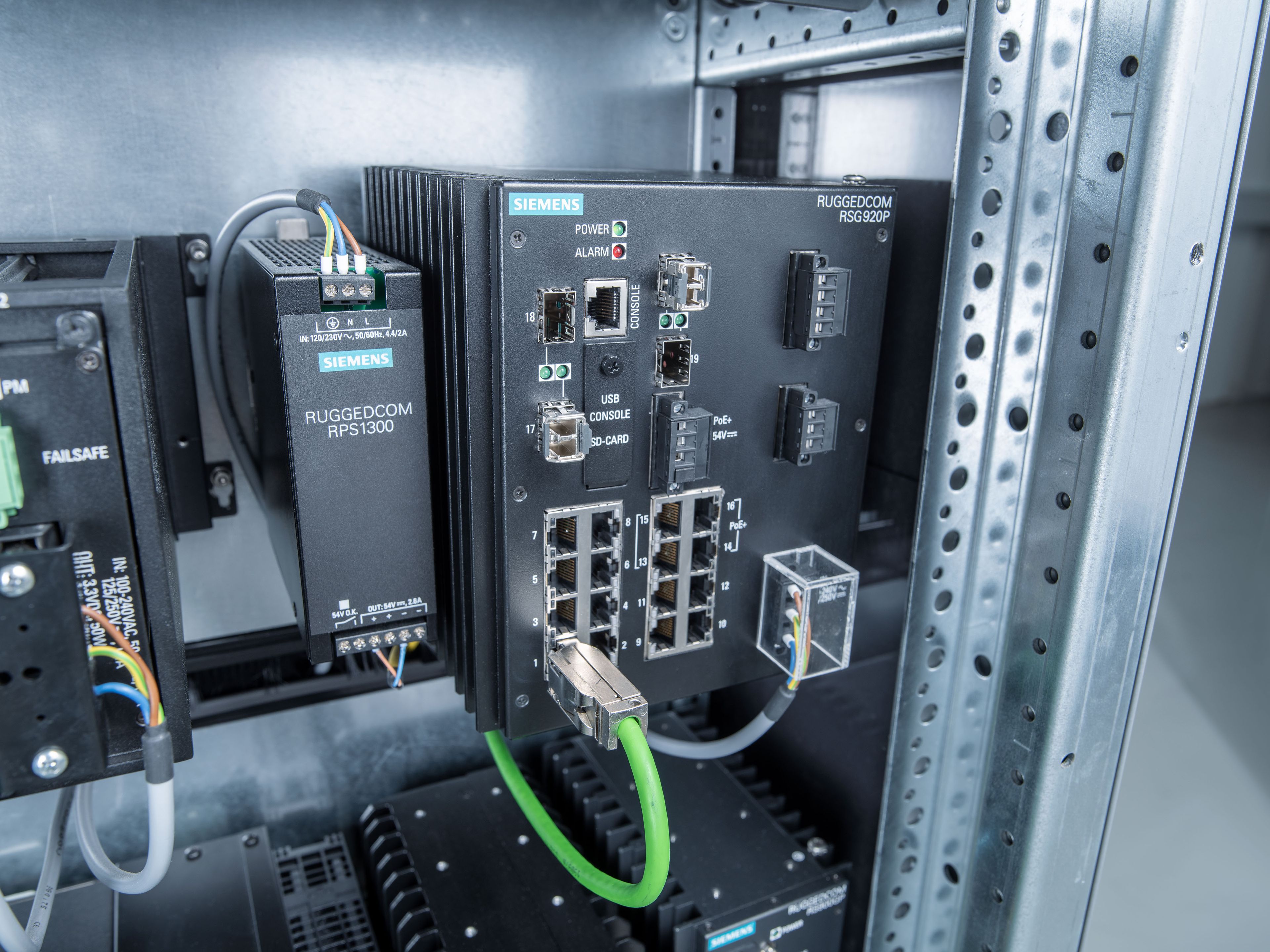
RUGGEDCOM
RUGGEDCOM has set the standard for reliable communications in electric power, transportation, oil & gas and other industrial networks with harsh environments. RUGGEDCOM hardware performs at its best when the ambient environment is at its worst, while our software ensures secure access and network management for your OT systems.