HVAC in trains in a time of COVID-19
Mitigating the spread of COVID-19 viruses on trains thanks to heating, ventilation and air conditioning systems – learn more about how our HVAC systems work.
The impact of the pandemic on rail travel
How do modern HVAC systems hinder the dispersion of viral particles on board trains?
Modern HVAC solutions on board trains hinder the risk of infection on the train – and they do so without any additional modifications. They do this by:
- Introducing a high volume of fresh air into the carriage. Depending on the vehicle type and HVAC mode, approximately 10% - 30% of a carriage’s interior volume is replaced with fresh air per minute.
- Enabling a high air exchange rate of the air inside a carriage. Used air, and any viral particles it might carry, remains in the carriage for just two to three minutes before it is sucked out again.
- Eliminating dead space. Fresh air is evenly distributed into the interior while used air is very evenly extracted from the interior out again. There are no spaces in the carriage in which aerosols can collect.
Collectively, these measures work very effectively to hinder the risk of direct transmission from passenger to passenger within our trains. A residual risk of infection, however, is still possible.

Flushing out used air while cooling or heating
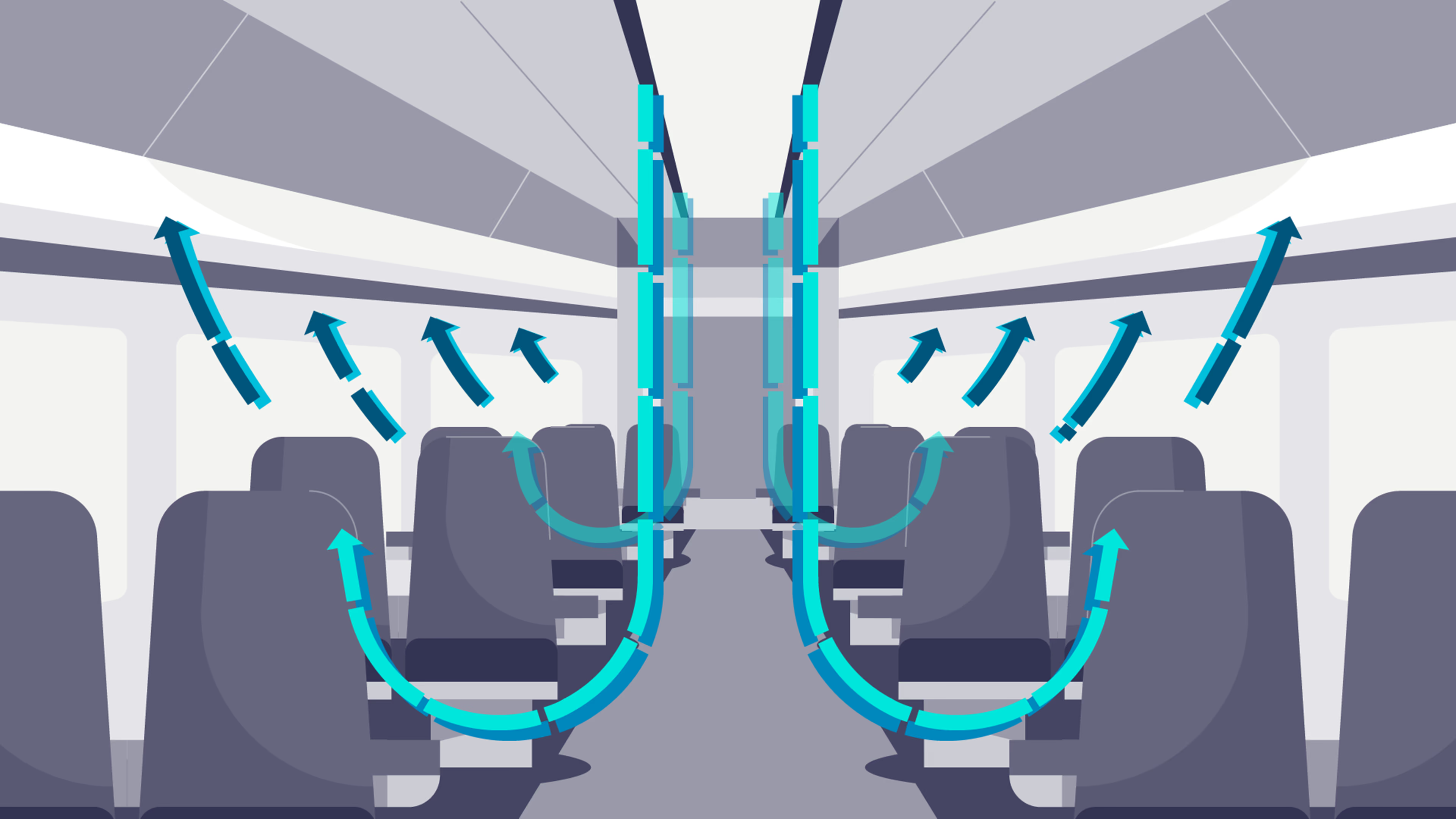
While cooling
When cooling a train interior, air is mainly introduced via the ceiling. Due to the placement of the exhaust vents – in the gaps under the luggage racks, the ceiling or the boarding areas – stale air is very evenly and efficiently extracted.
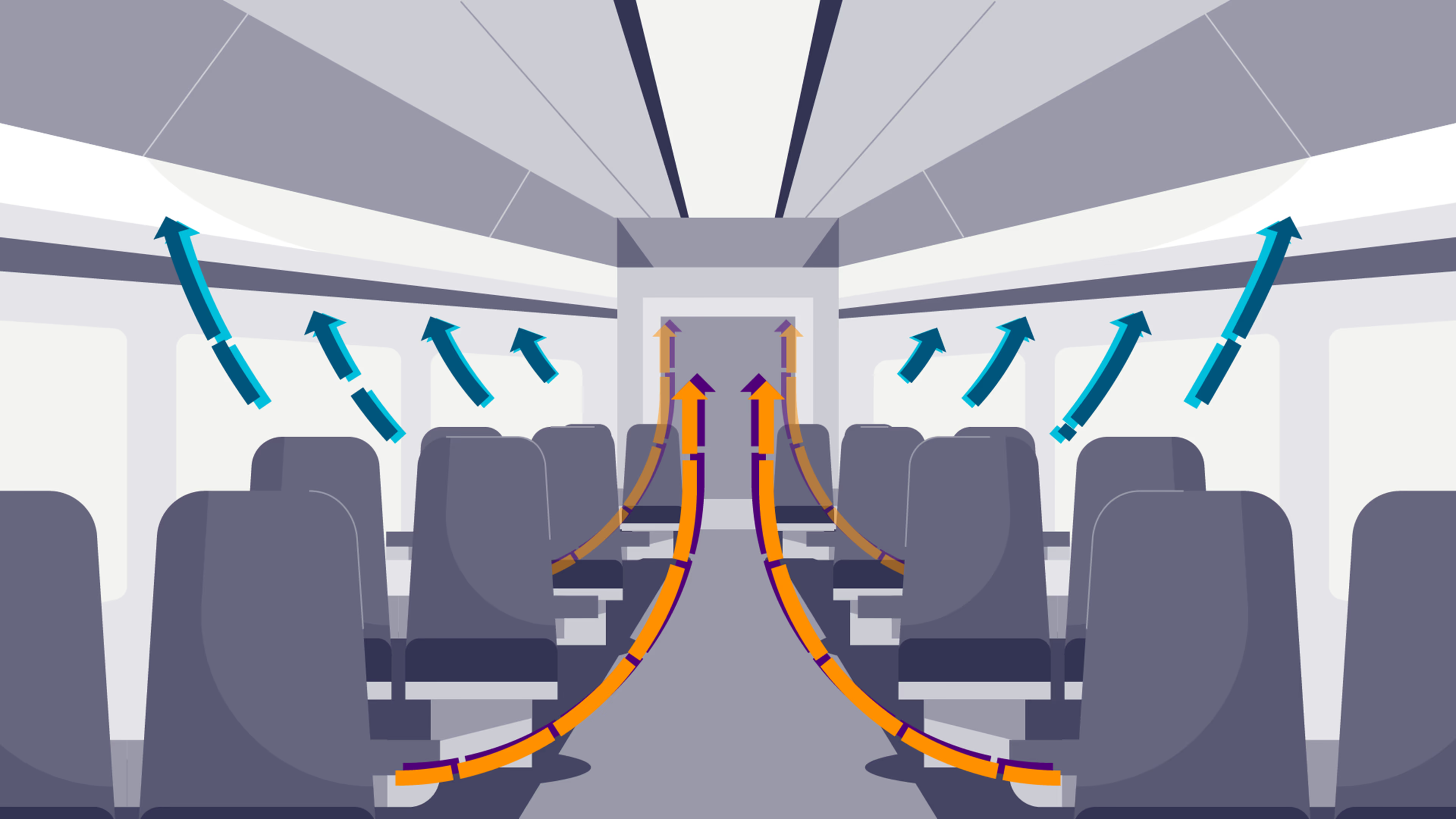
While heating
In contrast to cooling, warm air comes from below when heating a train. Again, thanks to the placement of the exhaust events – in the gaps under the luggage racks, the ceiling or the boarding areas – stale air is being very efficiently extracted.
Impeding the spread of aerosols with proper ventilation
The spread of aerosols without ventilation
Depending on temperature conditions within the space, exhaled aerosols move through the room in a concentrated cloud. People in the direct vicinity and breathing direction of the infected person are exposed to a very high concentration of aerosol particles before the cloud is dispersed – putting the passengers at risk of infection.
Over a longer period of time, the aerosol cloud disperses throughout the space – where they can accumulate in dead spaces such as corners. Without extraction or dilution via HVAC systems, the infected particles can remain in the space for more than 30 minutes and up to hours.

The impact of ventilation on exhaled aerosols

The distribution and extraction of exhaled aerosols
Facts and figures at a glance

Duration
Maximum time even very light particles remain in the carriage before being extracted by the uniform ventilation.

Dilution
The breathing volume per person of about 0.5m³ air per hour is diluted to a supply air volume of 3000-4000m³/h including a fresh air volume of 400-1800m³/h.

Maximum exposure
Research shows passengers are exposed to less than 0.01% of aerosols from an infected passenger via HVAC systems.
Can viruses be spread indirectly via the HVAC system? We take a closer look.

What happens in the HVAC system
Even if the HVAC system does not have a HEPA filter, there are still many components – such as filters, heat exchangers, heating coils, radial fans and deflectors – which work to stop a portion of the viral particles. Together, these individual components combined with the very long and complex air duct from the inside of the carriage trap a large percentage of all viral particles. According to our research, only about 15% of the aerosols (and less than 1% of larger droplets) make it back into the interior of a carriage. This filtered air is mixed in with fresh air before being reintroduced back into the carriage – further diluting the viral load.

The impact on the passenger
The supply air – a mixture of filtered and fresh air – is blown back into the carriage at a relatively high velocity. Due to the power and speed of the air stream, inhaling any viral particles it might carry is much more difficult than inhaling viral particles from the still air of an unventilated room. This is because even though aerosols are very light, they are still significantly larger and heavier than air (gas molecules). According to our research, a passenger breathes less than 0.01% of the aerosol of an infected passenger indirectly via the HVAC system – even at very low fresh air levels. At higher fresh air volumes, the value drops again significantly.
What is the impact of wearing masks on board – do they work?

Spread of the virus without masks
If the infected passenger is not wearing a mask, viral particles are easily distributed into the spaces both in front and behind him or her.

Spread of the virus with masks
The range of viral particles is dramatically curtailed. Aerosols are deflected away from other passengers and less particles are spread into the room. Even with a theoretical efficiency of just 70%, the total reduction of the aerosol burden on other passengers is more than 80%. Ultimately, wearing a mask has the greatest impact on minimizing the risk of infection, especially when people are in very close proximity – more so than any HVAC technology.