
Digital twin for rail
Siemens Mobility is driving the introduction of the comprehensive digital twin for the rail industry. A digital twin that covers the entire lifecycle of a rail asset, enabling engineering improvements, cost savings and predictive maintenance. And in the era of AI, the quality of data becomes ever more important. Discover the comprehensive digital twin with Siemens Mobility.
Comprehensive digital twin and the Industrial Metaverse
The benefits of the Siemens comprehensive digital twin and Industrial Metaverse in the rail industry
In the rail industry, the application of the comprehensive digital twin and Industrial Metaverse addresses the specific challenges of long-lifecycle assets, such as rolling stock and rail infrastructure. Fed with real-time data from connected sensors and continuously updated, the comprehensive digital twin offers benefits way beyond the engineering phase. It supports requirements management and design as well as manufacturing, installation, and decades of operation. The operational data also helps improve future designs. Even during recycling, the digital twin remains a valuable asset.
Let’s take a look at the core three pillars of the comprehensive digital twin – digital twin of the product, digital twin of production and digital twin of operation – as well as the Industrial Metaverse.

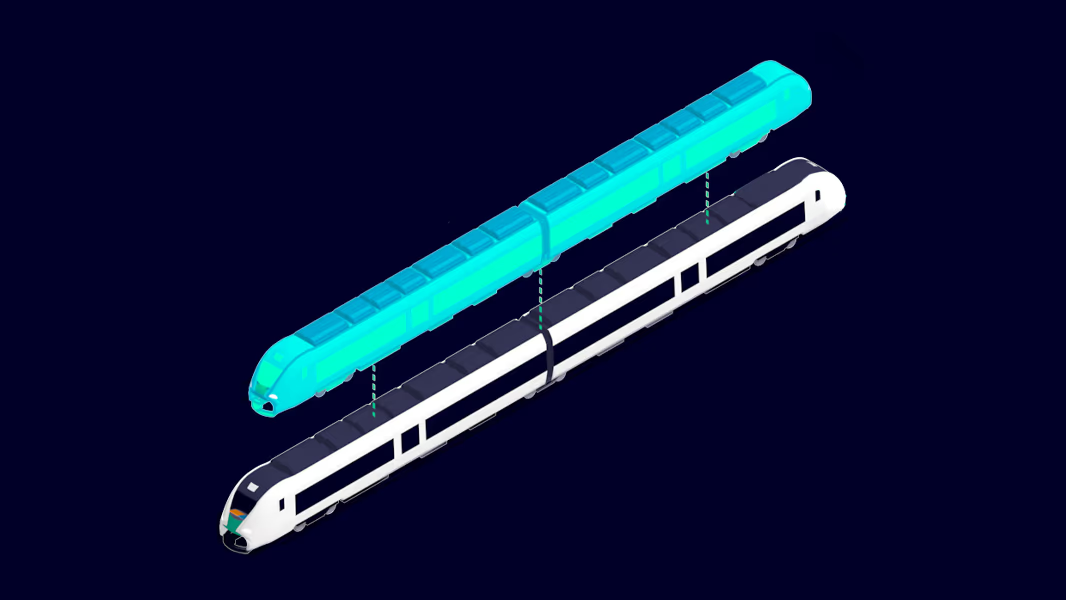
Digital twin of the product
The digital twin of the product focuses on design, mechanics, electronics, and software. It allows engineers to simulate and validate the product, even before it exists physically.
Application: Model-Based Systems Engineering (MBSE)
Instead of relying on document-based requirements, the digital twin of the product makes it possible to work on a connected digital model. This ensures that changes in mechanical design automatically flag potential conflicts in the electrical or software domains.
Application: Virtual Commissioning
The digital twin of the product enables Software-in-the-Loop (SiL) and Hardware-in-the-Loop (HiL) testing. One example would be control software for traction or door systems that is validated against a virtual kinematic model before physical prototypes exist, identifying integration errors early in the development phase.
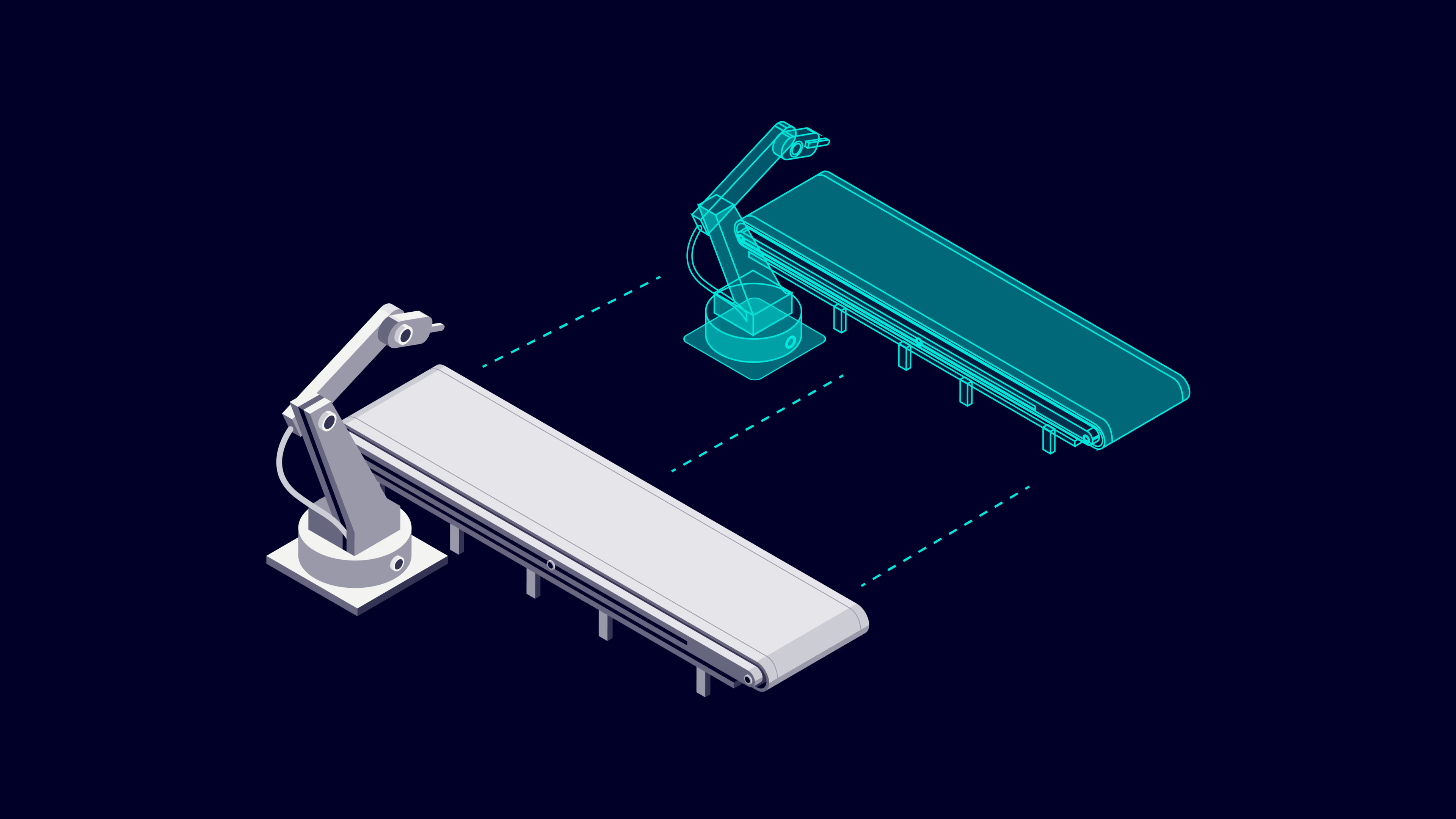
Digital twin of production
The digital twin of production applies to the fabrication of rolling stock and the physical installation of rail infrastructure. It simulates factory lines, automation, logistics and human workflows to optimize production efficiency.
Application: Factory Simulation
A digital model of production facilities is created to validate assembly sequences, material flow, and ergonomics. This allows manufacturing engineers to optimize cycle times and floor layouts prior to production ramp-up.
Application: Infrastructure Installation
For turnkey projects, the digital twin of production utilizes Building Information Modeling (BIM) data to simulate the installation logistics of wayside equipment, signaling gantries, and electrification systems, resulting in fewer clashes and delays on the construction site.
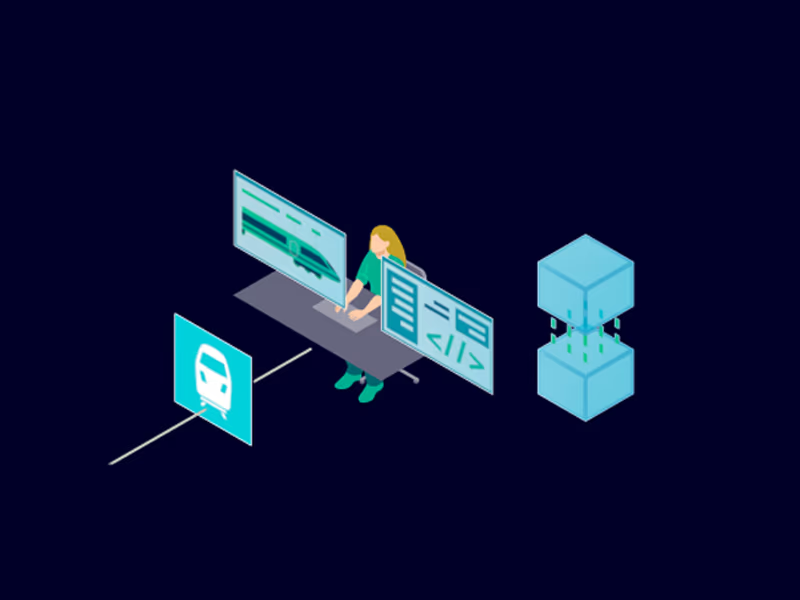
Digital twin of performance
The digital twin of performance represents the operational state of the asset, utilizing IoT data e.g., via Railigent X, to transition from time-based to condition-based maintenance, for example with real-time condition data collected by sensors.
Application: Operational Data Analysis
Real-time sensor data is mapped onto the digital model to monitor component degradation like bearing temperatures or door cycles. This enables the prediction of component failure, allowing maintenance to be scheduled based on actual asset health rather than fixed intervals.
Application: Closed-Loop Engineering
Data collected during operation is fed back to the engineering teams and into the digital twin of the product. Failure modes observed in the field provide empirical data to improve the design of future generations of rolling stock or updates to existing fleets.

Industrial Metaverse
The Industrial Metaverse serves as the visualization interface that renders the complex data from the digital twins accessible to human operators in a spatial context.
Application: Design Review & Stakeholder Alignment
The Industrial Metaverse replaces static renders with real-time, 1:1 scale immersive environments. Engineering teams and customers can evaluate cabin ergonomics, sightlines, and accessibility requirements spatially, reducing the need for physical mockups.
Application: Remote Expert & Training
Thanks to the Industrial Metaverse, location-independent collaboration becomes possible. Maintenance technicians can project digital repair instructions onto physical assets via AR, or train in VR environments that replicate hazardous or complex scenarios without risks to the real assets and personnel.
Discover real use cases for the digital twin and Industrial Metaverse at Siemens Mobility
Digital twin in Rail Infrastructure
WebXR technology: Exploring rail infrastructure without leaving your desk
WebXR technology enables a browser-based interactive 3D environment that allows you to learn more about rail infrastructure assets and procedures. The app uses product twin data to communicate their function, assembly, and maintenance. You can use the app for onboarding and training purposes as well as for demonstrations for partners or customers.
vTrainS: Automated creation of digital twins of the environment and train tracks from BIM data
The digital twins can be used for training, simulation, and operational preparation without blocking real infrastructure. The level of detail is adjustable as needed and the digital twins are compatible with simulators and operational tools.
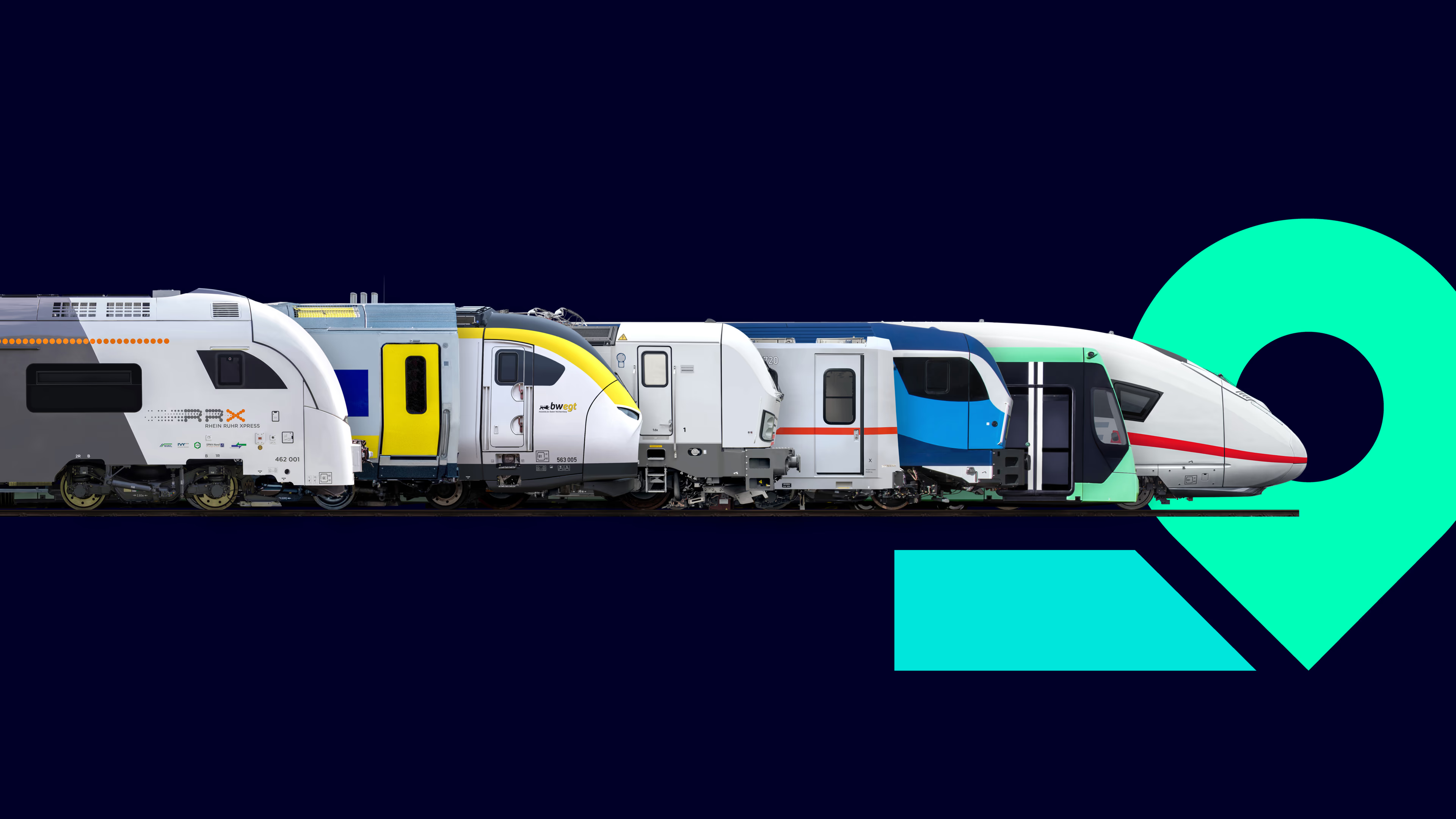
Digital twin for Rolling Stock
Digital train development: Addressing the bathtub curve with whole-life asset maintenance agreements
When a newly developed vehicle goes into operation, technical hiccups or undetected systematic failures often take years to be addressed. That is where the digital twin comes in: By simulating operation early on, these issues can be caught and fixed before the train is commissioned. The digital twin can also be used to improve driving simulators for train driver training.
Collaboration with TU Graz: Future-proof mobility with digital twins
Together with the TU Graz, Siemens Mobility is developing innovative components and lightweight structures, for example using high-strength steels, such as the lightweight bogie frame used by our customer ÖBB. This project uses new testing technologies, such as simulating the mechanical stress state of materials.
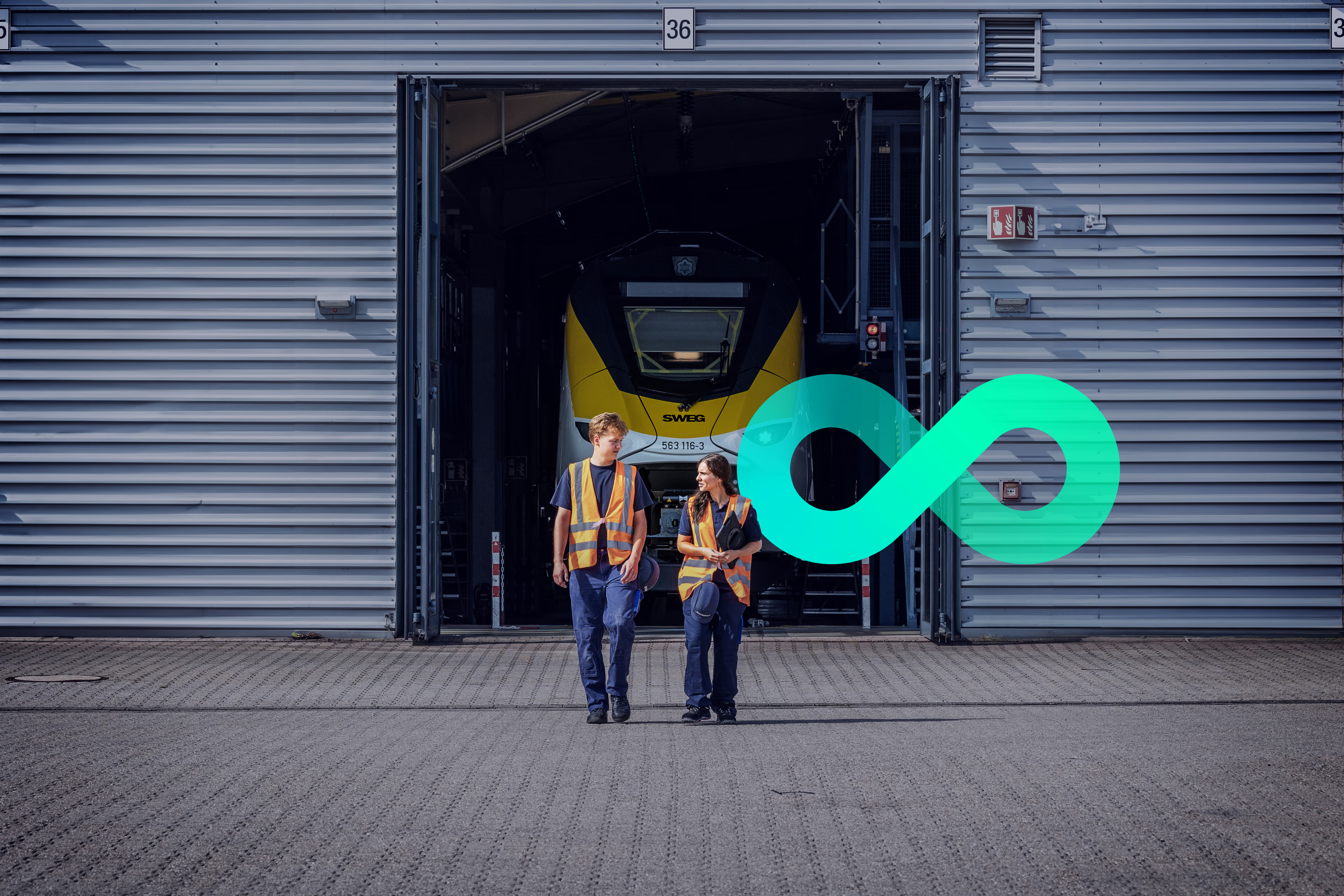
Digital twin for Customer Services
VEMS & Railigent X: Sophisticated predictive analytics for railway components
When Vehicle Equipment Measurement Systems (VEMS) measurements flow into
Railigent X, they form a comprehensive digital twin that evolves with each passing train. This integration enables progression from basic monitoring to sophisticated predictive analytics, including early fault detection, health state assessment for short term planning and remaining useful life calculations for mid-term maintenance scheduling. With this technology an open ecosystem allows data flows securely between stakeholders. Leveraging this technology results in reduced lifecycle costs and supports efforts in achieving 100% fleet availability.
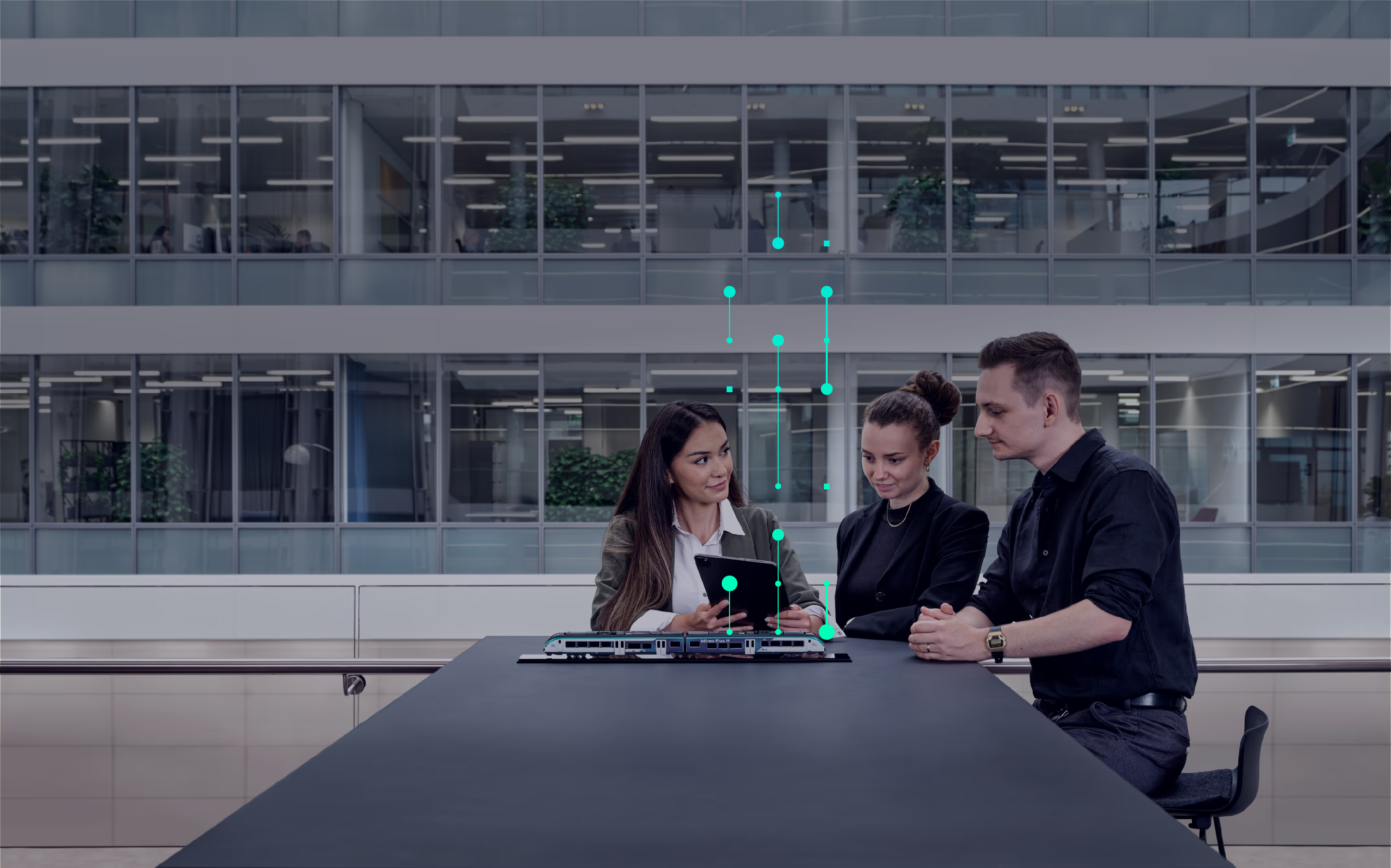
Digital twin for Software
TPS: Better schedule creation, dispatching and track work coordination
The TPS (Train Planning System) software uses digital twin technology in the core of its applications. In TPS a highly detailed digital replica of the entire rail infrastructure, capturing every element from tracks and switches to signals and other critical assets is created for each network. This virtual model serves as the backbone for schedule creation (TPS.plan), live dispatching (TPS.live), and track work coordination (TPS.trackworks) and allows you to optimize your dispatch planning and operations.

Digital twins reshape the rail lifecycle
In this white paper, Siemens Mobility shares how digital twins and AI bring rail operators closer to lifecycle cost-optimized rail with 100% availability and highest throughput. Download the white paper to find out more!