Crossings protection
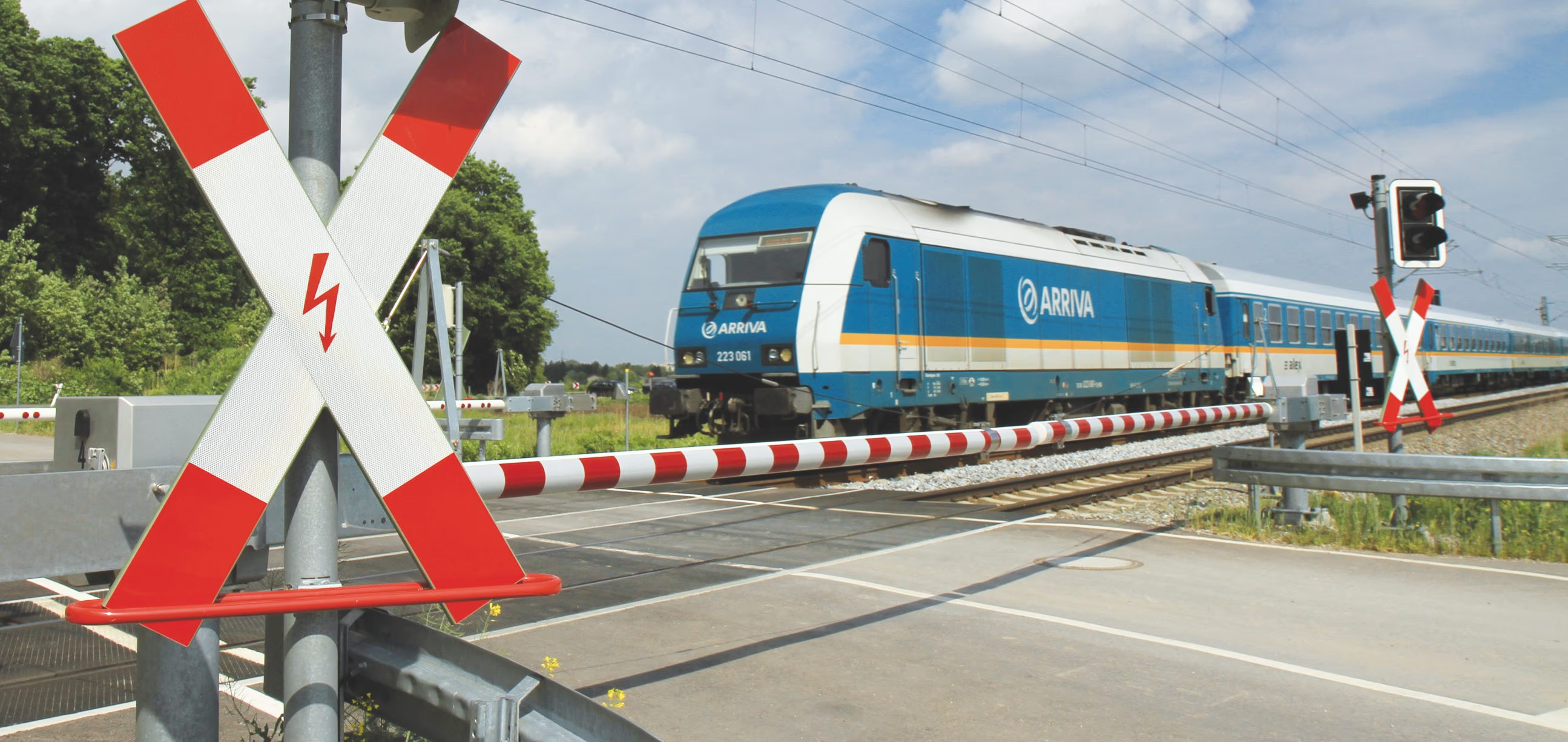
Smart, smooth, and safe level crossings
Predict: See what the future will bring
Siemens Mobility predictors are built on an electronic, microprocessor-based modular system designed to reliably detect an approaching train and start the crossing warning system.
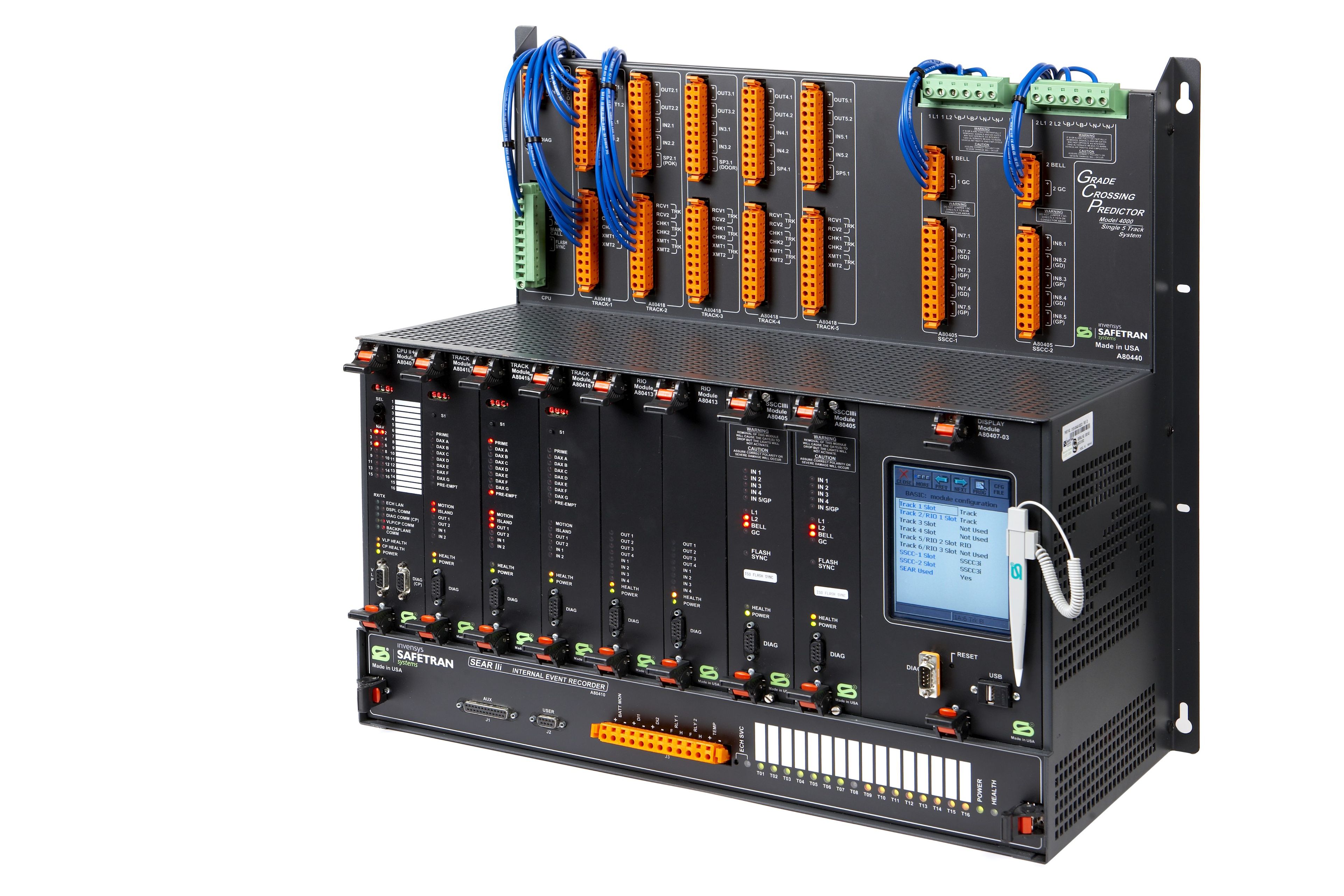
GCP 4000 grade crossing predictor
The GCP 4000 Grade Crossing Predictor is the rail industry’s only fully integrated crossing warning system, which combines the following features without requiring inter-connected wiring:
- Up to six GCP 4000 track circuits, including Intelligent Processor Island and DAXes
- 2 SSCC 3i modules capable of providing up to 40 amps of lamp energy and controlling up to four gates
- One SEAR IIi Event Recorder/Analyzer with automated inspection and reporting capability
- Built-in vital ATCS communication protocol for advanced application, such as RF DAXing
- Support for PSO track boards allowing PSO circuits for DAXing
- Multiple vital timers and Vital AND gates
- Embedded display for configuring, calibrating, diagnostics, and troubleshooting
- Built-in support for configuration management, including hardware information
The GCP 4000 comes in a variety of packaging configurations, from fully redundant 6-track systems to redundant 2-track systems and single 5-track and 1-track non-redundant systems. These packages are designed to optimize space requirements for different applications without compromising capability.
SGCP 4000/MS 4000 simple grade crossing predictor/motion sensor
Operation of the SGCP 4000/MS 4000 system is based on the maximum impedance of an unoccupied track circuit, which is determined by the location of termination shunts and rate of change in impedance resulting from the physical location of a train as it moves within a track circuit. The system applies a constant current AC signal to the track and measures the level of the resulting voltage. These levels vary with approaching track impedance, which also varies due to the distance of the train from the crossing. This is how the system detects inbound motion of a train and activates the crossing warning equipment.
- Available in single track non-redundant and redundant models
- Uses proven GCP 4000/5000 modules
- Reduced system size for installation in a smaller equipment house
- Provides a simple user interface in order to easily setup unit
- Programming can be confirmed by an Office Configuration Check Number (OCCN) and the track calibration information can be confirmed by a Track Check Number (TCN)
- Provides a diagnostic history log and train move history log capable of interfacing to a SEAR II Event Recorder/Analyzer for additional capability
- Supports the use of an external island using a vital input
- Can be configured as either a motion sensor or as a simple grade crossing predictor
GCP 5000 grade crossing predictor
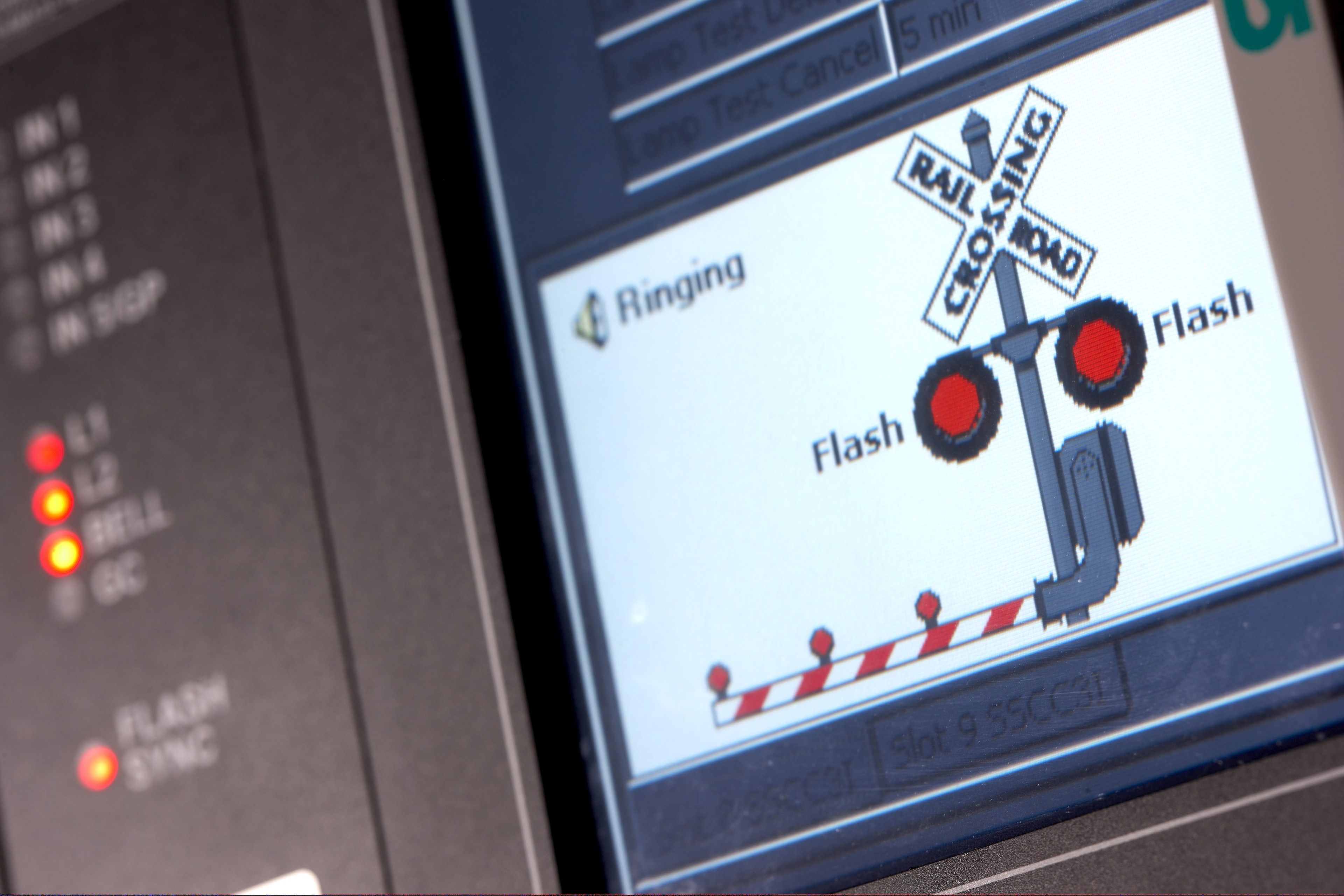
The Siemens Mobility GCP 5000 uses up to six track circuits for train detection. Each track module has nine track predictors that are configurable as motion sensors or predictors. Each track module has two vital inputs and two vital outputs. The Track Module Prime Predictor is generally used for control of local crossings, while the Track Module DAX A through DAX G predictors are normally used for control of remote crossings. The Track Module Preempt Predictor is usually utilized for interconnection with traffic signal systems. In addition to predictors, each track module is capable of providing a multifrequency island circuit.
- Capable of monitoring up to 6 track circuits including Intelligent Processor Island and Bi-DAXing
- SEAR IIi Event Analyzer/Recorder programmable via OCE and new display
- Provides a diagnostic history log and train move history log utilizing a SEAR IIi Event Recorder/Analyzer
- Internal logic utilizing vital AND gates and vital timers
- Multiple ethernet ports available for interfacing with eSSR radio (PoE) port, vital communications, as well as PTC applications
- Enhanced user interface tools, including OCE, WebUI, and new display
- USB ECD storage of SEAR IIi Event Recorder/Analyzer parameters
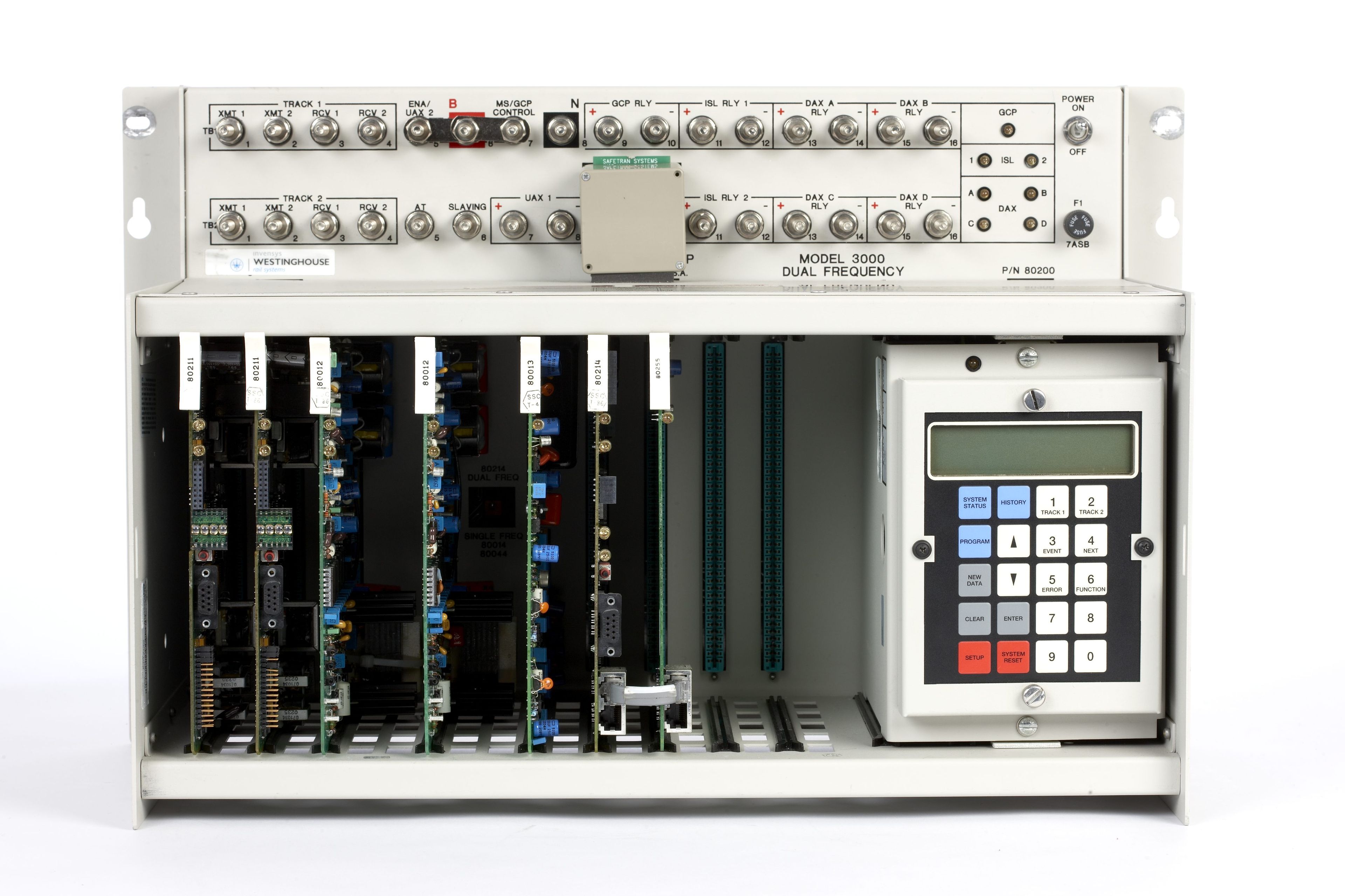
GCP 3000 Plus grade crossing predictor
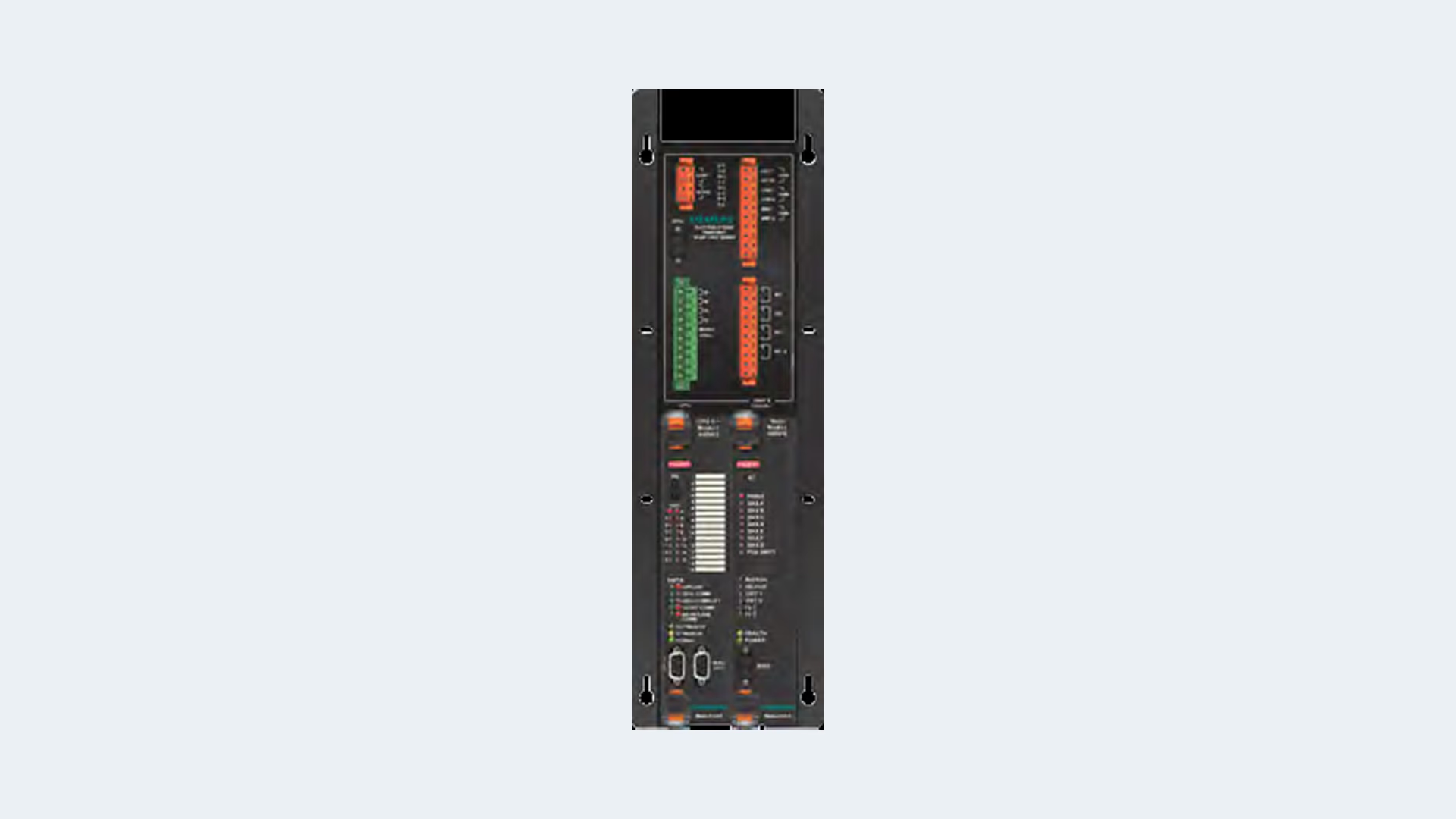
The GCP 3000 Plus uses up to two track circuits for train detection. Each track module has one track predictor that is configurable as a motion sensor or predictor. Each track module has two vital inputs and two vital outputs. The Track Module Prime Predictor is generally used for control of local crossings, while the Track Module DAX A through DAX D predictors are normally used for control of remote crossings. Usually, the Track Module Preempt Predictor is utilized for interconnection with traffic signal systems. In addition to predictors, each track module is capable of providing a multifrequency island circuit.
- Next generation decedent of proven legacy GCP 3000
- Utilizes proven GCP 4000/5000 modules and software updates are fully backwards compatible with the GCP 4000/5000
- Capable of monitoring up to two track circuits
- Multiple ethernet ports available for interfacing with eSSR radios, as well as vital communications
- Enhanced user interface tools, including OCE, WebUI, and new display
- Common menu structure between all user interfaces
- Generate office configuration check number (OCCN)
- Simple, tailored drop down menus for user-friendly configuration, diagnostics, and troubleshooting
Protect: Future-proof and customer-oriented
The Siemens Mobility solid state crossing controller (SSCC) series lets you control your crossings more reliably and more cost-effectively with greater flexibility. All parameters are easily set via an integrated LCD screen and push buttons, as well as being password-protected against unauthorized changes. The built-in standardized logic eliminates the need for relays and related wiring, and can be customized to accommodate a vast array of crossing configurations.
SSCC III and SSCC IV features
- Echelon connectivity for communicating recorder and diagnostic information
- Programmable loss of shunt timers for each input
- Up to eight programmable vital control inputs, including one for gate position
- Programmable low-battery indication threshold
- Programmable lamp flash rate
- Optional synchronized lamp flashing of multiple units
- Optional loss of shunt selection with configurable timers
- Non-volatile, real-time clock
- Expanded menu system includes pre-emption output
- Five built-in test modes

Record: Easy to install, even easier to use
Railroads have a duty of care to ensure grade crossings operate safely. In order to investigate and maintain, Siemens Mobility analyzers and event recorders immediately report anomalies to where the client's maintainers specify.
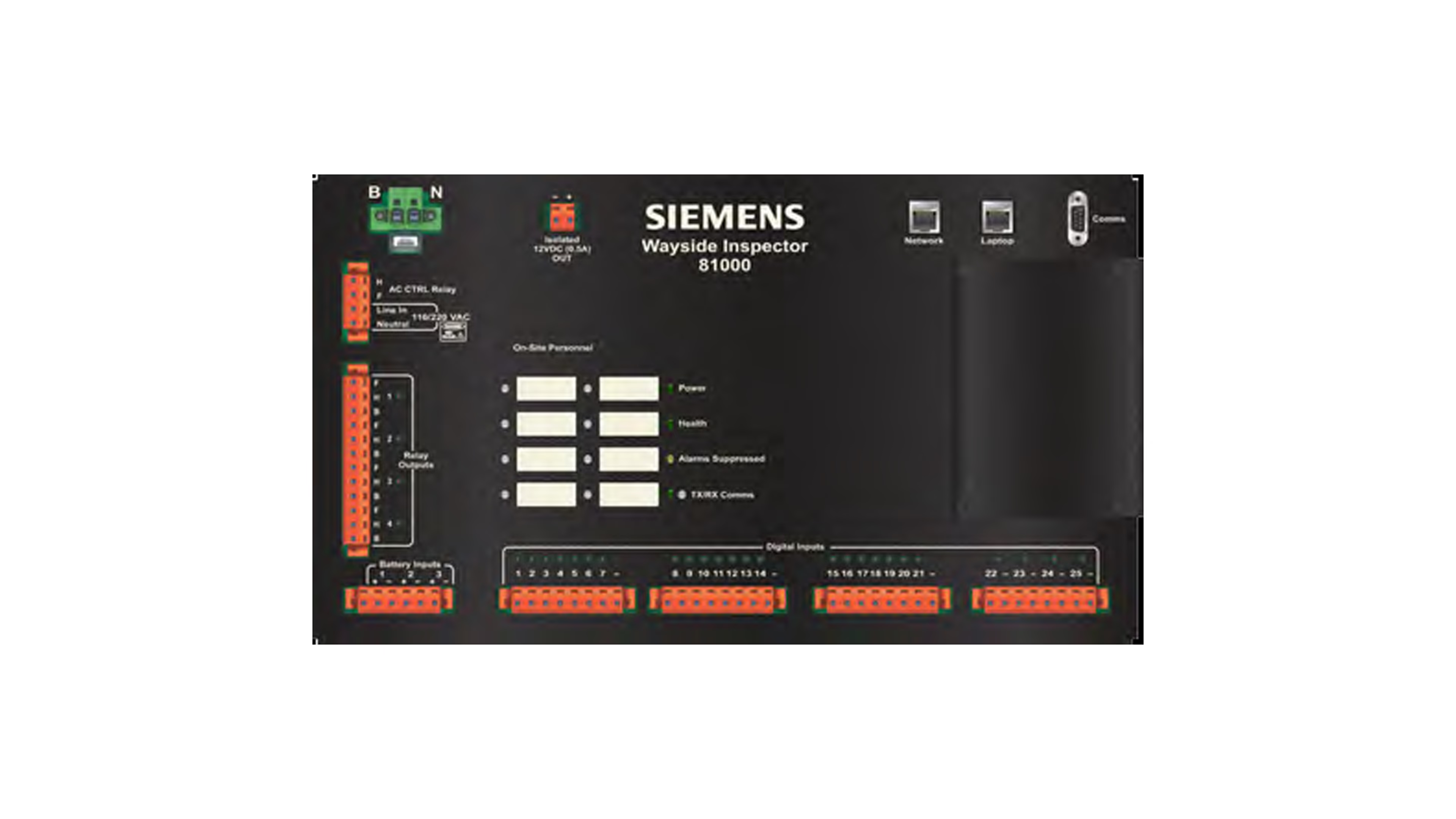
Wayside Inspector
The automated grade crossing testing system performs automatic periodic inspection of crossings, such as monitoring the state of discrete I/O signals, battery voltages, and AC power. From that information, it analyzes the operation of the grade crossing’s warning systems and provides a means for inspection of those systems. It can send alarms and inspection report logs to a back-office system or can interact through a WebUI to allow field personnel to, for example, adjust system settings or view statuses.
- Scheduled annual warning time inspection available for both main and standby equipment, and for every directional approach and route through associated crossing
- Scheduled monthly standby power inspection available
- Scheduled monthly ground inspection available
- All inspections can be tailored to meet individual railroad threshold requirements

SEAR II event analyzer/recorder
Offering reliable and simple comprehensive monitoring, recording, reporting, and alarm generation, the SEAR II is housed in a compact, easy-to-install, easy-to-use unit. Its microprocessor-controlled, non-vital, stand-alone alarm management system is designed to provide continuous real-time general-purpose status monitoring and event recording for a wide range of functions associated with grade crossings.
- 24 x 7 monitoring and fault reporting
- Echelon connectivity for communicating recorder and diagnostic information
- Non-contact detection of flashing lamps
- Isolated monitoring of up to 18 separate digital points
- Isolated monitoring of three analog points
- Configurable dry contact outputs for remote testing
- Configurable internal logic to discriminate faults from normal operation
- Configurable maintainer call on real alarms
- Can be remotely interrogated
- Direct interface to Grade Crossing Predictors
- Connects to analog and digital expansion modules for even larger systems
- Stores up to 150,000 events (up to 400,000 with extended memory module)
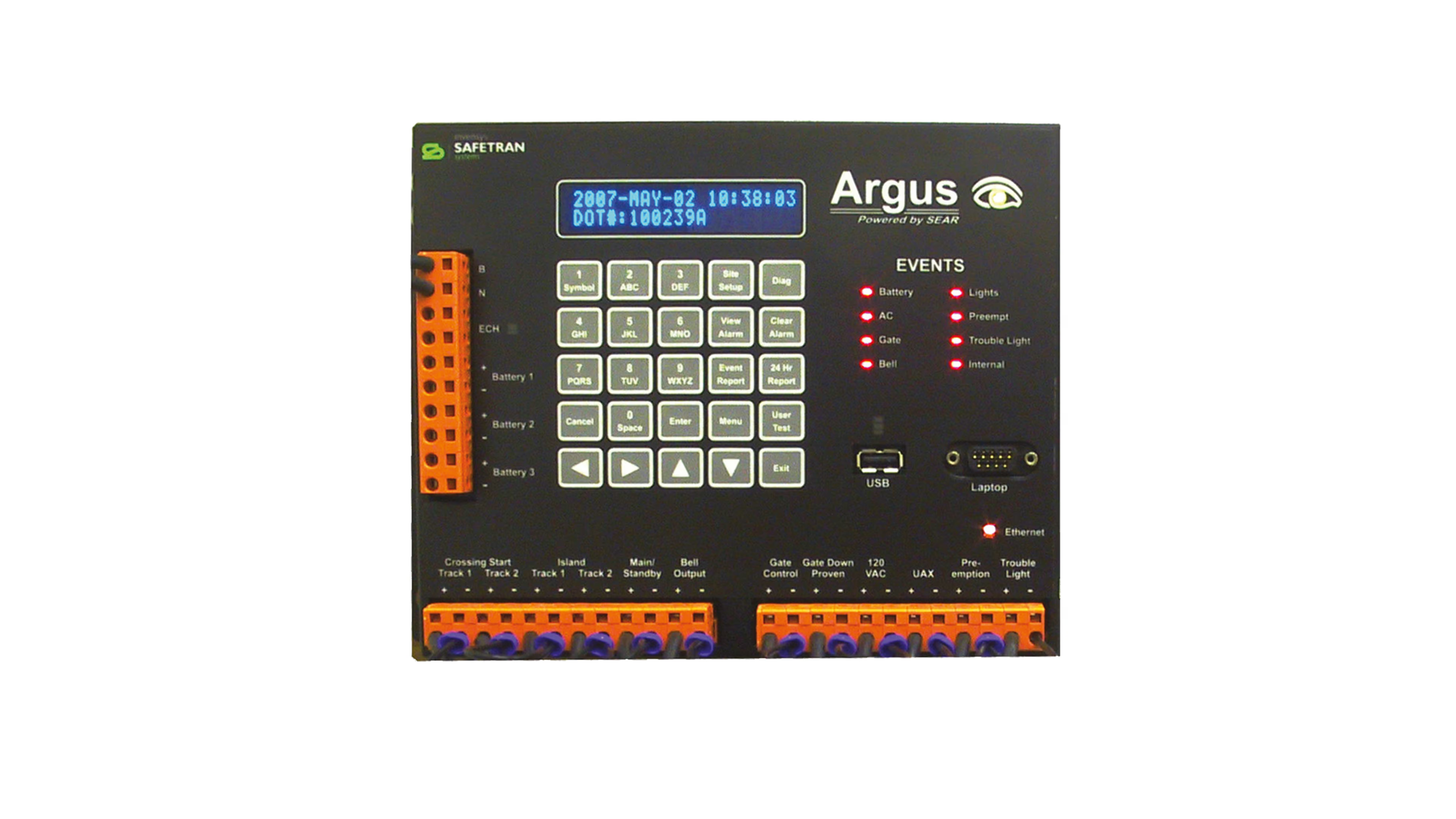
ARGUS standalone, mini event recorder
ARGUS is an inexpensive mini-recorder designed for non-vital event recording. It is a cost-effective solution for replacement of legacy recorder equipment, new installations needing additional input monitoring, or for remote monitoring of trouble locations. It is compact, simple-to-install and use. It can provide a basic monitoring and alarm system at an affordable price.
- Full monitoring, recording, and reporting functions for most standard crossings includes application with basic alarming functions such as low battery, AC power out and lamps out
- A generic version is available for use anywhere recording, alarming, and remote access are needed
- Allows the railroad to have recorded proof-of-crossing operation – events recorded in Argus are check-summed and tamper-proof
- USB port offers quick event log retrieval or allows loading of software using a memory stick; no laptop required
- Includes an Ethernet port (on side) which allows communication over wireless IP network
- Can be used to monitor vital inputs, provided wiring guidelines are followed
Enhanced level crossing safety
LX BUE S7
Designed for protection and main signals, the LX BUE S7 protection system features a fail-safe with coded mono processor and 2-out-of-2 peripheral components. The diagnostics are integrated in the fail-safe controller and the barrier drive operating is based on relays.
- Established and proven equipment
- Good cost position
- High availability
- High flexibility for customizing
- External resources for development and engineering easier available
- Apps for diagnostic available
- Best barrier drive – Sim 6/13 maintenance and installation
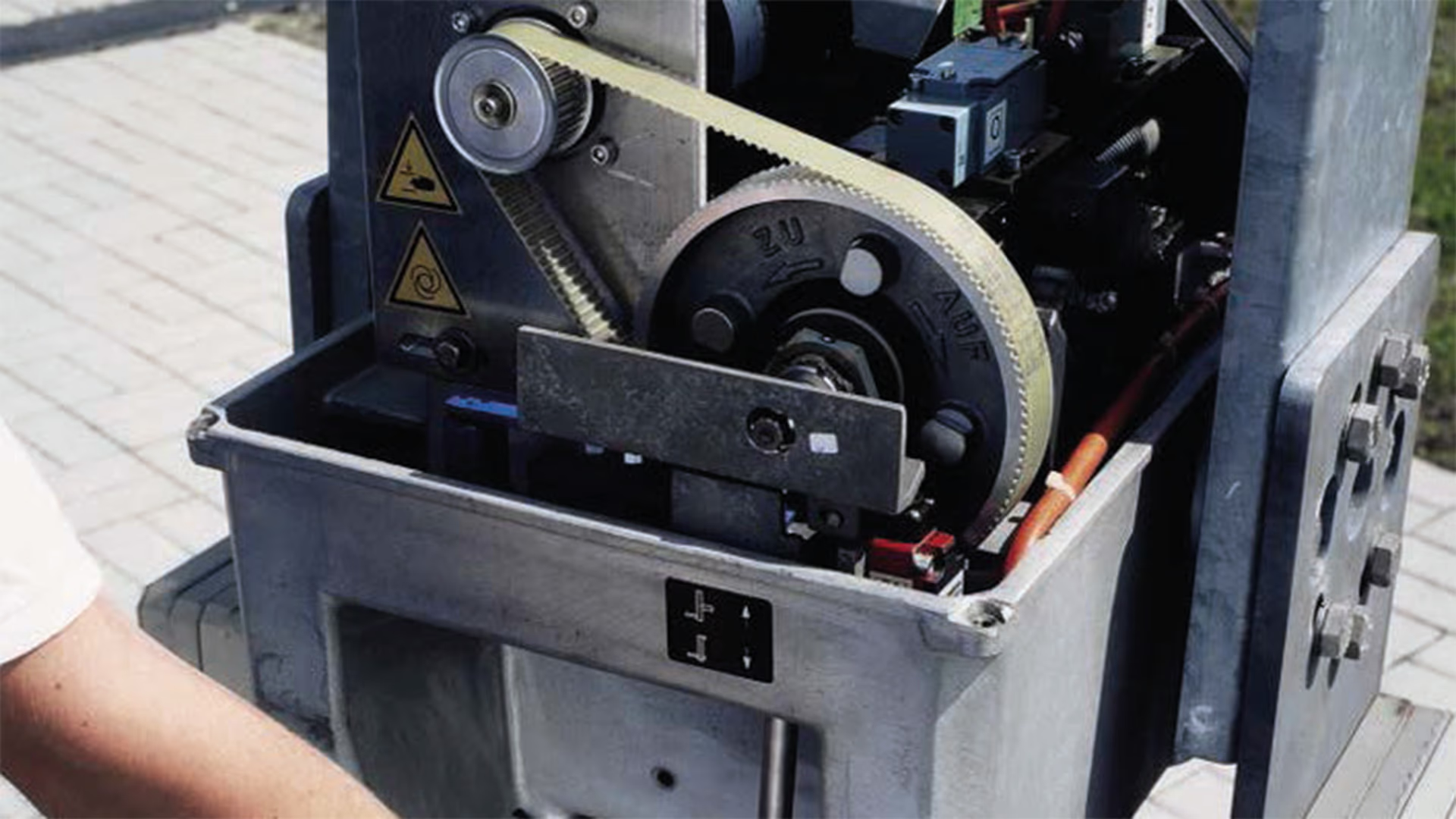
Wayguard DLX
Representing the new generation of level crossing protection, Wayguard DLX provides advanced diagnostic functionality compared to the systems of today as well as significant cost savings, especially in cabling and associated civil works. The main idea behind Wayguard DLX is the integration of control logic into the field elements (barriers, road signals, etc.) themselves.
- Digitalization, preventive diagnostic
- Cost-effective HW
- Simple, cost-effective cabling
- Saving of cost for housings (bungalows or outdoor cabinets) through decentralized positioning of operating modules, low-power consumption
- Integration in SiNet-Architecture

Simis LC axle counter-driven, level crossing protection system
Offering full functionality for FÜ, Üsoe, ÜS, and Hp, this 2-out-of-3 controller on ECC basis can also be used in interlockings (Simis D, W) and RBC. The diagnostics are housed in a separate controller with display, while pulse wide modulation on the operating boards serves the lights and barrier drives. Simis LC is a highly available, modular system that can easily be adapted to the conditions of individual level crossings and customer-specific requirements.
- Best diagnostic
- High functionality on the boards
- Automatic adjustment of cable resistance
- Configurable times and speed profiles for lowering/lifting of barrier arm (preserve gates)
- Axle counting detectors lower track maintenance costs
- Best barrier drive – Sim 6/13 maintenance and installation
- Best lightning protection

Fields of application
Simis LC can be used:
- with all traction types
- in station areas
- on single- and multiple-track lines with permitted speeds of up to 160 km/h and optionally 200 km/h with and without blocking
- for the operation of two independent level crossing systems with one controller and one equipment house and where the distance to an adjacent level crossing is less than the warning distance
- connected to road signals (Büstra) and for demand-controlled activation of advance road signals
- for the following monitoring modes: Ma (signal-interlocked), double Ma interface to different network operators, RM (remotely monitored), MS (with a monitoring signal), MSOA (with a monitoring signal and optimized activation), and mixed forms
- with automatic obstruction detector
- in replacement of old flashing light systems and in 1:1 replacement of the indoor equipment
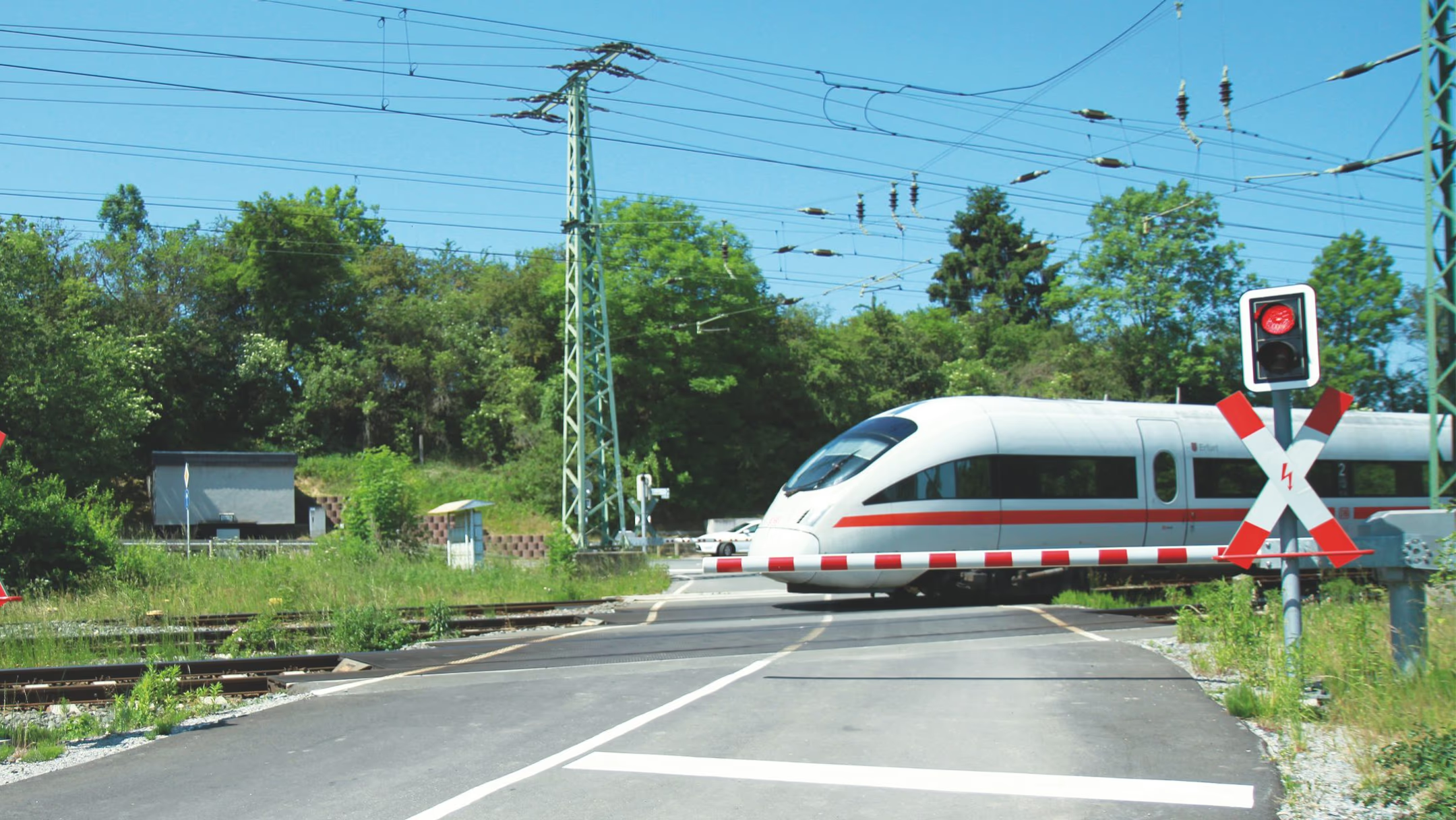
Westrace LX
By taking proven Westrace technology that has been applied on projects worldwide and creating new application techniques, Westrace LX controllers reduce the cost of modernizing crossings while still delivering SIL 4 safety. Their use eliminates the need for traditional relays, resulting in savings in installation, commissioning, and ongoing maintenance for lower overall lifecycle costs. An optional technician’s facility with comprehensive diagnostic reporting further reduces set-up times and maintenance fault finding.
- Innovative application process
- Dual redundant Westrace processor
- Advanced diagnostics and simplified maintenance
- Circuits and Interlockings
- ETCS ready
- Off-site testable
- High reliability
- Remote condition monitoring option
- Minimum maintenance
- Minimal modification to existing track
- OPEX savings
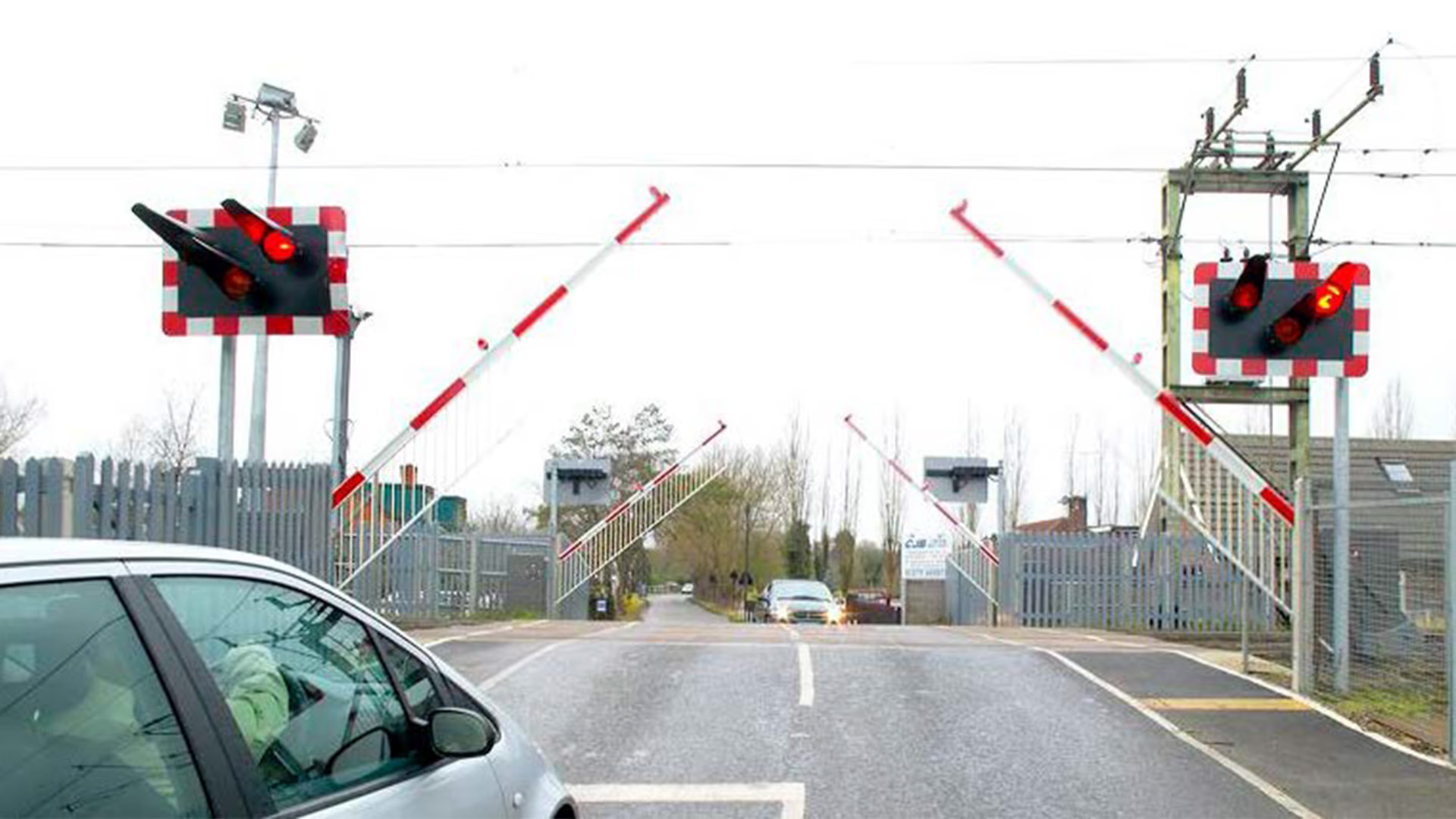
Wayguard LCM 200
Shaped by the needs of our customers and our knowledge of level crossings, the innovative idea behind the LCM 200 is that the control system is largely integrated into the hardware and software of the Simis W and Simis IS interlockings. This excludes the need for complex interfaces between the level crossing control system and interlocking, enabling a cost-effective solution.
- High-availability system
- Easy project management and integration reduces investment costs
- No additional hardware needed thanks to software management of the interfaces between the level crossing control system and the Simis W or Simis IS interlocking
- Cost-optimized maintenance thanks to the integration of a top-level, standardized diagnostics system
- Efficient corrective maintenance thanks to local, web-based diagnostics
- No need for walk-in control cabins as the LCM 200 control system is best housed in a cabinet
- It can be powered either by the interlocking’s uninterruptable power supply or via a local power supply

Radio operated approach indicator for CENELEC
Reduced investment costs by saving on cables and no need for closed-gate crossings
- Use of wireless, solar-powered indicator lowers investment and energy costs
- Saves entire cabling of wheel sensor relay
- Train direction detection
- Speed monitoring
- Installation any distance from point possible
- Power supply independent of electricity supply
- Compatible approach indication as with conventional systems
- Use with all crossing and point systems