ST Vital Relays, electrical hardware, signal enclosures, accessories

Quality and support you can count on
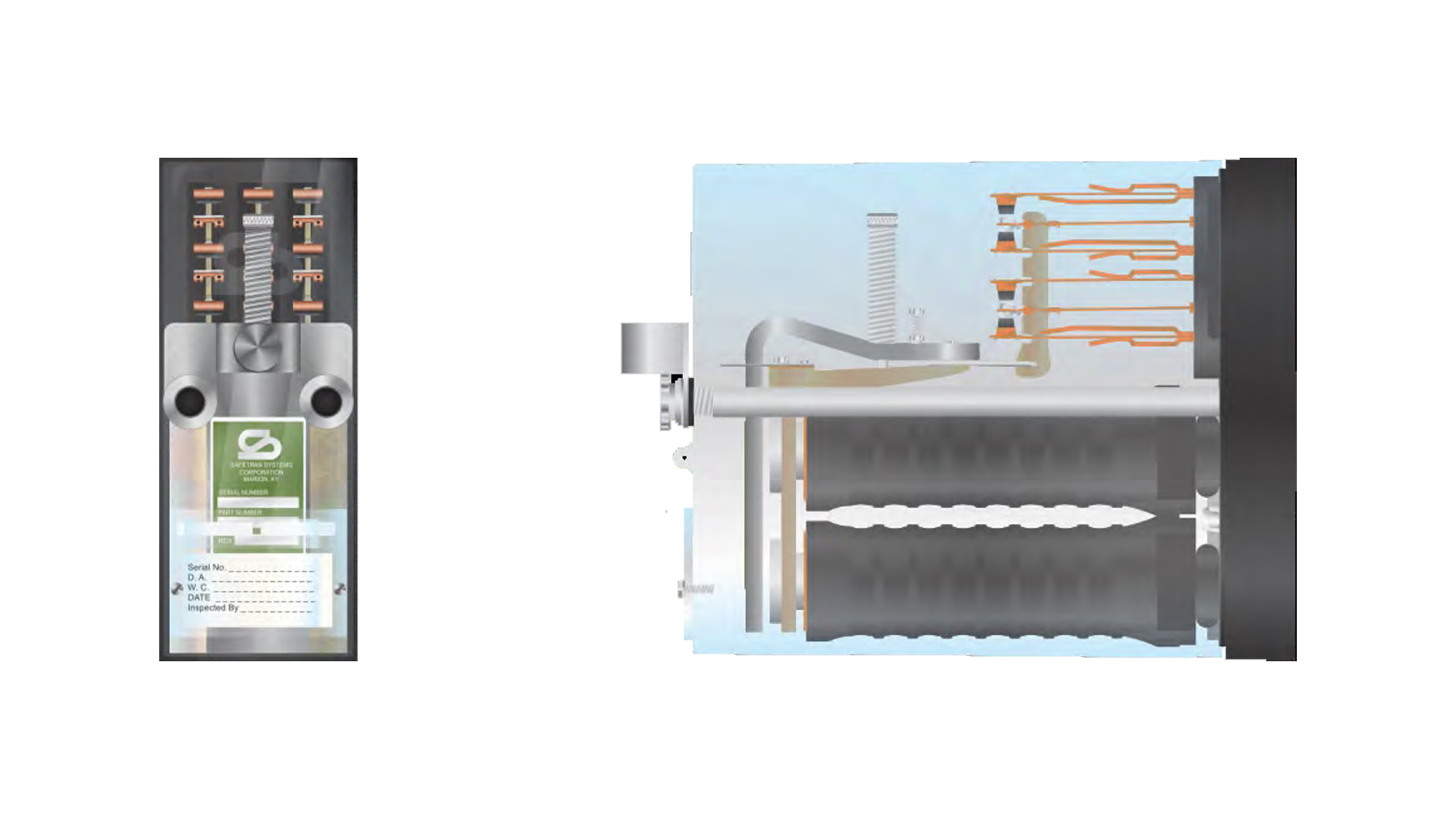
ST Series vital relays are compact plug-in circuit switching elements housed within a clear polycarbonate case for use in modern railway systems. These relays incorporate the required control characteristics as well as operating security for this application. ST-1 and ST-2 relays fit into size 1 and 2 sockets already in use commonly throughout the industry. Selected models are interchangeable with other manufacturers’ existing types of relays as well.
Each relay carries a relay registration plate unique to that specific type. Sockets have uniform indexing pins to ensure insertion of the proper relay for each circuit function. All contact and coil connections are brought out through the base of the relay as spring prongs. The socket has wedge-shaped plug insulators with flat metal terminals on both the upper and lower surfaces.
Relays are guided into the socket by two rods so that each pair of prongs engage their respective socket terminals, making a firm, low resistance contact. The socket terminals are available in either the solder or crimp types. Terminals are easily removed from the back of the socket for making wiring changes without unplugging the relay.
Features: Vital relays in ST-1 and ST-2 frame sizes
- Available in both ST-1 and ST-2 frame sizes
- Mounts easily in existing socket bases
- All ferrous metal parts are nickel plated
- Meets or exceeds all applicable AREMA specifications
- Contact support springs are phosphorous bronze, molded in phenolic blocks. Relays are provided with space for three such blocks.
- Regular, heavy-duty, extra heavy-duty; tungsten and magnetic arc suppressed contacts are available
- Heavy armature provides for positive drop-away
- Highly efficient magnetic structure makes routine calibration quick and easy
Please refer to the individual relay specifications for technical details on contact material and current carrying capacity.
Benefit from competitive pricing and short lead times
Resistors/resistance units
Fixed resistance units
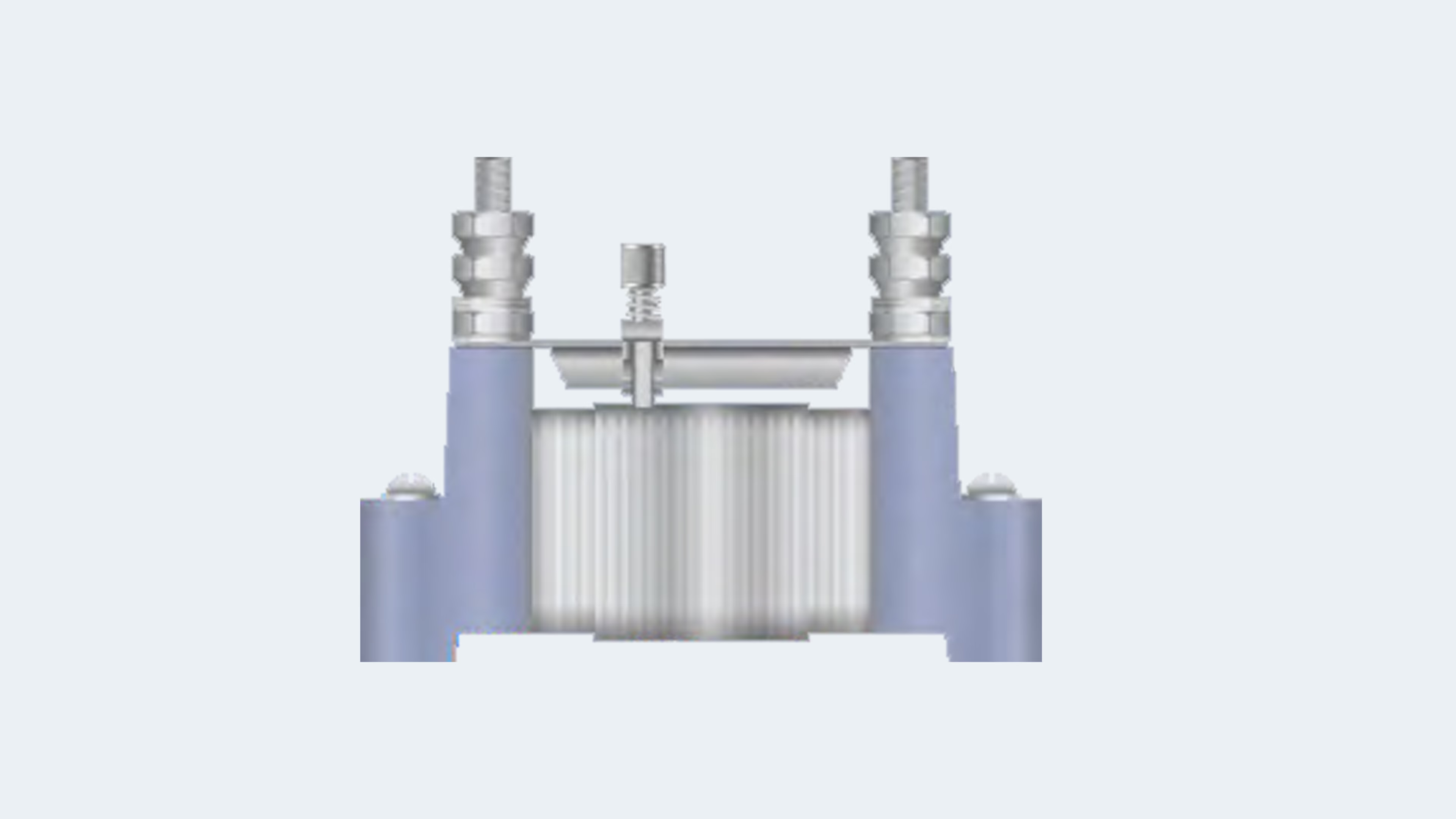
Fixed resistance units employ the same materials and construction used in the adjustable types. A metal tag attached to one post gives specifications of the unit. All units are 100% tested for resistance. The tolerance is +10, -0% of the rated value. This is the same range as a + 5% resistor, except that each unit is guaranteed to have a nominal value not below the rated value. A fiber guard for protection against touching of adjacent units, and a spacer for use where excessive heating occurs, are available. Siemens Mobility adjustable and fixed resistance units are marked in AREMA wattage. Maximum temperature rise of the hottest part of resistor body is 1,800° C (3,560° F) above ambient temperature.
Adjustable resistance units
Adjustable resistance units provide a sliding contact with resistance graduations. The resistance wire is made of a corrosion resistant alloy, and has an electrically resistant oxide coating which prevents shorts from incidental contact of wires. The wire is wound around a patented porcelain base with grooves for locating the windings. The wire is attached to the terminal posts by a washer and 2 nuts located inside the porcelain block. A stainless steel channel type bridge, used to insure against bowing and consequent loss of contact pressure, is marked in ten equal divisions of the total range of adjustment, to facilitate settings and recording of critical circuits. The bridge is also marked with minimum and maximum resistance values as well. The stainless steel contact assembly has two stainless steel springs, one of which is mounted between the sliding member and the double contact, keeping pressure on the contact, so the circuit is always closed under spring pressure, while making adjustment. A Hex-head screw passes through both springs to exert direct pressure on the double contact, allowing it to lock the sliding assembly in place on the bridge.
Terminal blocks
Types of terminal blocks
Siemens Mobility offers various types of terminal blocks for different applications. Please refer to our product brochure for a list of all models and specifications.
- Type 217 Block Porcelain Terminal Blocks
- Type 390 1” Square Terminal Blocks
- Type 274 Rounded 2 Post Wide Terminal Block
- 13 Way Terminal Block
- 14 Way Terminal Block
LIGP Thru terminal block – low impedance ground plane
LIGP Thru terminals are a patented approach that helps alleviate costly field wiring time as well as effort since arresters, test links and/or equalizers can be installed in the factory. Case wires are separated from the field cable and there is no need to pull the field cable through the terminal board. The Thru post test link provides separation from both the ground and the case wire for ease of cable megohmmeter testing (meggering).
Fulfil all your requirements with customer-specific designs
Features
- Meets or exceeds applicable AREMA specifications
- Available in multiple standard sizes from 4’ (1.22m) x 4’ (1.22m) to 8’ (2.44m) x 8’ (2.44m) (other sizes may be available upon client request)
- Adjustable legs for leveling of foundations
- Interior aerial outlet standard
- Interior ground terminal plate standard
- Interior light standard
- Exterior generator outlet standard
- Medium-density fiberboard interior finished panels painted with fire retardant paint
- Ventilation louvers equipped with covers to reduce possible pests
- Steel shell variants painted with primer and finished with aluminized paint

Pedestal junction boxes
Pedestal mounted box assemblies are available in several sizes and configurations. Cast iron box construction provides weather-tight rugged protection against the elements while providing flexibility to place the pedestal virtually anywhere.
Instrument cases
Instrument cases are available in several sizes and configurations. Available in welded aluminum or steel shell construction with doors that can be completely removed or locked at 90° open position with hooks and locking rods included. Doors can be designed in a variety of arrangements.
- Meets or exceeds applicable AREMA specifications
- Available in multiple standard sizes from 41” (1.04 m) to 81” (5.08 m) wide (other sizes may be available upon client request)
Some of the most widely used tools and accesories in the industry
Hand tools
- AAR Terminal wrenches
- Switch adjustment wrenches
- Torque wrenches
- Crimping pliers
- Bond punches
Hardware and miscallaneous
- Washers
- Nuts
- Ground stud posts
- Shields and caps
- Terminal connector clips
- Connector busses and links
Padlocks
Padlocks are rugged and reliable. Simple body and hook construction are made of either cast zamak or cast bronze. The locking screw is made of brass and is designed to prevent backing all the way out of the lock body. Models are available with or without attached chains, different key patterns, triangle, hexagon, slotted hexagon etc.
Lubricants: Greases and oils
- Semaphore oil
- NO oxide greases