eHighway – Electrification of road freight transport
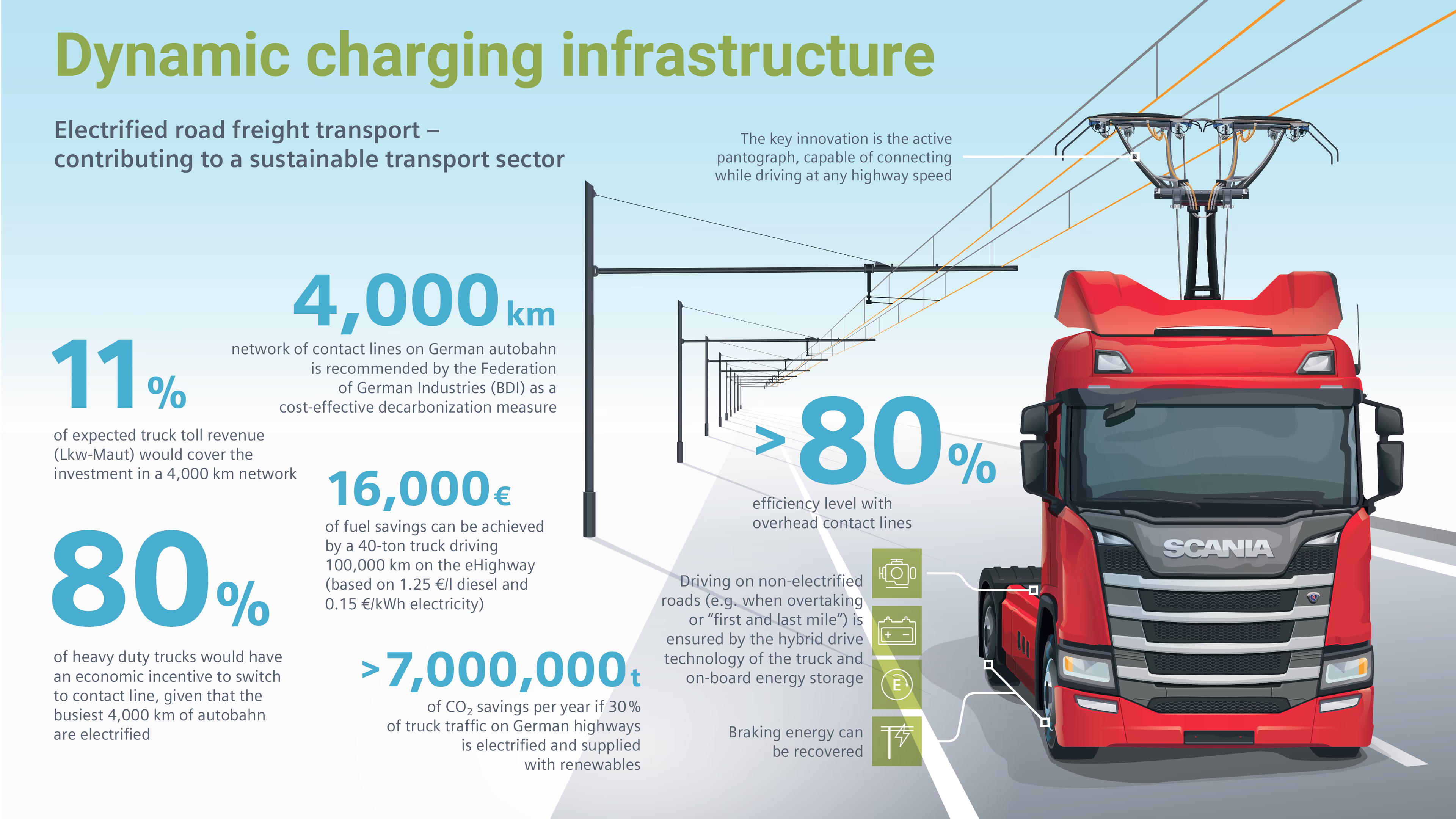
Road freight transport powered by electricity: Siemens’ dynamic charging infrastructure combines the efficiency of electrified railroads with the flexibility of trucks into an innovative freight traffic solution that is efficient, economical, and environmentally friendly.

Road freight transport powered by electricity: Siemens’ dynamic charging infrastructure combines the efficiency of electrified railroads with the flexibility of trucks into an innovative freight traffic solution that is efficient, economical, and environmentally friendly.
What is the best strategy to climate-friendly road freight transportation?
Even under ambitious scenarios to shift goods transport to electrified rail, road freight is expected to grow in absolute terms and remain the biggest source of CO2 from freight. We all depend on trucks for goods and services we need in our daily lives. But 24% of global CO2 emissions are caused by transportation, and road freight transport plays a considerable role in these emissions. As we aim to cut emissions by 65% in Germany by 2030, and reach carbon neutrality in Europe by 2045, it is imperative to examine strategies that will contribute to significantly lower emissions in the transportation sector.
Siemens Mobility is conducting a comparison of technology concepts to reduce CO2 emissions in long-haul trucking, assessing the advantages and disadvantages in terms of economic and environmental impact by evaluating eight criteria: Operational Range, Time to Market, Scalability & Resource Efficiency, Energy Efficiency, Total Cost of Ownership, Flexibility, and CO2 Abatement Cost. Let’s take a look at the facts.



Reduce truck operating costs and emissions
Shuttle transport
Heavily-used truck routes, for example from ports to freight and distribution centers, are often a burden on the environment. In these situations, the dynamic charging system produces a significant reduction in pollutant and CO2 emissions. At the same time, the economic benefits of the system are felt particularly quickly on these high-use routes.
- Solution for high frequency shuttle transport over short and medium distances (< 50 km), i.e. in ports or industrial areas
- Lower fuel consumption and longer lifetime
- Reduction of air and noise pollution
Electrified freight transport in mines
The eHighway is an ideal way to connect pits and mines with warehouses, transshipment points or processing plants. The economic benefits of the eHighway system can be easily calculated on the basis of transport volumes. At the same time, the eHighway system significantly reduces environmental pollution and dependence on fossil fuels.
- Connection of pits and mines to storage or transit locations
- Minimization of harmful emissions
- Sustainable, clean and economical mine operation
Electrified long-haul traffic
The dynamic charging system is based on a safe and proven infrastructure to provide a continuous energy supply to heavy commercial vehicles. It can be integrated and operated within the existing road infrastructure without significant effort and combines the efficiency of electrified railroads with the flexibility of trucks, halving energy consumption while maintaining full mobility. The system enables trucks to use renewable energy and can contribute significantly to reducing CO2 emissions. Both the ecological and economic advantages of the eHighway system grow with increased use of the route.
- Economical and sustainable alternative for road freight transport
- Significant reduction of CO2 emissions
- Substantial cost savings for freight carriers
How it works?
Energy supply
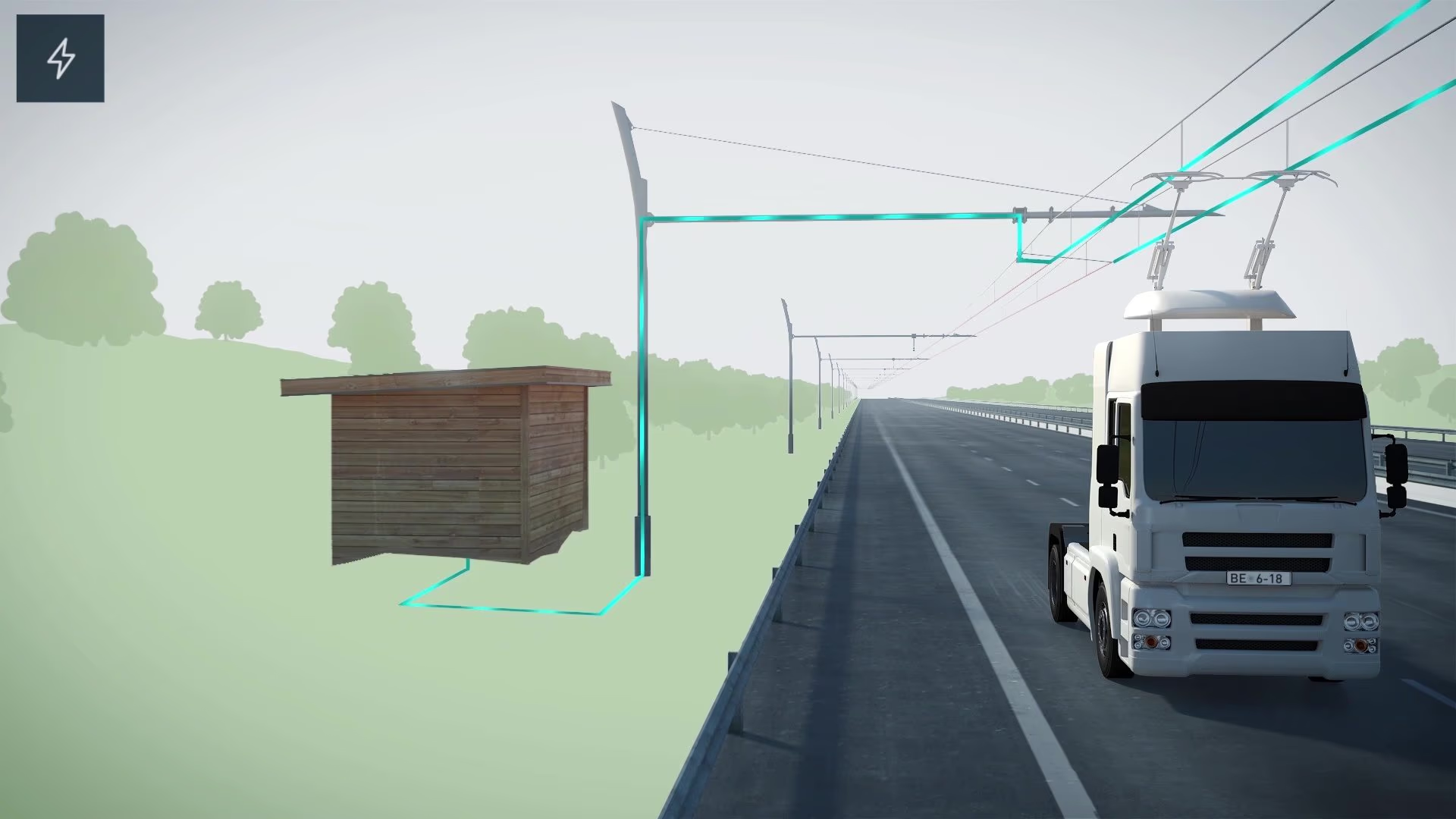
The energy supply system is based on proven technology from the world of railroad electrification. The two-pole catenary system ensures a reliable energy supply for the eHighway truck. The catenary system leads to a level contact wire that enables stable current transmission, even at high speeds. The overhead contact lines are supplied with energy from substations equipped with:
- Medium voltage switchgear
- Power transformers
- Rectifiers
Controlled inverters (for feedback of the electric energy generated by the vehicles’ regenerative braking).
Pantograph
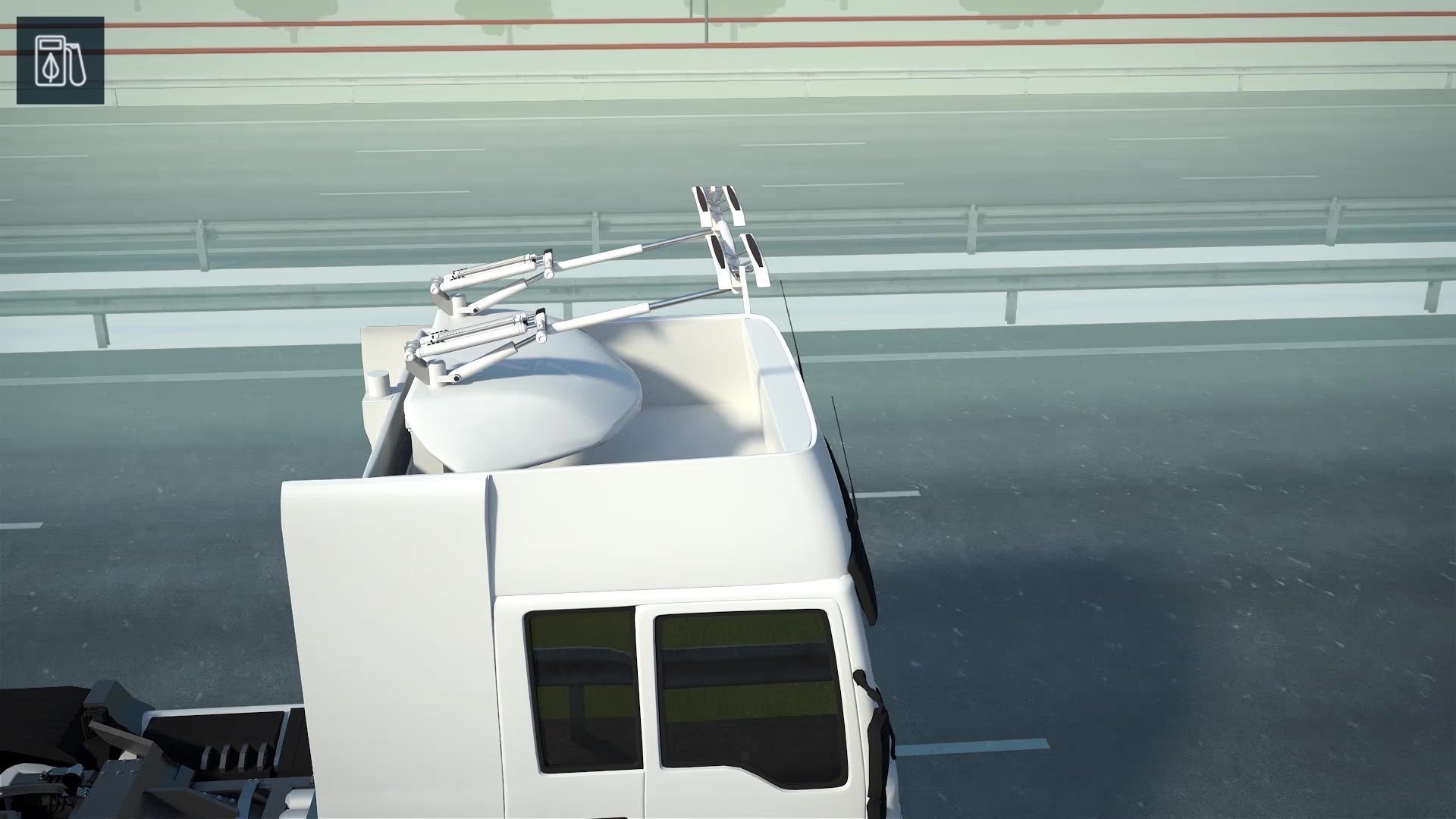
The active pantograph transmits the energy from the overhead contact lines to the electric motor of the eHighway truck. The pantograph can be easily connected to and disconnected from the contact wire at speeds ranging from 0 to 90 km/h. This is done either automatically or manually at the push of a button. Steering an eHighway truck connected to the overhead contact lines is no different to driving a diesel truck, as the active pantograph compensates for any shifts in position within the lane. The pantograph automatically disconnects in the event of evasive maneuvers or if the indicators are used.
Hybrid drive
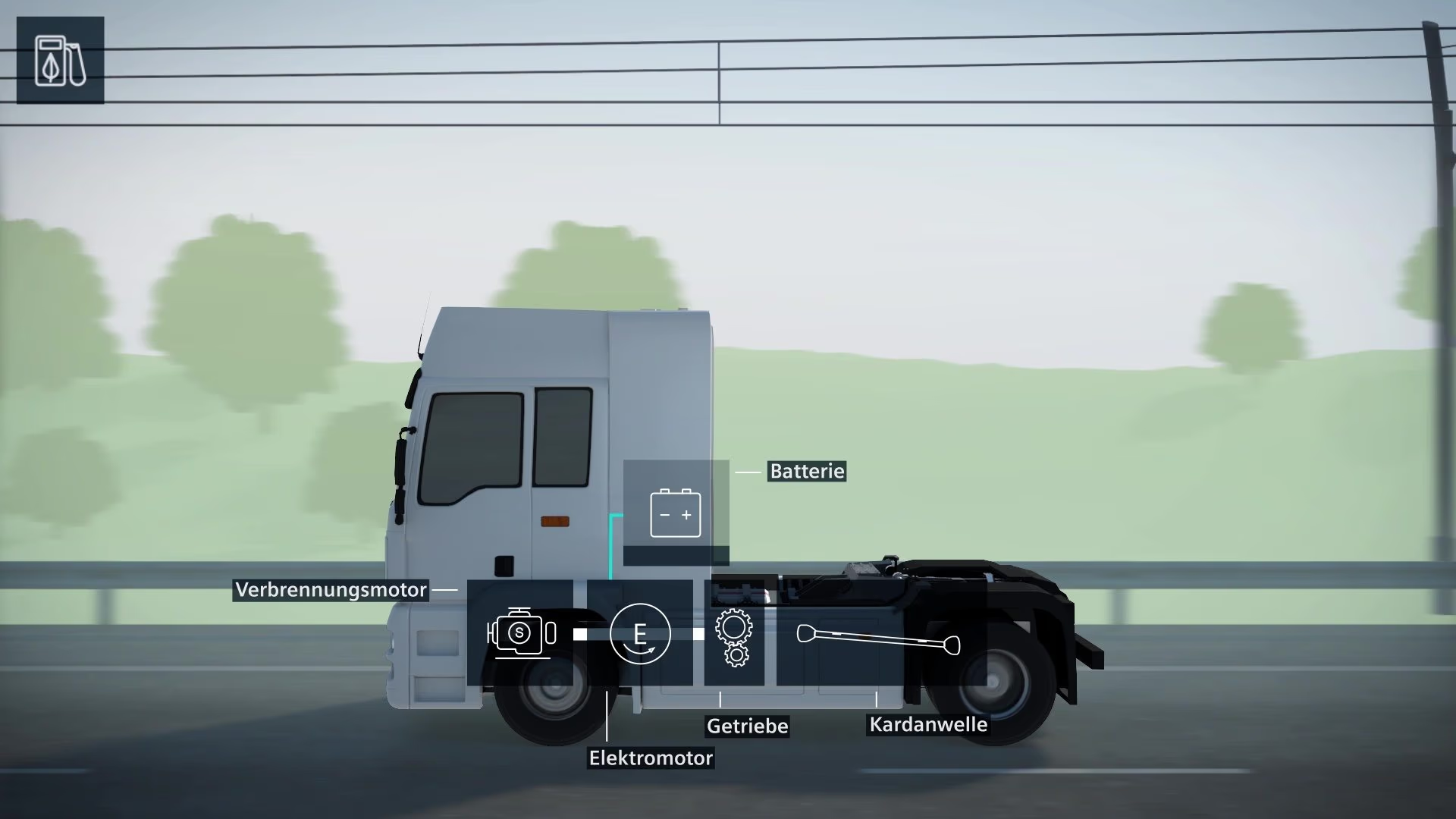
On electrified routes, the electric motors in eHighway trucks are powered via the overhead contact lines and the active pantograph. For remaining sections of road, the eHighway truck has a hybrid drive. There are no restrictions on the type of hybrid drive: depending on the application and customer requirements, serial and parallel concepts with internal combustion engines, battery solutions, fuel cells etc. can all be implemented. The electric motors of the eHighway trucks also enable recovery of the vehicle’s braking energy.

First eHighway in Germany
- Installation of an overhead contact line system for electrified freight transport on a ten-kilometer stretch of autobahn for the customer Hessen Mobil
- Dynamic charging infrastructure is built on the public A5 federal autobahn between Weiterstadt and Langen/Mörfelden
- Field testing of the eHighway system up to 2022, together with research partner TU Darmstadt and provider entega
- Scania supplying five overhead line hybrid trucks for this project, with a total of 15 being provided for German field testing
Benefits and highlights:
- Decarbonizing road freight transport
- Reduces local air pollution
- High energy efficiency lowers operating costs
- Rapid integration into existing infrastructure
- Proven technology ensures rapid employment
- Compatible with other drive technologies
- Trucks can operate completely electrically and at the same time charge their batteries while driving
- Can be scaled up quickly based on established supply chains
