More than 40 years of light rail in North America
As the market leader in the U.S. and Canada, Siemens Mobility has delivered more than 2,000 light rail vehicles and streetcars to 20 cities over the past four decades. We have come a long way since the first light rail vehicle took its inaugural trip in San Diego in 1981.
Almost 40 years later, Siemens Mobility manufactures modern high- and low-floor light rail vehicles at its Sacramento, California manufacturing facility powered by a 2.1MW solar installation. Our innovative rail designs include the first low-floor light-rail vehicles in North America introduced in 1996, and the new S700 light-rail vehicle design featuring 100% low-floor technology. These low-floor designs enhance operational efficiency and accommodate those with impaired mobility. Today’s low- and high-floor light rail vehicles built by Siemens Mobility combine industry leading innovations with time-tested design to provide best-in-class service for cities across North America.
Connecting neighborhoods
Light rail systems move passengers to their destinations faster and more comfortably, allowing them to skip traffic congestion and reduce air pollution. Our light rail vehicles connect neighborhoods with city centers running mainly on tracks separated from the roads, making travel easy, reliable and affordable.
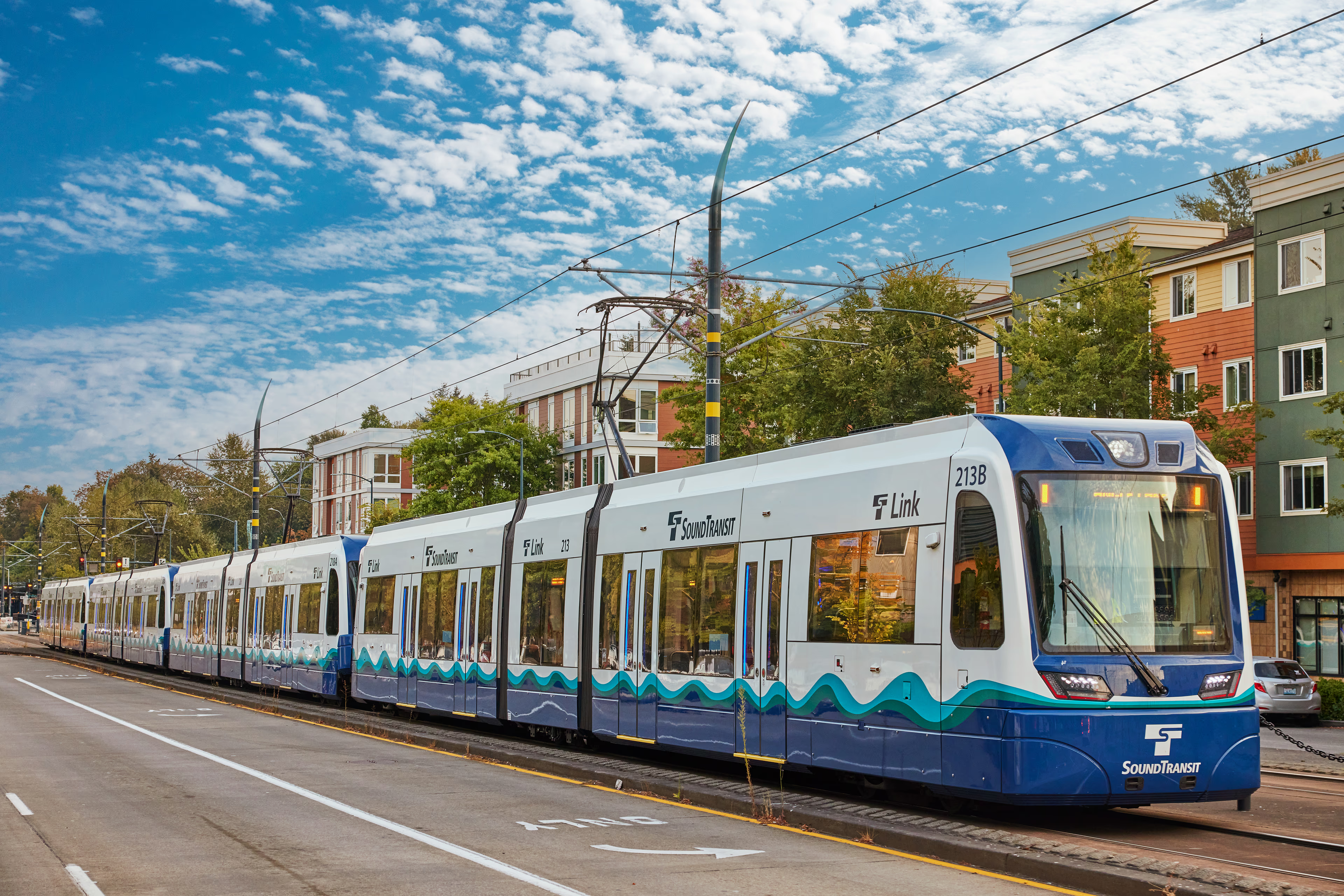
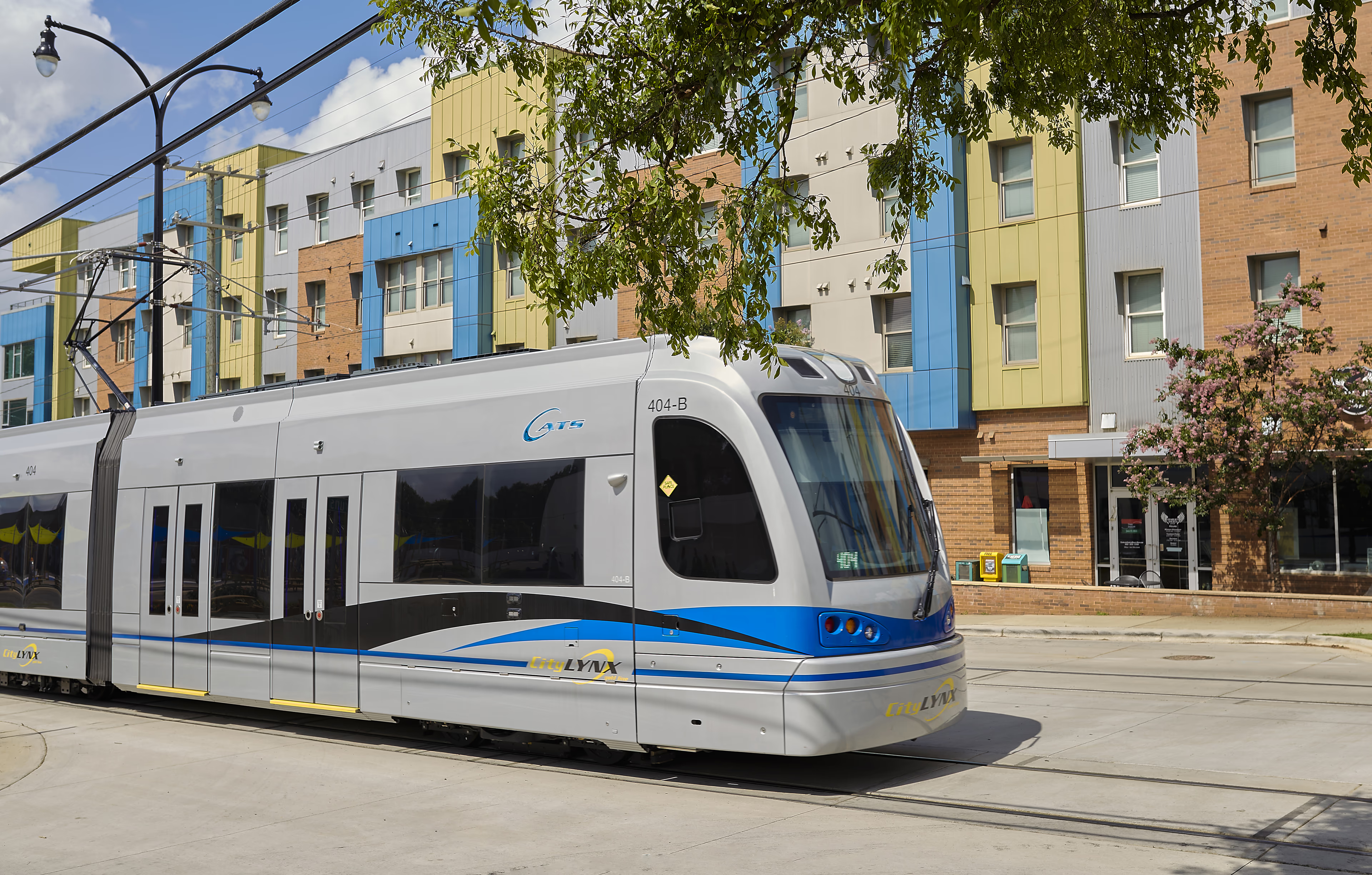
In addition, our streetcars share the street with private vehicles. Designed for a top speed of 35 mph (56 km/h), the streetcar offers an attractive alternative to traveling by car or bus in the city center. It also reduces downtown traffic and serves short local routes with frequent stops.
Our portfolio for urban mobility in North America
The S700 is the latest innovation in Siemens Mobility low-floor light rail technology. Proven in the U.S. market with more than 450 sold to 10 transit agencies across the country, the S700 builds on the success of the beloved S70 platform – with a new name, modern design and new passenger experience. Maintaining the many proven and reliable aspects of the beloved S70, the S700 features technological innovations throughout its vehicle design and an innovative open low-floor configuration that makes it one of the most accessible vehicles of its kind on the market. The end-to-end low-floor access for all passengers including those in the ADA community and better sightlines for security allows for noticeably improved passenger flow, comfort, safety and efficiency.
Reliability
The S700 has proven reliable in several demanding climates from Houston to Minneapolis, Phoenix to Seattle. A robust climate control system ensures customer comfort across a wide range of temperatures and humidity levels.
Maintenance
The S700 has been designed with ease of maintenance as a prime factor intended to minimize turnaround times. Several service-proven features are included in the S700 standard design that will make maintenance, cleaning and repairs easier – including simplified truck and tire maintenance to reduce downtime.
Smart Technology
A remote diagnostic tool and rail remote service desk allows the end user remote access to view active and historic vehicle fault data. Data is sent in real-time when traveling on the alignment, at station platforms or vehicle staging locations. On-board energy storage systems can also provide energy to the propulsions system via a roof mounted unit if desired.
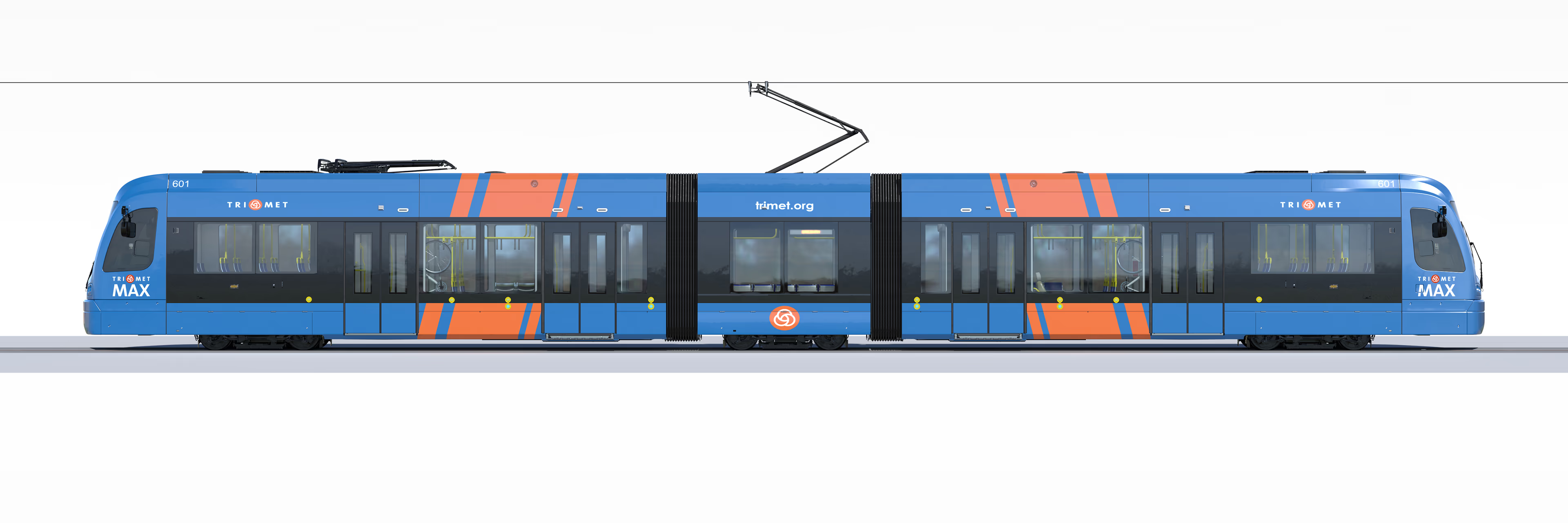
Vehicle
- Three-section low-floor light rail vehicle
- Meets the strict U.S. requirements for accessibility and safety (fire protection, body strength)
- Continuous low floor vehicle design for 70 percent of the length of the passenger compartment
- Vehicle Length: 81.4 ft – 95.4 ft (24.8 m – 29.1 m)
- Vehicle Width: 8.7 ft (2.65 m)
- Can form train consists of up to five vehicles by means of fully automatic couplers
- Overhead line: 600 V DC, 750 V DC, 1,500 V DC
- Maximum speed: 65 mph (105 km/h)
Bogie
- Two conventional motor bogies with axles, one trailer bogie with idle wheels
- Track gauge: 1,435 mm
- Optional active suspension for load-dependent control of the entrance level at the platform
- Motorization: 66% (four of six axles are powered)
- Full-suspension transverse drive arranged parallel to the axle
Body
The body has a lightweight construction to reduce total weight. However, it takes into account the especially strict U.S. guidelines regarding static strength, crashworthiness, and fire protection.
Streetcars are reviving American cities, connecting bars, restaurants and pedestrian areas along the streetcar line. This promotes cultural vitality and fulfills the new desire for urban proximity and walkable neighborhoods.
The S700 streetcar is based on our proven S700 light rail vehicle platform. Thanks to their design these vehicles can also be used as streetcars if desired by the transit agency. It offers passengers easy, barrier-free access and can be converted to a light rail vehicle for future expansion.On-board energy storage systems provide energy to the propulsions system via a roof mounted unit.
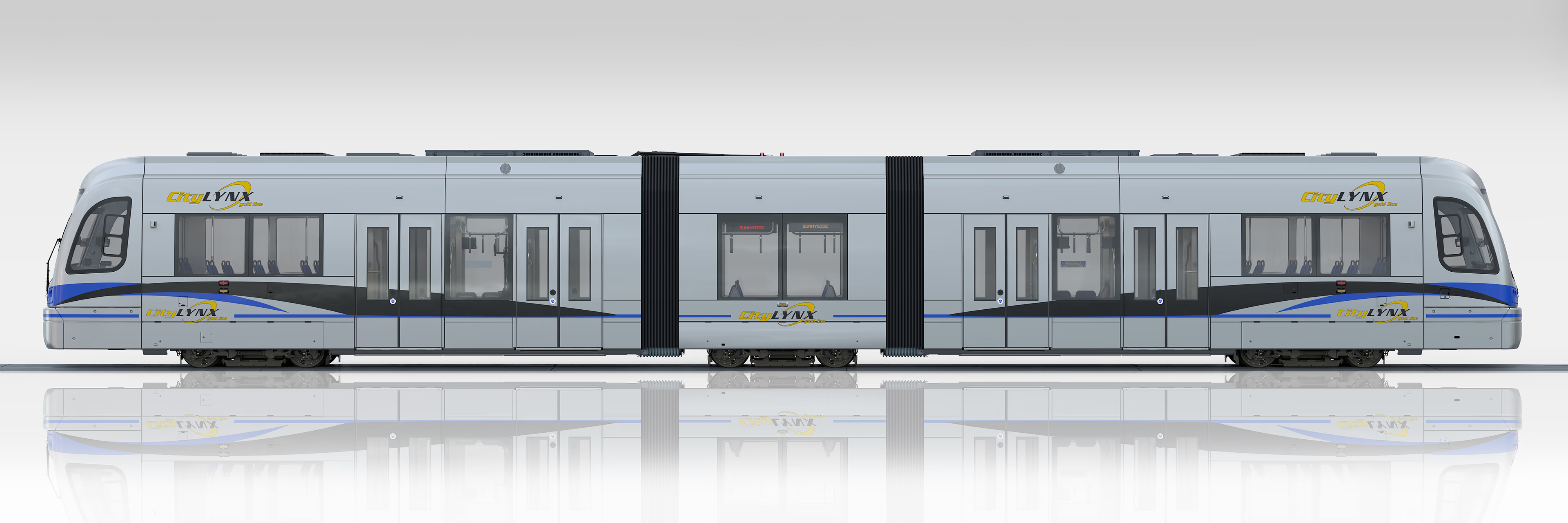
Vehicle
- Three-section low-floor streetcar
- Meets the strict U.S. requirements for accessibility and safety (fire protection, body strength)
- Continuous low floor vehicle design for 70 percent of the length of the passenger compartment
- Vehicle length: 85 ft – 90ft (25.9 m – 27.4 m)
- Vehicle width: 8.7 ft (2.65 m)
- Overhead line: 750 V DC
- Maximum speed: 56 km/h (35 mph)
Bogie
- Two conventional motor bogies with axles, one trailer bogie with idle wheels
- Track gauge: 1,435 mm
- Optional active suspension for load-dependent control of the entrance level at the platform
- Motorization: 66% (four of six axles are powered)
- Full-suspension transverse drive arranged parallel to the axle
Body
The body has a lightweight construction to reduce total weight. However, it takes into account the especially strict U.S. guidelines regarding static strength, crashworthiness, and fire protection.
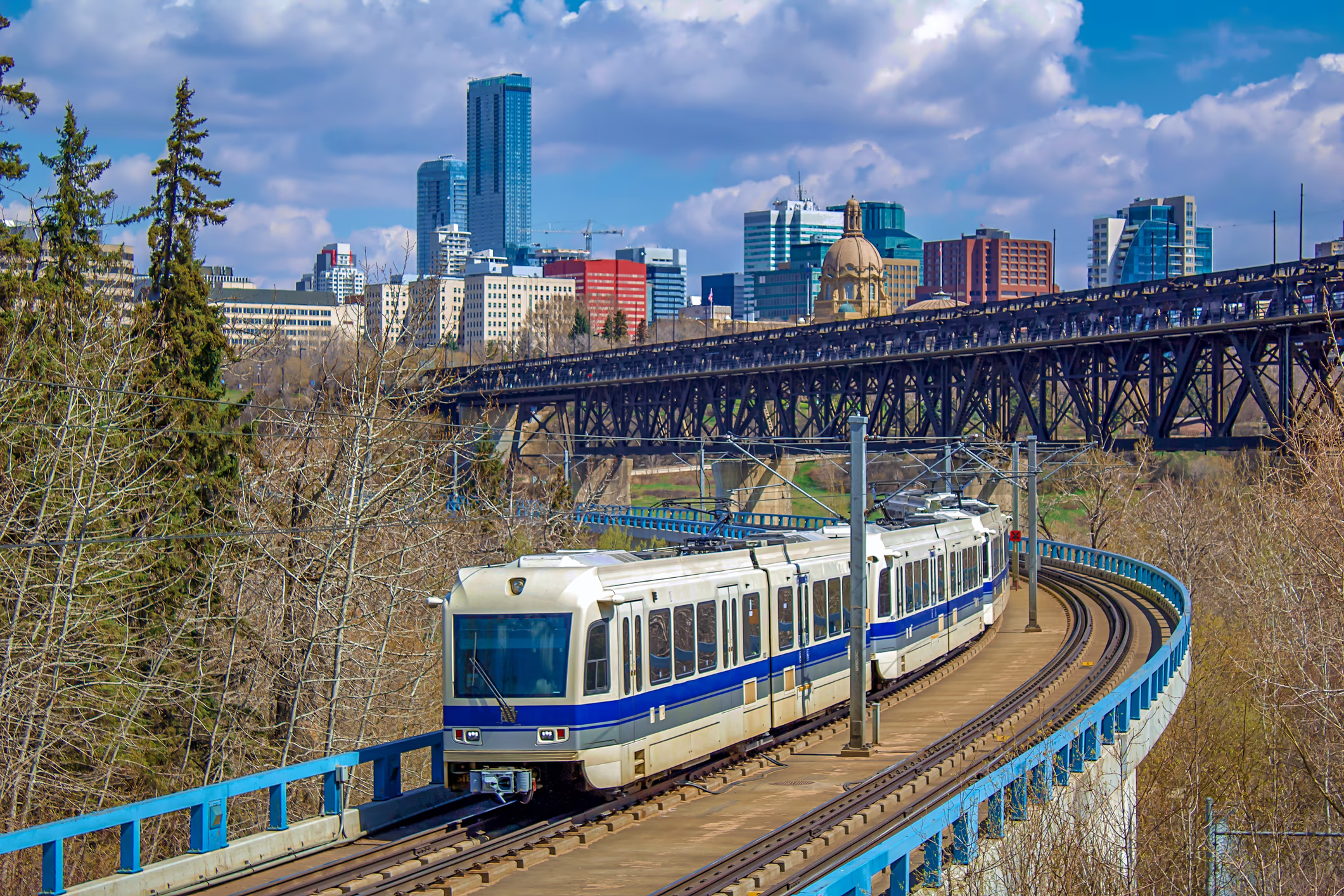
The S200 platform is the newest development in high-floor technology – using the already proven construction and components of the S70 platform. In October 2013, the city of Calgary in Alberta, Canada ordered new S200 vehicles to replace their aging fleet, which continues the more than 30-year success story of Siemens Mobility's high-floor vehicles in Calgary.
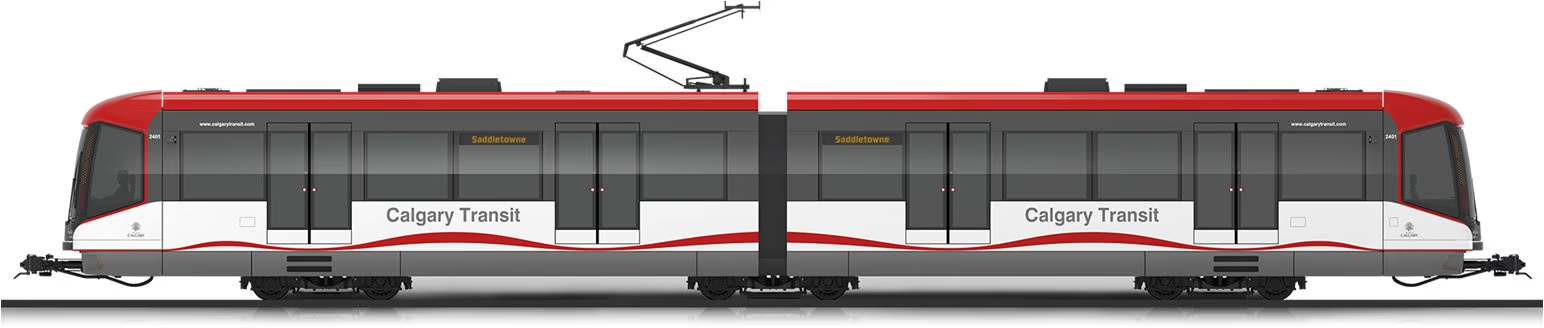
Calgary vehicle
- High-floor light rail vehicle with a high floor area of 982 mm (3.2 ft)
- Vehicle length: 25.80 m (84.6 ft)
- Vehicle width: 2.65 m (8.7 ft)
- Passenger capacity: 60 seats, approx. 247 total passengers
- Traction supply voltage: 600 V DC
- Maximum speed: 80 km/h (50 mph)
Technical highlights
- Proven driver protection concept in accordance with U.S. crash standard
- Optimized passenger compartment concept with full ADA accessibility
- Specific features for the extreme climatic conditions in Calgary, e.g., floor heating in the passenger compartment, triple-insulated windows, and increased insulation
Siemens Mobility’ latest technology in high-floor vehicles makes travel easy, reliable and accessible. With the capability to accommodate high and low boarding and operate in multiple vehicle consists, the Muni LRV4 is there to help connect the great places throughout San Francisco. This vehicle is a hybrid creation, combining the best elements from both of our successful high-floor and low-floor light rail platforms.

San Francisco vehicle
- High-floor light rail vehicle with entrance height of 864 mm (34 in)
- Vehicle length: 75 ft (22.87 m)
- Vehicle width: 8.7 ft (2.65 m)
- Passenger capacity: 60 seats, approx. 203 total passengers
- Traction supply voltage: 600 V DC
- Maximum speed: 80 km/h (50 mph)
Technical highlights
- The operators cab features large side windows and a wrap-around console for improved ergonomics and the operator’s seat is positioned on the vehicle’s centerline for increased visibility.
- This vehicle is especially energy-efficient. The light-weight drive system recuperates braking energy, and the electro dynamic braking to zero-speed reduces brake pad usage and life cycle cost.
- The LED lighting system uses up to 40 percent less electricity than standard incandescent and fluorescent lighting.
- The smart HVAC controls save energy and reduce operating costs.
Technical highlights
- Proven driver protection concept in accordance with U.S. crash standard
- Optimized passenger compartment concept with full ADA accessibility
- Specific features for the extreme climatic conditions in Calgary, e.g., floor heating in the passenger compartment, triple-insulated windows, and increased insulation