Autonomous mobility
Autonomous Mobility is an essential building block of the digitalization of rail traffic. Our proven innovations help you to maximize network capacity, improve punctuality and realize substantial energy savings.
Ready for the next step in mobility?
Look forward, move forward: with autonomous mobility that is ready for implementation today

Further your operations
Gear up for a boost to your bottom line with our solutions for autonomous mobility. Built on proven innovations and our already mature expertise in the field, we offer a broad scope of what is possible – all the way from semi-automated to driverless to fully unattended autonomous driving.
The benefits: reduced operating costs thanks to improved energy efficiency and network use as well as more profits with improved passenger throughput and capacity.
Best of all: a step towards autonomous mobility is a step towards the future – thanks to future-proof offerings that will lower your lifecycle costs over time.
In real numbers: maximized network capacity by up to 30%
Please your passengers
Set the stage for happier passengers with smooth, safe journeys with fewer disruptions and more reliability. The automation of your mobility networks means that you can deploy more trains, trams or metros as they are required – resulting in more frequent, less crowded public transport options.
Connected and automated mobility systems also offer passengers better options for the first and last mile, customized to real-time demand.
In real numbers: more punctuality by up to 15%

Do right by the planet
And finally, move towards a sustainable future with autonomous driving. The improved energy efficiency of automated transport systems means you can reduce your footprint on the planet’s resources.
What’s more, the improved passenger experience offered by autonomous mobility adds to the attractiveness of public transport – thus encouraging the switch from unsustainable private transport options to low-carbon public transport options.
This reduces air and noise pollution as well as congestion on roads in the long run.
In real numbers: energy savings of up to 30%
Our references for connected and automated mobility systems
S-Bahn Hamburg - Pioneering digital rail operations in Germany
More punctual trains, more stable timetables, greater sustainability and greater travel comfort: all this is made possible by automation of rail operations. The digital S-Bahn in Hamburg pilot project is the perfect example of how new technology can improve urban transportation in growing cities.
The technological foundation for this success story is ATO (Automatic Train Operation) over ETCS (European Train Control System). With this technology: the railway operator can automate the starting, acceleration, cruising, coasting, braking, and stopping of the trains.
But automated doesn’t automatically mean driverless. In Hamburg, a driver continues to be on board – but only needs to intervene if there are disturbances or irregularities.
- Read more about the case
- Learn more about the technology

Thameslink - Modernizing rail travel in southern England
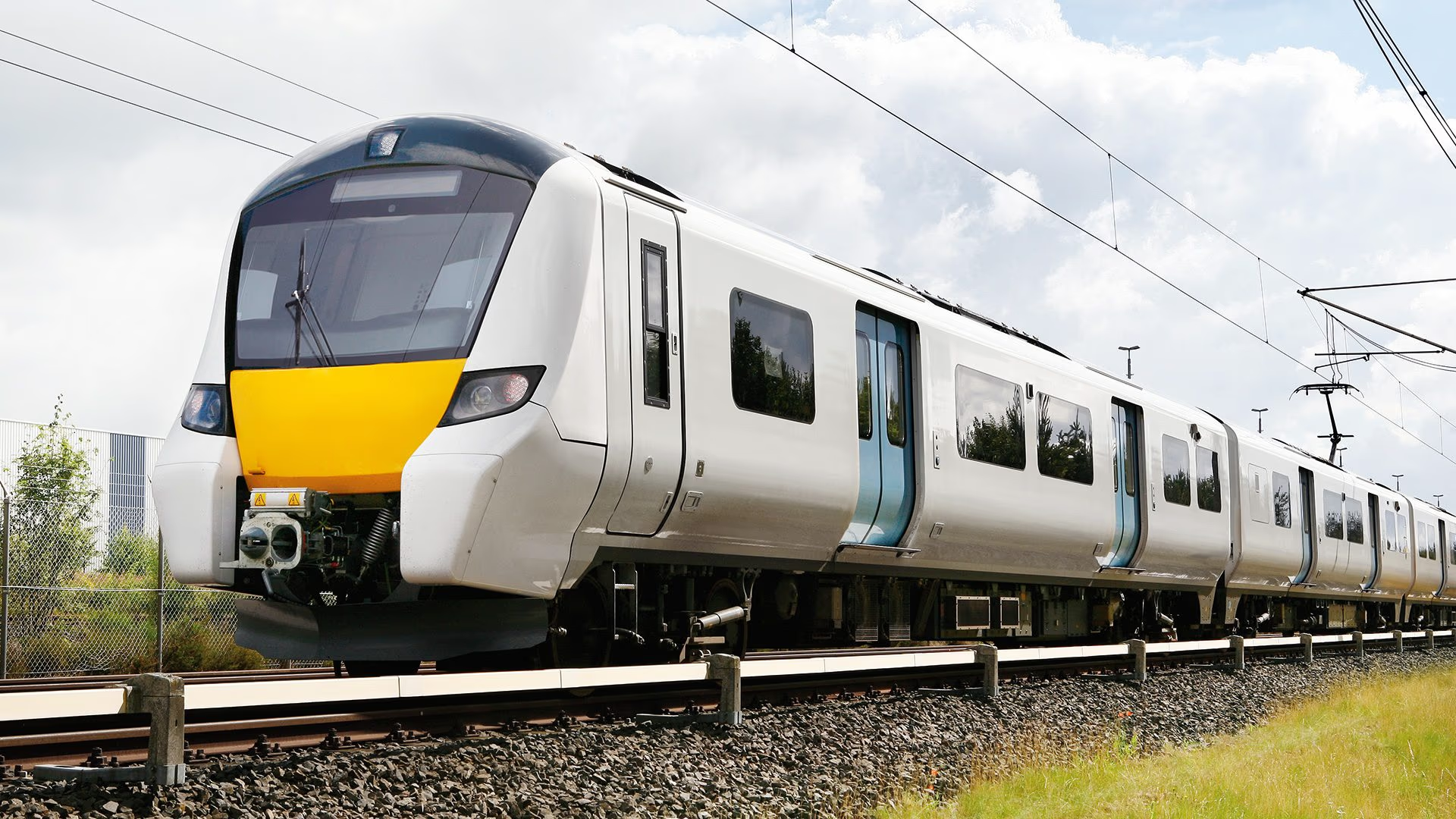
The world’s first operational application of ATO over ETCS: this success story came to be as the UK’s Department for Transport (DfT) looked to modernize their lines and fleets.
The system, implemented by our teams at Siemens Mobility, operates in conjunction with existing infrastructure and enables short headways between the trains – every train follows an optimized speed profile and adheres to a precise schedule, stopping accurately at platforms and departing again without delay.
This advanced vehicle control system, which adjusts the train’s speed based on route utilization, paired with the Desiro City makes energy savings of up to 50 percent entirely possible.
The outcome: more punctual, more sustainable and less crowded trains for over half a million people commuting to work in London every day.
- Learn more about the technology
- Discover the trendsetting train family
SBB Switzerland - Topping a new milestone in the Alps
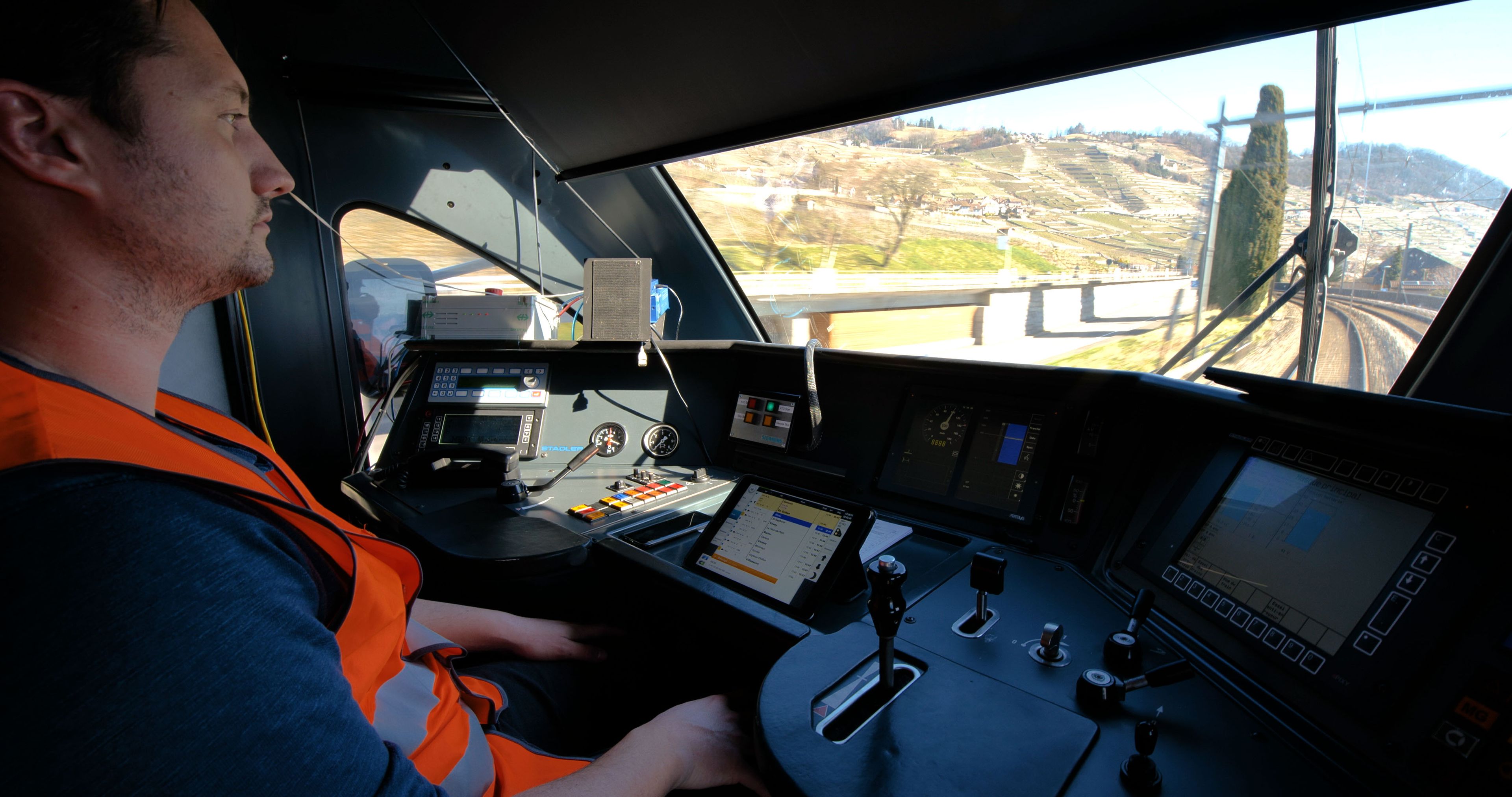
Imagine a scenario in which train drivers can activate automatic train control with the push of a button at a train station or anytime during a journey. The train would then move smoothly and automatically to the next stop, but the driver could take back control at any time.
Such a scenario is entirely realistic – as proven in our test project with the Swiss Federal Railways (SBB). The highlight of this test project is an onboard ATO unit that lets operators use their currently installed version of ETCS with ATO, instead of having to upgrade to a future version.
In addition to automatic door control, the project also proved how autonomous driving (with automatic approach, acceleration, braking, and precise driving along monitored brake curves) can ensure a very high level of passenger comfort.
- Read more about the case
- Learn more about the technology
ViP Potsdam - Riding the world’s first autonomous tram
A tram with no driver? That recognizes obstacles and handles complex situations correctly? That responds to traffic signals and people and vehicles crossing its path?
This implementation of an autonomous tram in the German city of Potsdam grabbed headlines when it was launched in 2018 because it proved the feasibility of autonomous driving in a complex open system involving other road users.
Behind the success of the project: a highly innovative rail perception system that fuses data captures from three different sources – lidars, radars and cameras – to create a profound 3D image of the tram’s surroundings.
Following this, we are currently working with partners on automating a depot with the autonomous tram. The goal: the automation of time-intensive marshaling and servicing processes to take the load off employees and ensure a high level of vehicle availability.
- Read more about the case
- Learn more about the technology
- Discover the tram that fits your city

Klang Valley Metro - Reducing traffic congestion in Kuala Lumpur
Kuala Lumpur: capital of Malaysia and one of the fastest-growing metropolises in Asia. It also has an enormous concentration of private cars – resulting in a great deal of environmental pollution over the years.
Key to solving this urban challenge were new metro routes to entice people to leave their cars at home and rely on public transport.
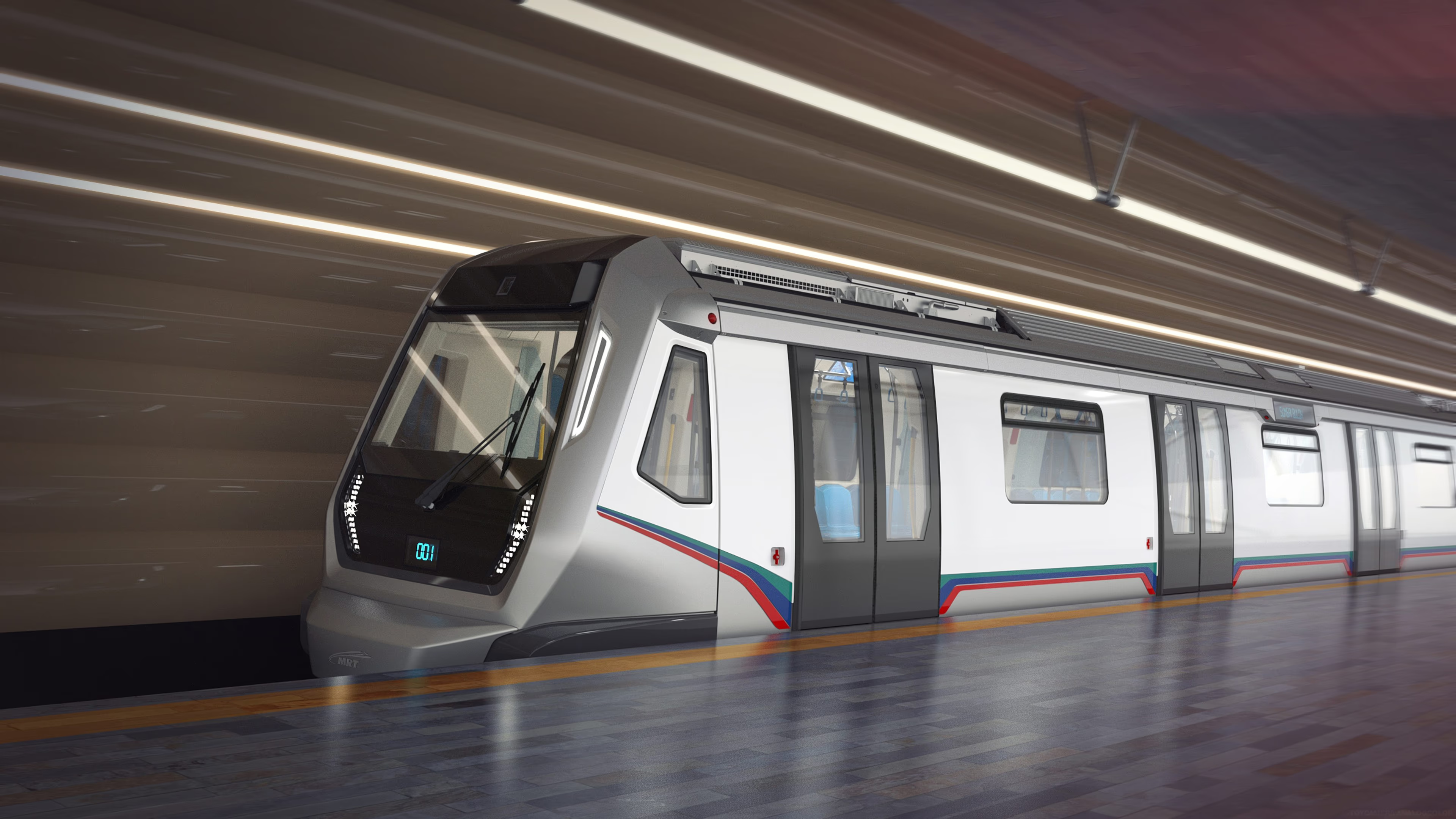
This is where we came into play – with 58 new, driverless trains for the Klang Valley Metro project.
Fully automated, the futuristic Inspiro metros went into service in December 2016 and supports unattended train operation (GoA 4) along the entire 51-kilometer-long Sungei Buloh-Kajang Line.
- Read more about the case
- Discover our metro