Perception systems for railways
Two complementary railway perception systems - ODS-P on platforms and ODS-T on trains, which use sensors to monitor tracks and surrounding areas in real time. The architecture, redundancy and data-driven evaluation underpin reliable operation across the network.

Two complementary railway perception systems - ODS-P on platforms and ODS-T on trains, which use sensors to monitor tracks and surrounding areas in real time. The architecture, redundancy and data-driven evaluation underpin reliable operation across the network.
Advancing safe and intelligent railways with perception systems
Modern railway networks depend on reliable environmental awareness to ensure safe and uninterrupted operation. In general, there are two complementary systems. The Obstacle Detection System for Platforms (ODS-P) monitors the track area along the platform with sensors installed on the infrastructure side. The Obstacle Detection System for Trains (ODS-T) provides perception capability mounted on the vehicle. Depending on customer-specific use-cases, either a single application of ODS-P or ODS-T can be deployed or a combination of both supports safe operation.
Obstacle Detection System for Platform (ODS-P)
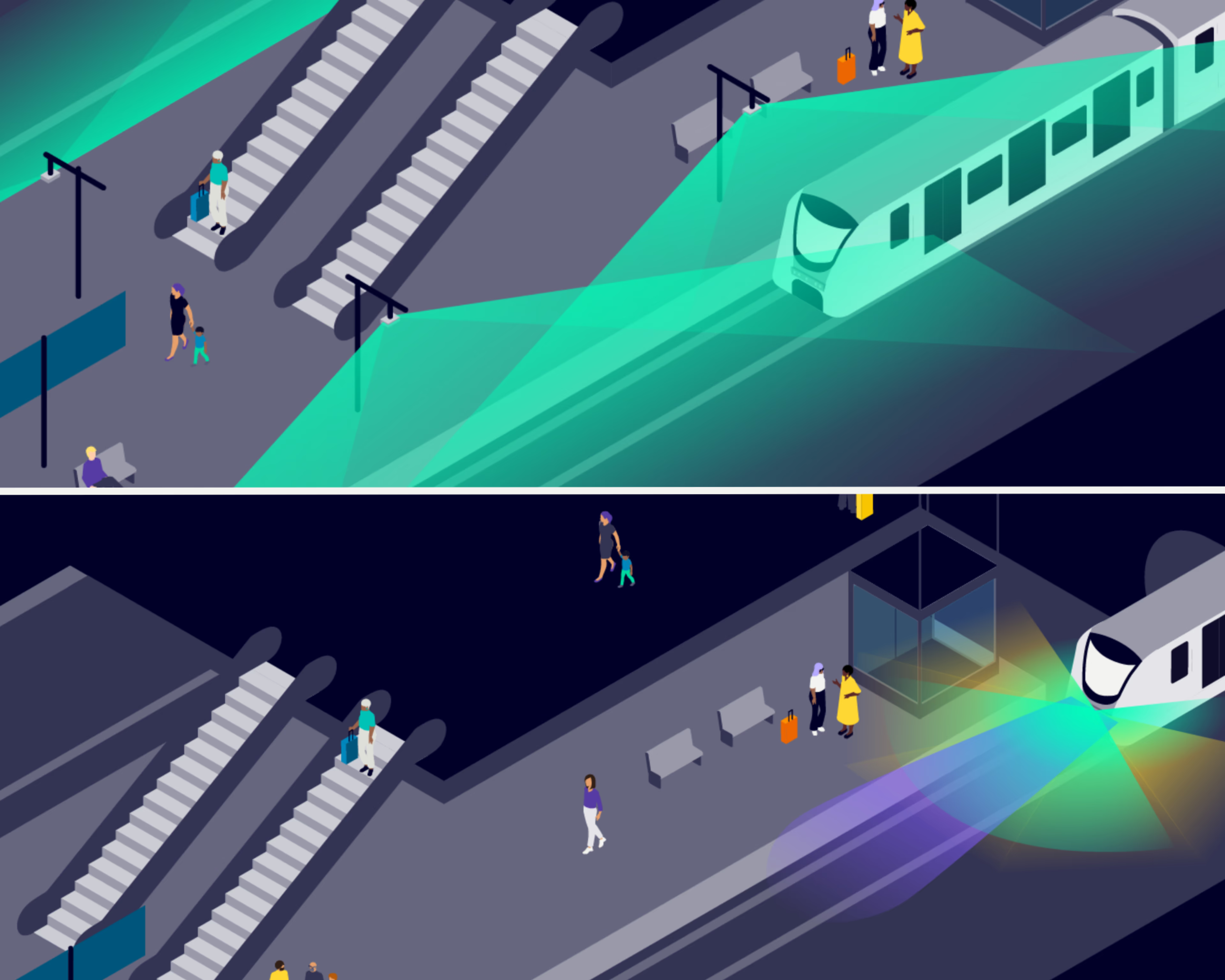
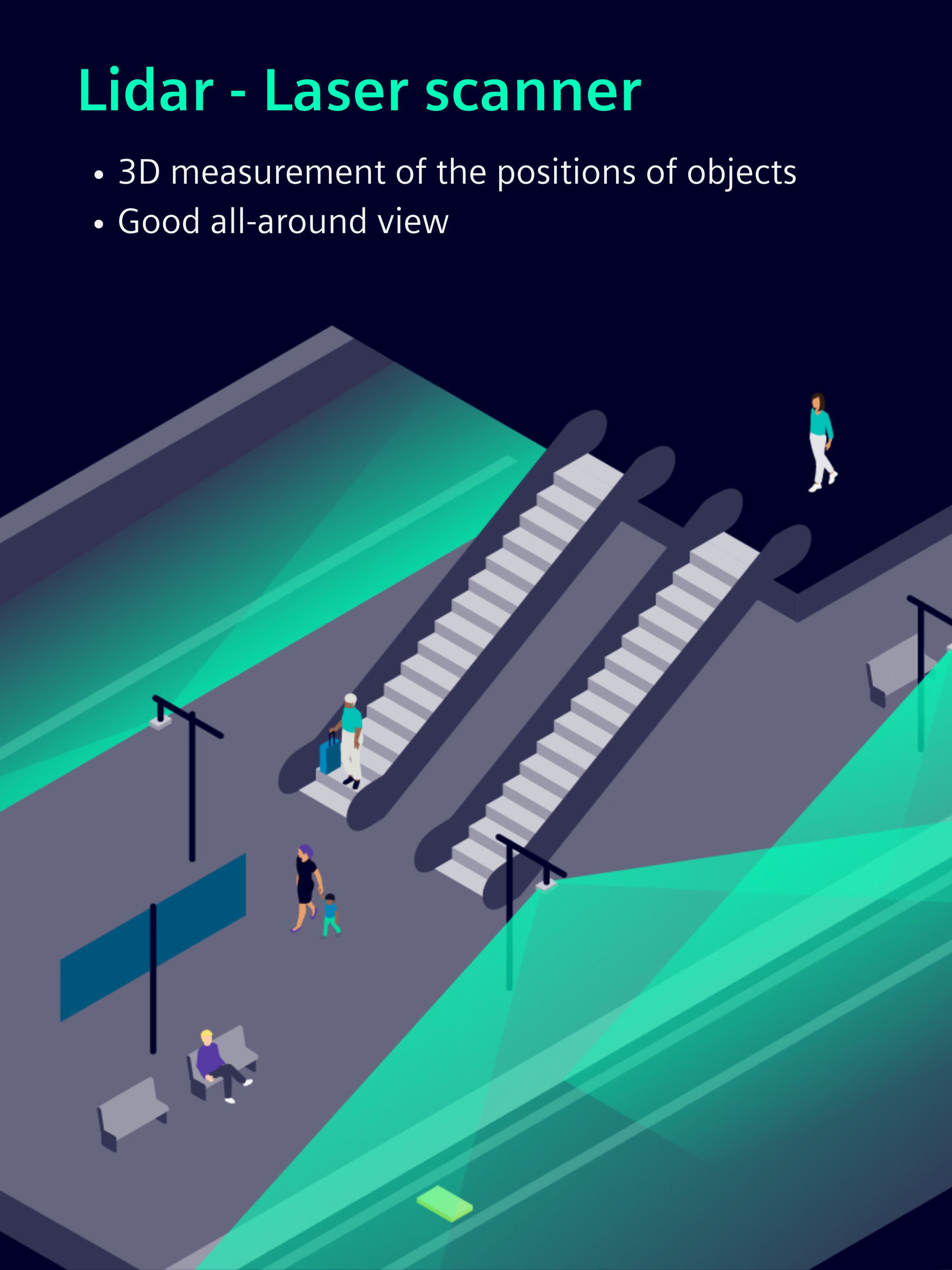
ODS-P monitors the track area along the platform using high-resolution Light Detection and Ranging (LiDAR) sensors. These sensors generate precise three-dimensional point cloud data of the environment, enabling continuous monitoring of danger zones. To ensure reliable performance in challenging conditions such as rain, fog, snow, or strong sunlight, the system design incorporates multiple sensors strategically positioned along the platform. Their placement and overlapping coverage significantly minimize the impact of environmental factors, delivering consistent detection accuracy even when visibility is compromised.
The resulting point cloud is processed in real time by a backend system that separates general visual computation from safety related decision making. This separation supports cybersecurity requirements and ensures that safety decisions remain protected.
ODS-P classifies detected objects on the track, distinguishes trains from foreign items such as humans/newspapers/boxes etc., and evaluates whether a situation presents a safety risk. When a hazard is detected, the system communicates directly with the Communications-Based Train Control system, known as CBTC, and can trigger safety relevant actions. Each platform is supervised with closed-circuit television (CCTV) cameras, so operators can view the exact alarm location together with live and historical video in the supervisory system. Video and sensor information can be stored for investigation and evidence in compliance with local regulations and guidelines.
Redundant design with automatic failover
ODS-P is designed for continuous availability. Critical components are duplicated in a parallel processing setup, which ensures that functions continue seamlessly if a component fails. Local processing ensures operation during interruptions of central systems. Continuous health monitoring and early fault detection further increase reliability. The architecture is designed to integrate future sensor generations without requiring structural changes.
Obstacle Detection System on Trains (ODS-T)
ODS-T adds onboard perception capabilities by equipping the train with sensors such as cameras, LiDAR –laser scanners, and/or radar technology. The fusion of sensors is particularly done to combine the strengths and weaknesses of all the three sensor technologies and creates a forward-facing perception field that supports the detection of persons, debris, animals, or foreign objects within the relevant monitoring area.
The system evaluates sensor information and classifies detected objects to determine whether the situation requires attention. When a relevant object is detected, ODS-T can generate alerts or trigger safety relevant actions. Video and sensor information can be stored for further investigation and assessment. The hardware is engineered for vibration, varying lighting conditions, outdoor exposure and the dynamic environments typical for railway operations.
Field testing and sensor evaluation for Obstacle Detection Systems
To validate perception performance under real-world conditions, we currently conduct extensive field testing in daily operation for both ODS-P (platform-based) and ODS-T (train-based) systems. These tests observe how sensing technologies behave across diverse environmental scenarios, including rain, fog, snow and varying lighting conditions.
During testing, the system stores raw sensor data as well as detection data while operating under normal service conditions. This data-driven approach enables us to evaluate sensor behavior, refine placement strategies, optimize system settings, and confirm detection robustness throughout all seasons.
The sensor platform combines LiDAR, radar, and camera-based perception to detect relevant objects at different distances, ensuring comprehensive coverage for both station platforms and open tracks. The collected data helps improve sensor placement, fine-tune system parameters, and confirm long-term stability.
These insights pave the way for advanced assistance functions and form the technological foundation for future automated train operation.
Data driven evaluation for future product design
Insights from these testing activities feed directly into the ongoing enhancement of both ODS-P and ODS-T.
The collected data supports performance evaluation, long term stability checks and assessment of sensor suitability for future railway applications. Insights from these testing activities flow directly into the continued improvement of both ODS-P and ODS-T.
Two perception capabilities
The Obstacle Detection System for Platform and the Obstacle Detection System on Trains form a consistent perception framework for railways. The platform-based system monitors the track area at the station, while the onboard system extends awareness from the vehicle perspective. This approach supports safe, reliable, and modern railway operation.