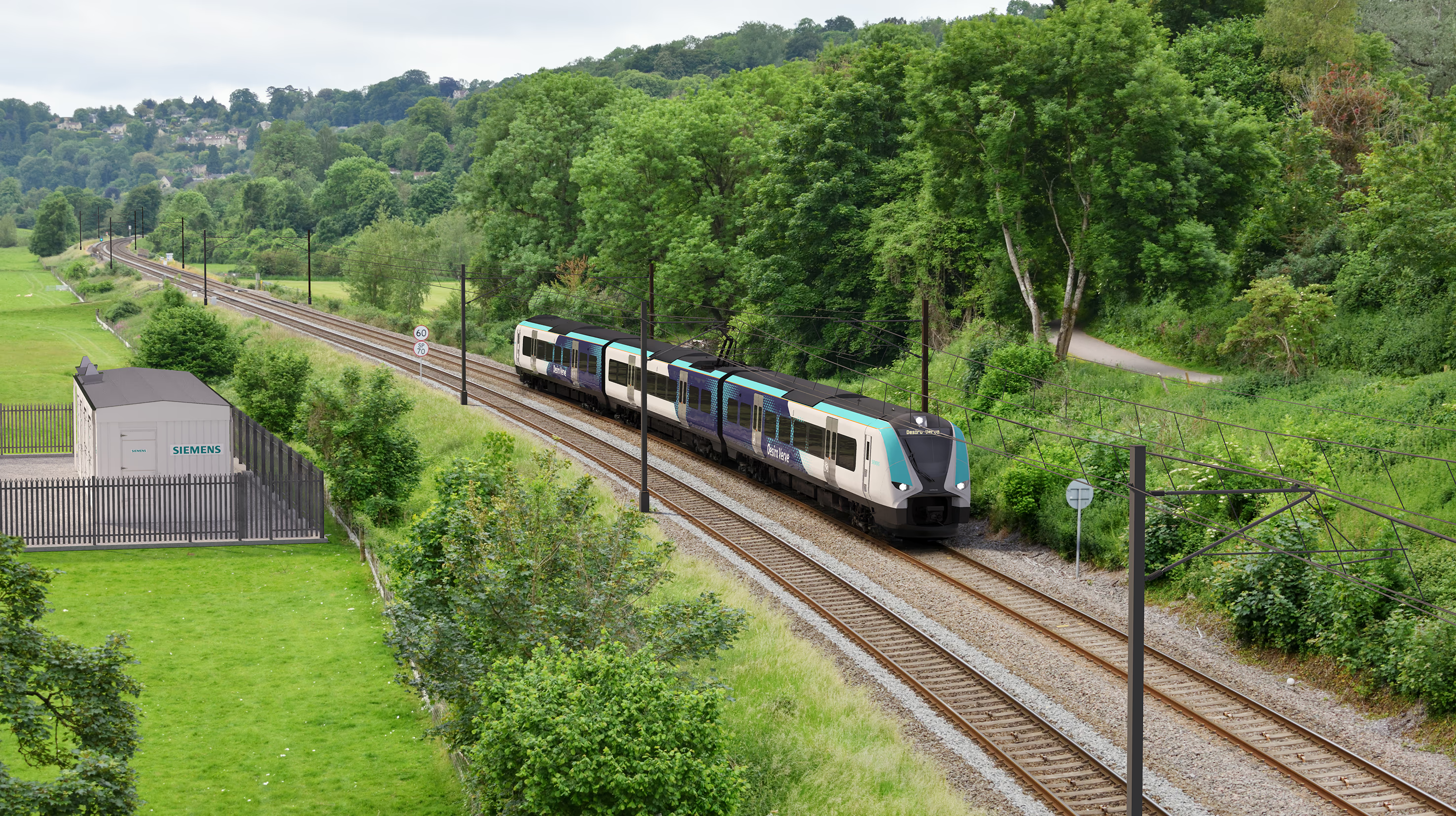
Cutting-edge battery trains transform UK rail
What does replacing diesel trains mean for Britain?

million tonnes of CO₂ savings

minutes to recharge battery trains
The challenge
Rail is the greenest form of transport. But an estimated 29 per cent of Britain’s current fleet is solely run on diesel fuel, further contributing to climate change.
The solution
Our battery bi-mode trains can replace ageing diesel fleets for train operators. We have reviewed routes across the country and identified strategic points along these routes where discontinuous electrification overhead line equipment could be installed.
Only small sections of track would need to be electrified, with fast-charging at key points on routes supplied from the domestic grid via our innovative Rail Charging Converters (RCCs).
The impact
This solution is a much quicker and cheaper way to replace diesels on routes that can't be electrified fully any time soon.
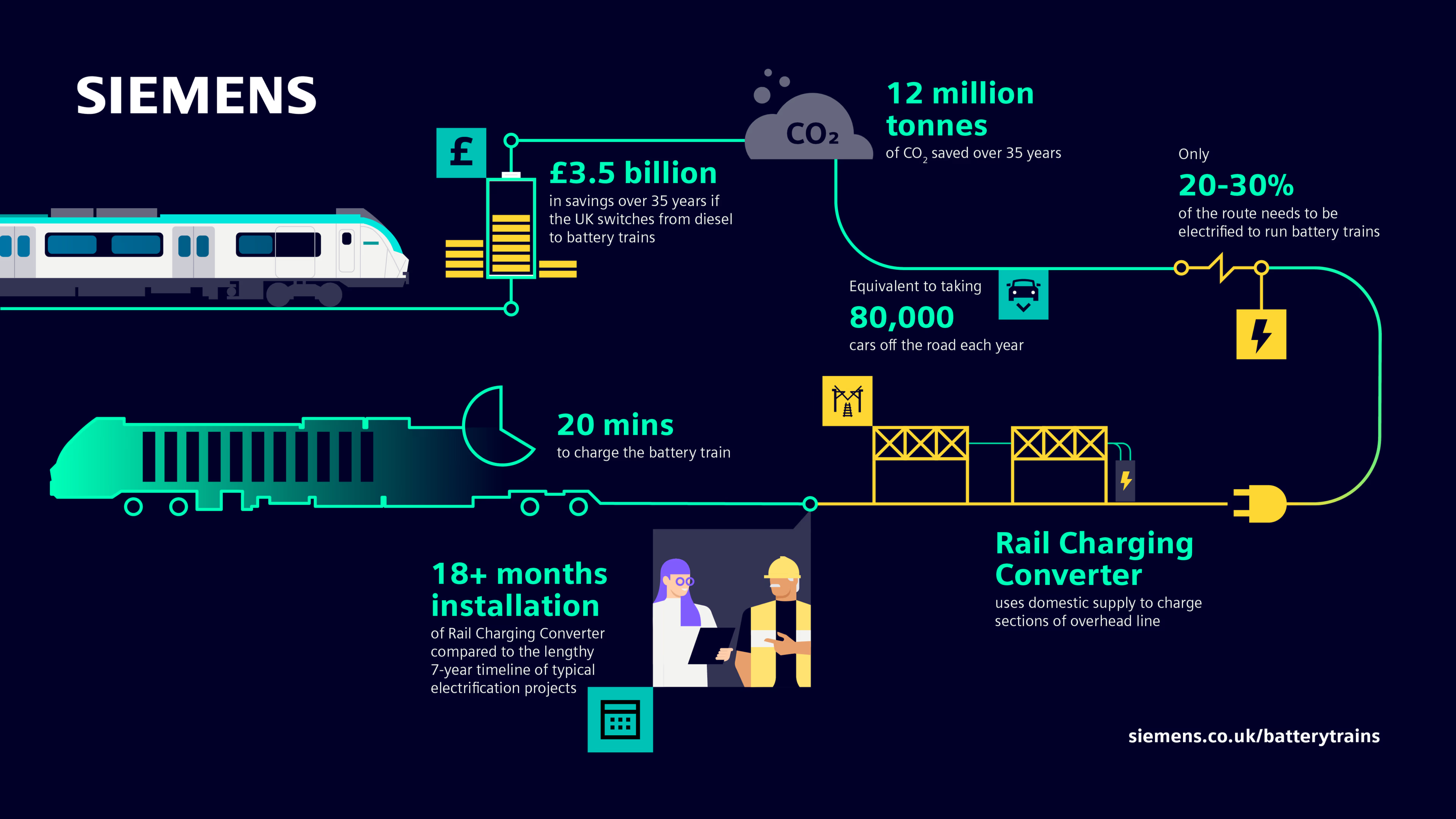
It can save 12 million tonnes of carbon emissions and £3.5 billion over 35 years across 7 areas, supporting the Government’s aim of removing diesel-only trains from Britain’s railways by 2040.
The technology behind our battery bi-mode trains
Our battery trains, which would be manufactured at our state-of-the-art facility in Goole, East Riding of Yorkshire, offer an innovative approach to rail transportation.
Powered by overhead wires on already electrified routes, our trains seamlessly switch to battery power in areas where there are no wires. That means only small sections of the routes or particular stations have to be electrified with overhead line equipment (OLE), making it much quicker and less disruptive to replace diesel trains compared to full electrification. Our cutting-edge Rail Charging Converter (RCC) makes it possible to plug directly connecting to the domestic grid, potentially reducing delivery times for OLE to as little as 18 months, compared to the traditional seven year time frame.
Extensive modeling using advanced train performance simulation software has demonstrated the superiority of our battery bi-mode trains over diesel or part-diesel powered trains. With only 20-30% of a line requiring electrification, our trains, featuring Lithium Titanate Oxide battery chemistry, can rapidly charge their batteries in just 20 minutes while moving on electrified sections or during stops at stations.
By embracing this transformative approach, we estimate a staggering £3.5 billion in savings and a remarkable reduction of 12 million tonnes of CO2 emissions over a 35-year period. This is equivalent to removing 80,000 cars from our roads or creating a forest spanning the entire area of the Isle of Man.

Our first battery train fleet is now in service
Siemens Mobility’s first battery train fleet is already in passenger service in Germany. These highly advanced trains are running in the Ortenau region and will save 1.8 million litres of diesel per year when operating throughout the whole network. Stay tuned as we embark on our journey to bring this groundbreaking technology to the UK. Together, let's pave the way for a cleaner, more efficient, and sustainable future for the UK's railway network.