
Teaching trams to drive
During InnoTrans 2018, Siemens Mobility put the world's first autonomous tram on the rails.
Riding the autonomous tram
Life isn‘t programmable. The future of trams is.
Pedestrians, crossing vehicles, right of way: Trams have to react quickly and correctly to many challenges. Smart technologies can help anticipate such situations and handle them safely – as successfully demonstrated during real-life prototype testing in Potsdam.
Here, Siemens was using a system completely developed for autonomous driving trials. Local tram operator Verkehrsbetrieb Potsdam (ViP) teamed up with Siemens to enable the prototype testing.
The experimental tram used to demonstrate autonomous driving at the world premiere is not designed for commercial use. The project aims at identifying the technological challenges of autonomous driving under real-life conditions, then developing and testing solutions for them. A continuation of the cooperation is already being discussed with ViP.
The autonomous tram must face the challenges of an open infrastructure. Highly complex algorithms constantly assess the ride and provide a prognosis on future traffic condition developments.
Mastering real-life challenges

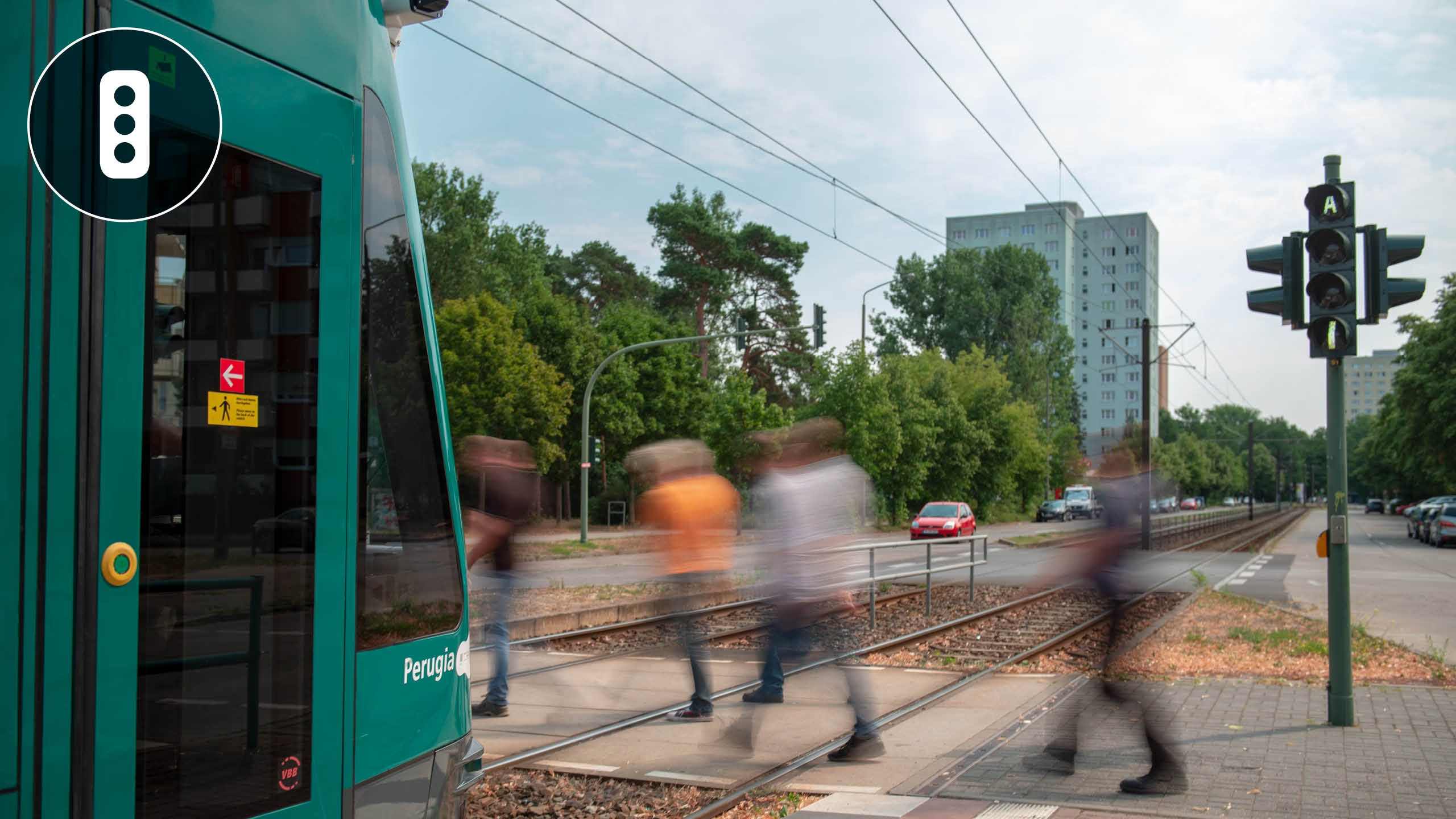
Approaching a signal
During the test rides, the system took control of the vehicle on a segment of Potsdam's tramway network. Tasks included interpreting the tram traffic lights and halting at the stops.
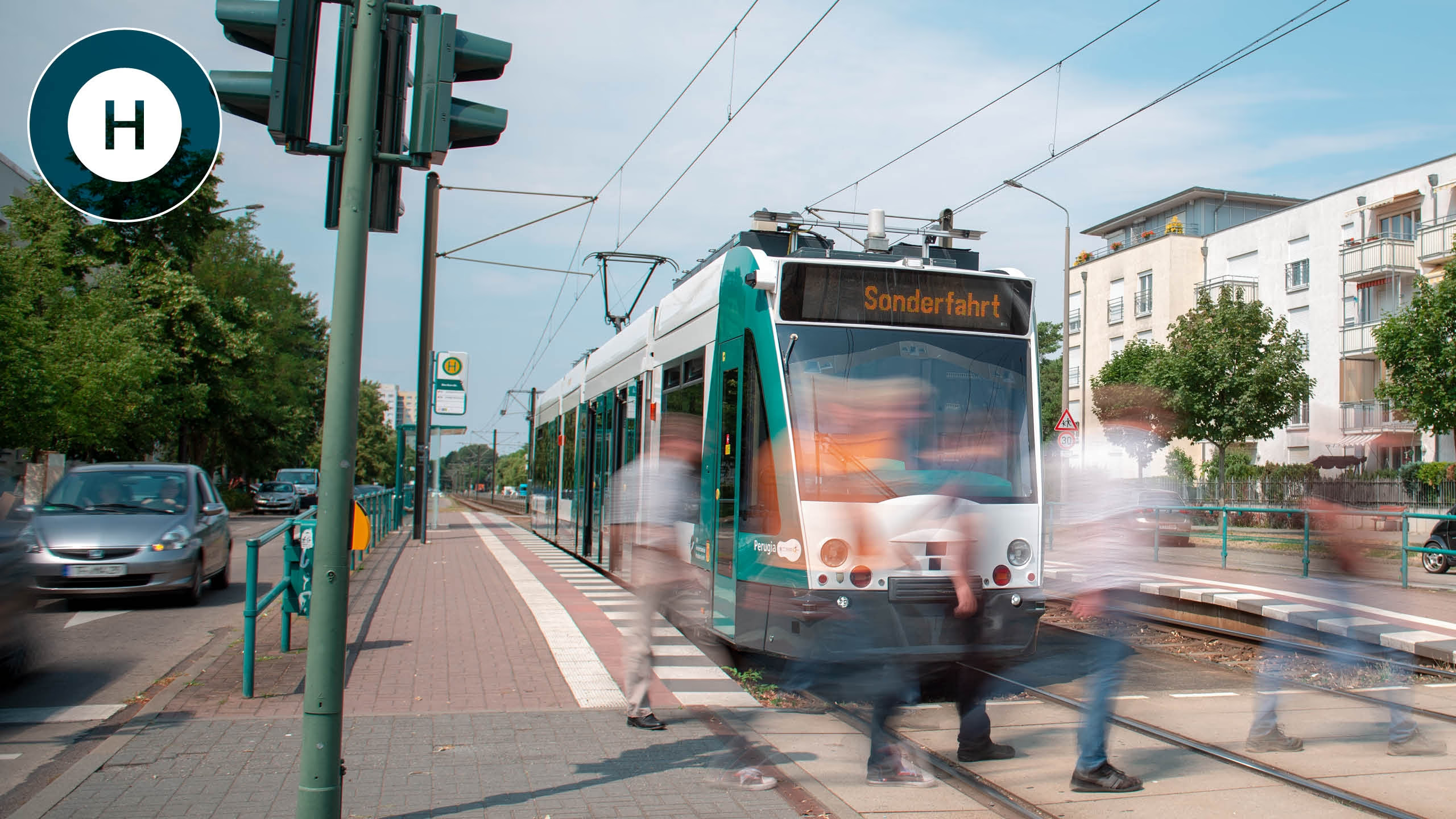
Approaching a station
Those who attended the demonstration only noticed being transported safely and reliably on the course of the route, including smoothly and accurately approaching the regular stations.
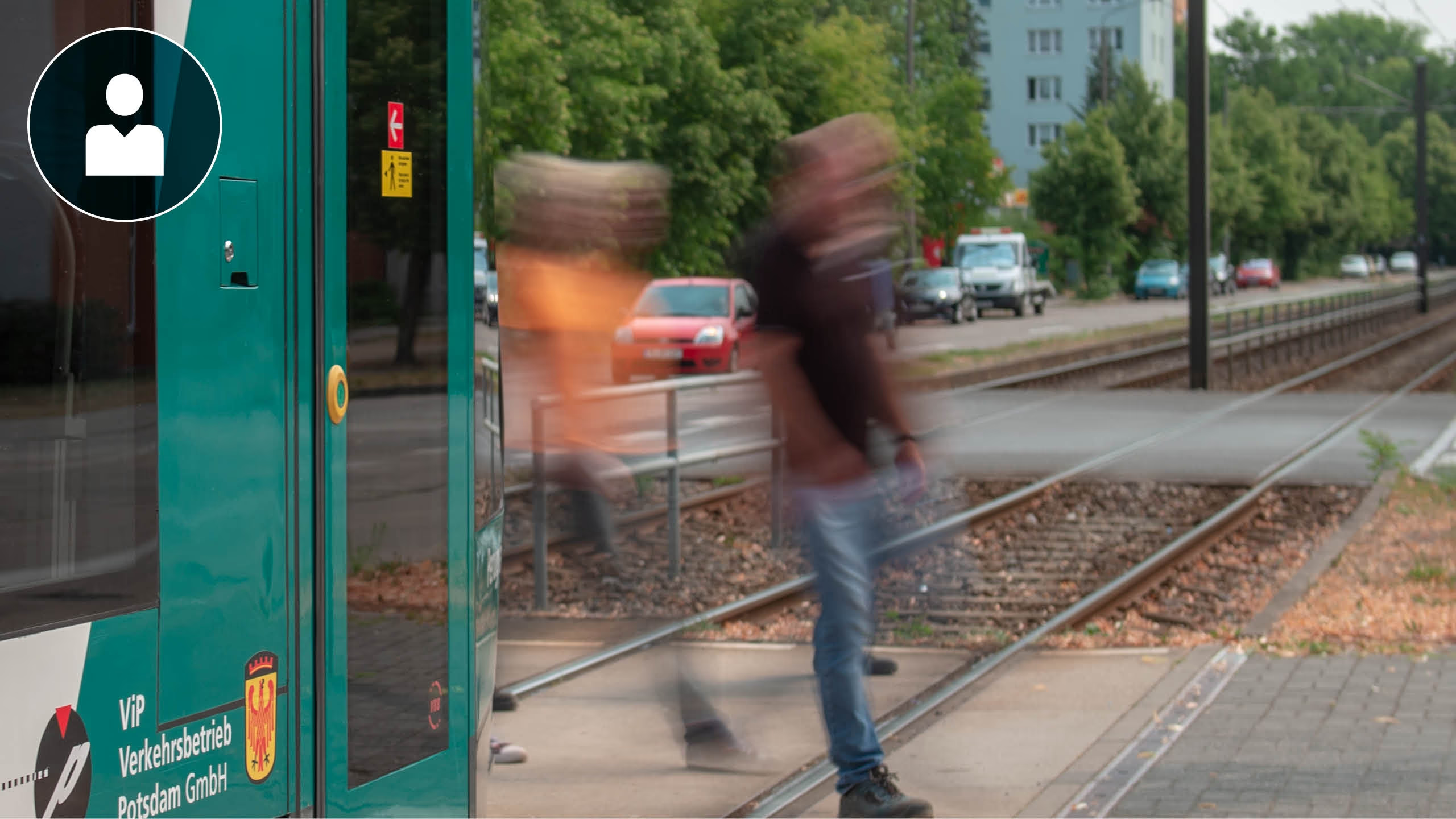
Crossing pedestrians
The research prototype of the self-driving tram independently reacted to possible dangers, such as at intersections without traffic lights where it could expect to encounter crossing vehicles, cyclists, and pedestrians at any time.
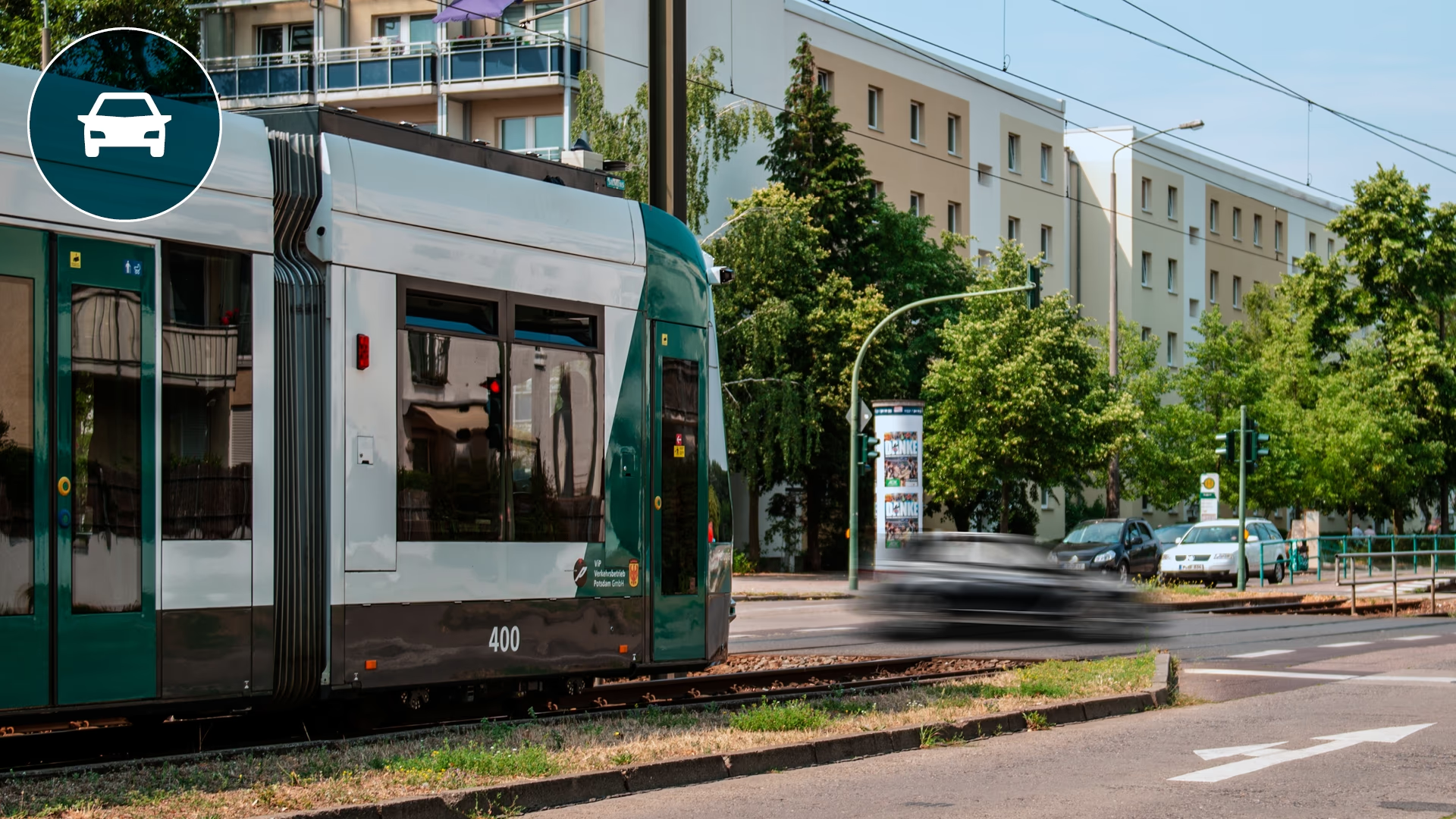
Crossing car
When the system identified another traffic participant as a possible danger, it automatically signaled a warning. Depending on the situation, it adjusted its speed, maintained a safe distance from any preceding vehicles, or automatically slowed to a stop.