Train-planning systems (TPS)
As an integrated, modular software solution, our TPS Suite combines infrastructure, timetables, and train-path management. The capability of the applications ranges from long-term timetable planning to real-time train dispatching, and track work coordination.

As an integrated, modular software solution, our TPS Suite combines infrastructure, timetables, and train-path management. The capability of the applications ranges from long-term timetable planning to real-time train dispatching, and track work coordination.
Unleash the full potential of your infrastructure

TPS.plan: network-wide train-path planning & capacity management
TPS.plan combines the management of infrastructure, timetables and train paths. It provides reliable timetables for strategic long-term planning as well as annual and daily timetables. The system models a "digital twin" of the rail network and the infrastructure. This way, it enables highly accurate timetable management.

TPS.live: real time train dispatching
TPS.live is specifically designed for ad hoc train dispatching. Users of the software can react in real time to unforeseen events such as delays or broken shunting points and signaling systems. TPS.live identifies possible conflicts in the entire railway network and offers automatic, semi-automatic, and manual conflict resolutions. Network-wide optimization will shortly be possible as well.
TPS.trackworks: Managing construction sites
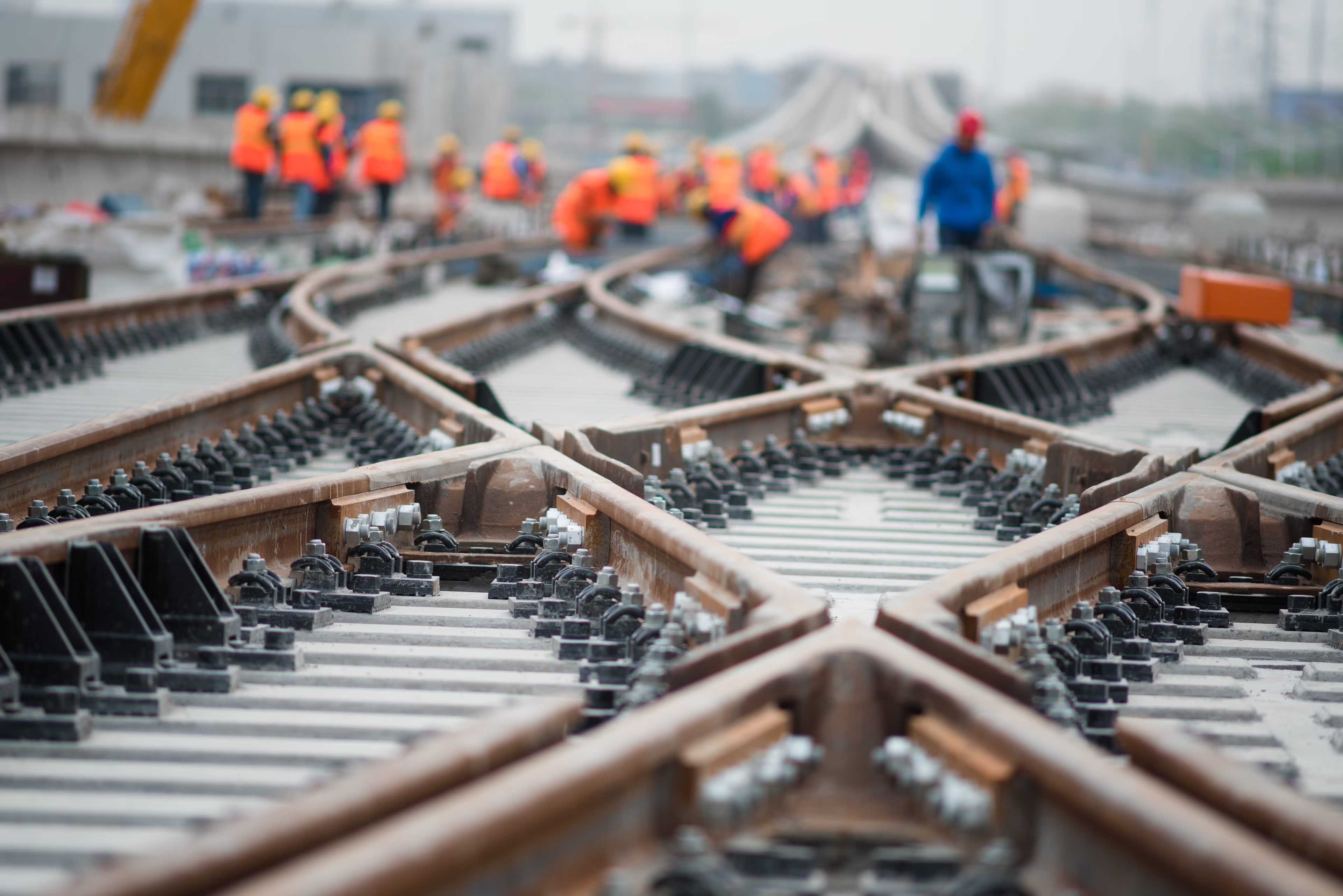
TPS.trackworks helps reduce the impact of track construction works on services. It enables users to manage all construction sites within their network using one single system. From strategic planning to the coordination of individual construction projects: TPS.trackworks simplifies processes and to schedule operations in a way that minimizes negative impacts on travelers.
Benefits at a glance
Perfect fit with existing IT environments
TPS provides several automated interfaces (e.g. web services) and thus optimally interacts with other systems. Customer-specific functions can be easily integrated. This way, the software adapts to existing IT infrastructures.
Multi-client capability
Multi-user operation is a central element in the software architecture. As a result, trains can be processed by various planners from different organizations on different locations at the same time. Rights, roles, groups, and users can be precisely defined.
Modular approach
Highly flexible and configurable solutions for railway networks of any size. The modular approach allows to adapt to the specific requirements of customers.