Integrated rail diagnostics with RailXplore Fusion
RailXplore Fusion transforms your rail infrastructure for the future
RailXplore Fusion is Siemens Mobility’s platform for rail diagnostics and automated rail inspection. It consolidates signaling data, subsystem logs, and operational events into a single, structured interface replacing manual log comparisons across disconnected systems. For engineering and operations teams managing complex signaling infrastructure, this supports a shift from fault reaction to fault prevention across the full asset lifecycle.
What is RailXplore Fusion?
RailXplore Fusion is an integrated rail diagnostics platform that connects data from signaling core systems, interlockings, and subsystems into one centralized environment. AI-based analytics and an integrated assistant extend the solution's diagnostic capability beyond data collection into pattern recognition and predictive assessment. It supports automated rail inspection workflows, predictive maintenance, and real‑time fault analysis, covering everything from commissioning to day‑to‑day operations in the operations control center.
By centralizing the exchange of diagnostic data across internal and external systems, applications, and data sources, RailXplore Fusion functions as an operational data hub. Infrastructure teams gain one consistent view of system behavior across the network.
For teams managing mixed infrastructure environments, the modular, API‑first architecture allows existing systems to remain in place. Both Siemens and third‑party diagnostic systems can be connected without platform replacement.
Solving the challenges of modern rail inspection
Maintenance accounts for a significant share of rail infrastructure lifecycle costs, with unplanned corrective work remaining a major driver. In many cases, the root cause is not the fault itself, but the time lost between a fault occurring and having enough information to act.
Rail infrastructure generates large volumes of diagnostic data across the entire network, from interlocking logs and train control events to wayside asset sensor data. But many rail inspection workflows still rely on manual processing. This overhead delays fault detection, extends root cause analysis, and increases operational risk.
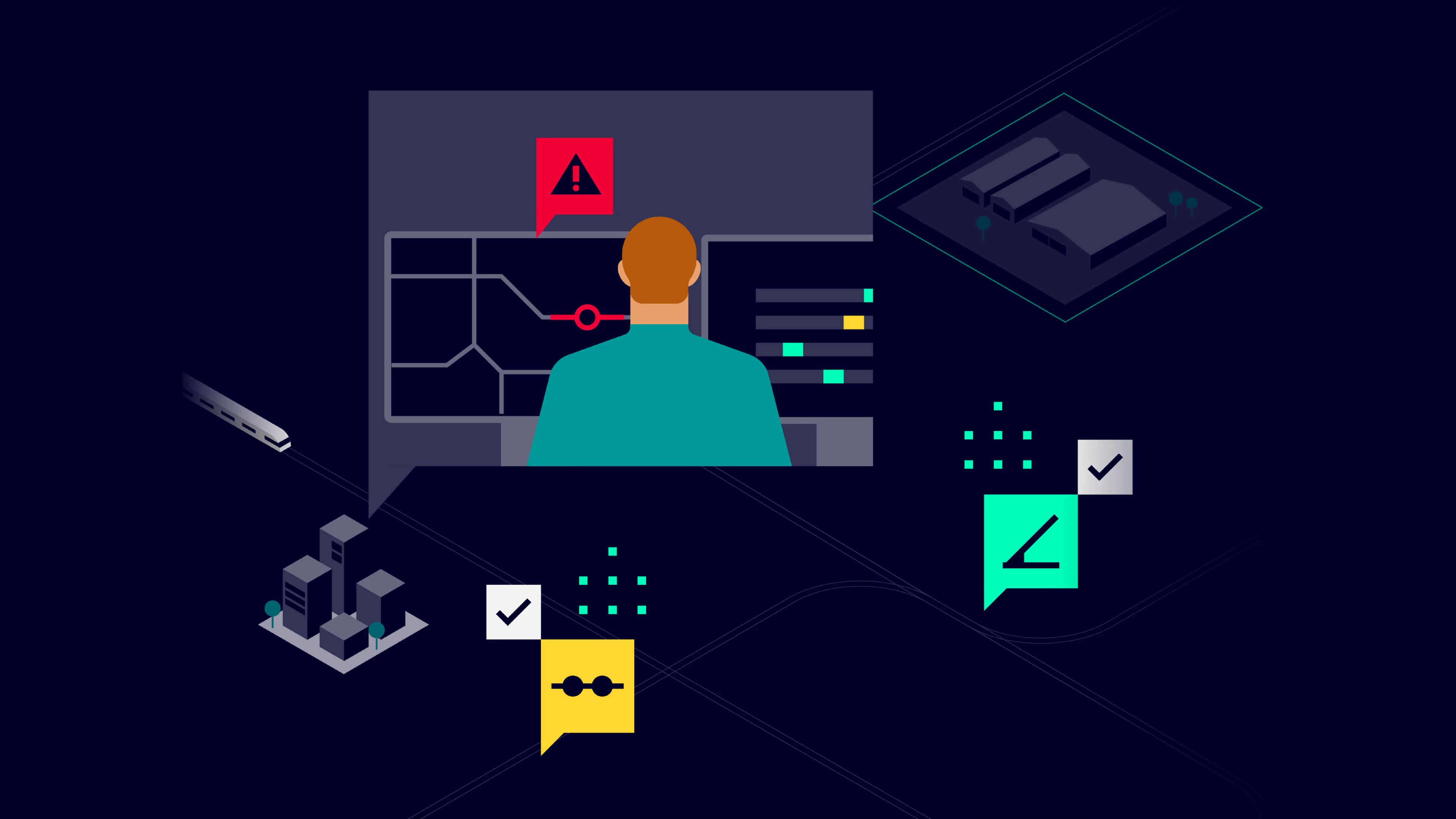
Prevent failures before they impact operations. RailXplore Fusion transforms operational data into actionable early warnings, enabling maintenance teams to detect emerging risks, avoid service disruptions, and optimize maintenance activities. The result: up to 80% less manual investigation effort and up to 20% faster response and repair times.
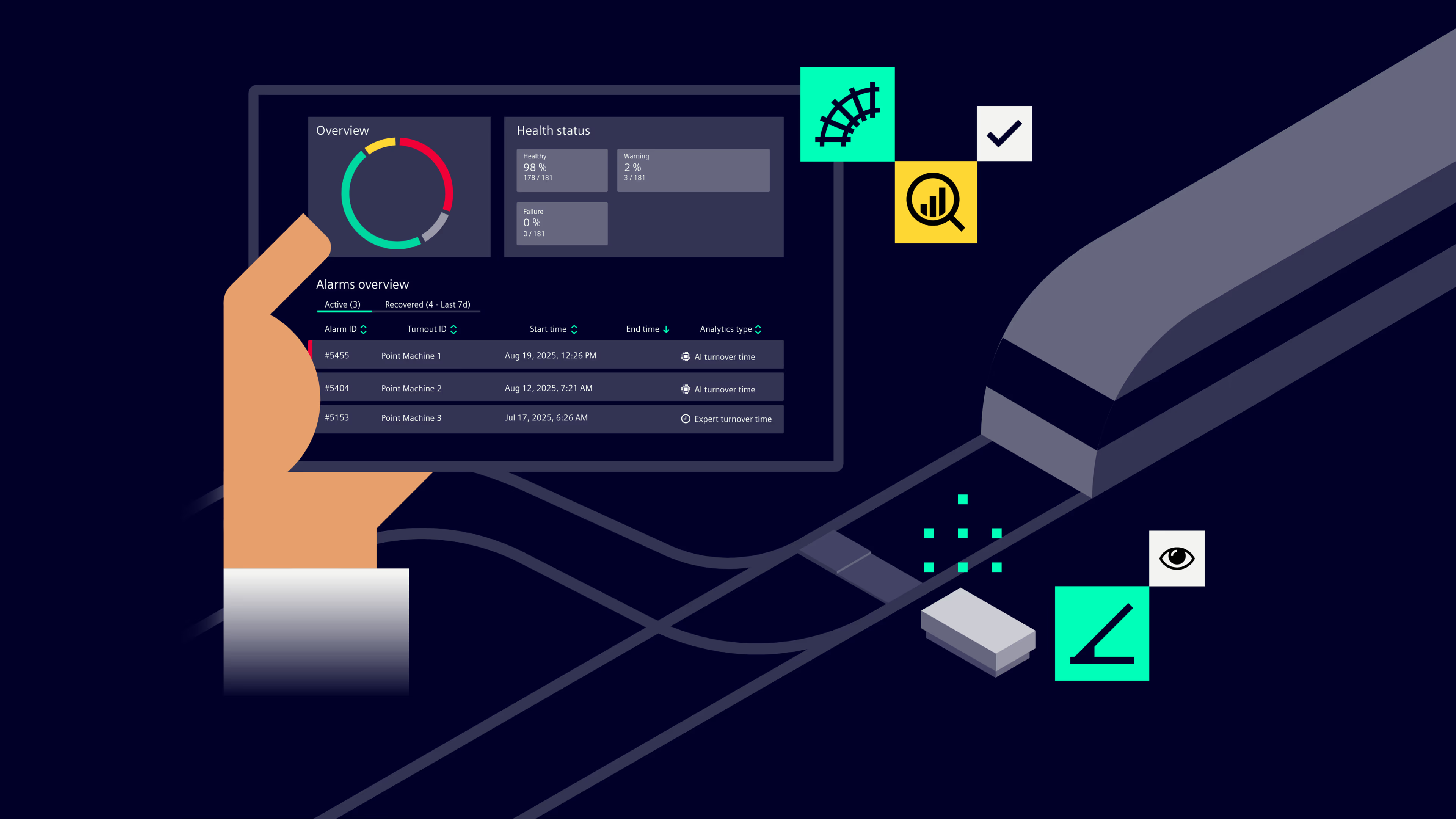
Maintain what needs attention, not what tradition dictates. RailXplore Fusion Point Operating Systems provides a real-time health status for every turnout, enabling maintenance teams to identify degradation early and prioritize interventions based on actual asset condition rather than assumptions or fixed schedules. The result: better maintenance decisions, improved asset availability, and greater confidence in every intervention, with 100% visibility into turnout health.

Detect issues before they require a site visit. RailXplore Fusion Track Vacancy continuously monitors field conditions and provides early warning of emerging faults, allowing maintenance teams to replace routine inspections with automated condition monitoring and investigate incidents remotely. The result: up to 60% fewer outdoor equipment faults and significantly reduced inspection effort.
From days of analysis to minutes of insight. RailXplore Fusion Signaling automatically correlates and analyzes signaling data across multiple sources, transforming complex investigations into fast, actionable root cause analysis. What once required manual review of thousands of log entries and expert knowledge can now be completed automatically with up to 90% faster root cause analysis.
Automated diagnostics from signaling and subsystem data
RailXplore Fusion processes log and protocol data from signaling core systems like Trainguard GMT 3, including interlockings such as Trackguard Sicas and Trackguard Westrace, as well as subsystem and onboard logs. By correlating these data sources, the platform builds a continuous picture of diagnostic performance including fault frequencies, performance trends, and recurring event patterns.
This is not simple log aggregation. Automated analysis identifies anomalies early and structures diagnostic output so that fault localization becomes a guided, data‑driven process rather than manual log comparison across systems.

Third-party module integration
The API-first architecture connects non-Siemens diagnostic systems without requiring platform replacement. Mixed infrastructure environments are supported out of the box.
For infrastructure managers working within established RAMS (Reliability, Availability, Maintainability, and Safety) processes, continuous diagnostic data provides the availability records, fault frequency logs, and performance trend data that RAMS documentation requires. RailXplore Fusion supports the structured collection and analysis of diagnostic and performance data that can be used within project‑specific RAMS processes, such as those defined in EN 50126 - without replacing the responsibility of system‑level safety assessments.
AI‑driven insights for predictive rail maintenance
Reactive maintenance is costly. A fault that becomes visible in operations typically follows a period of degraded behavior that was present in diagnostic data but not acted upon.
RailXplore Fusion applies advanced analytics and AI‑based methods to historical event and alarm data to identify performance degradation patterns specific to each infrastructure. The integrated AI Assistant supports troubleshooting and configuration tasks by providing contextual guidance, helping to reduce resolution time and support effort.
RailXplore Fusion delivers that condition: Accurate, correlated diagnostic data, accessible where maintenance decisions are made.
Predictive rail diagnostics in practice: Matterhorn Gotthard Railway
Since 2021, RailXplore Fusion has been deployed across six point machines at three stations, monitoring performance continuously across all four seasons. The platform collected power consumption, voltage, maintenance log data, and environmental conditions, correlating these inputs to build a real‑time picture of each machine’s health status. AI‑based trend analysis identified deteriorating conditions automatically, before failures reached the operational level.
The results justified rapid expansion. Following the successful pilot, the Matterhorn Gotthard Railway extended RailXplore Fusion across its network, covering 36 stations and over 200 point machines, with further rollout planned.
For an alpine railway where every unplanned failure affects both timetable stability and passenger trust, the shift from reactive maintenance to predictive rail diagnostics significantly changes what is operationally possible.