
Scaling sustainability impact
The need for sustainable mobility solutions
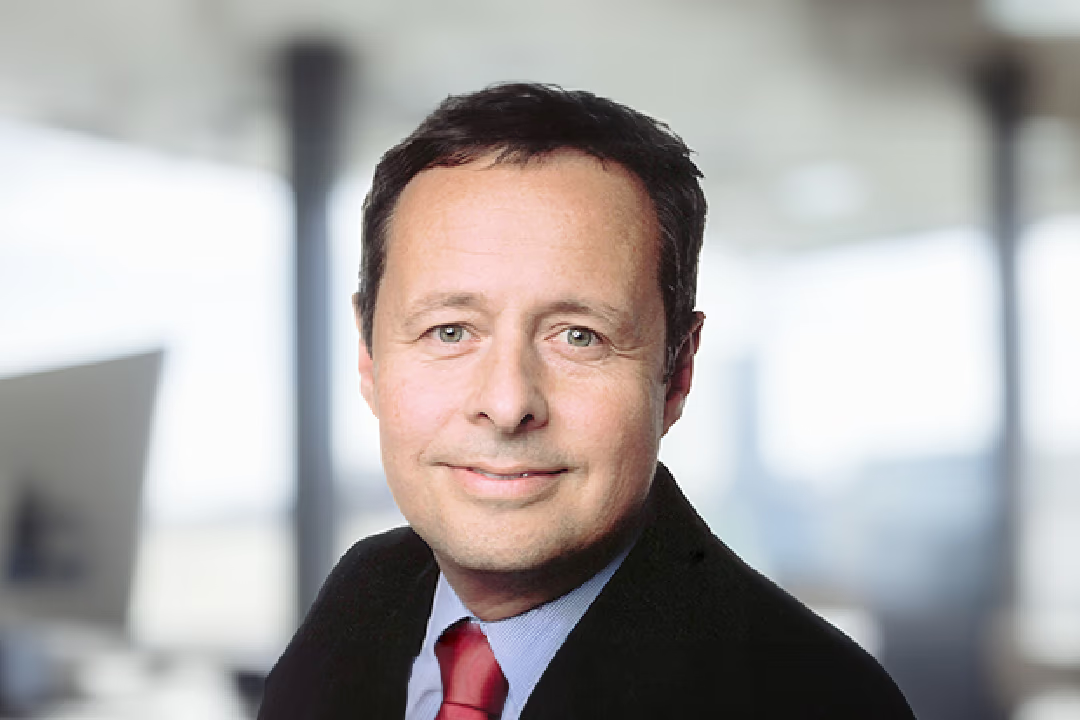
The EU taxonomy provides a reliable and, above all, externally audited assessment of our business activities. I am therefore proud of these excellent results, which are being actively promoted by all our business units. Not only are we helping to reduce emissions in the transport sector, but as an industrial company we are also reducing our own footprint.
Global megatrends influence mobility demand
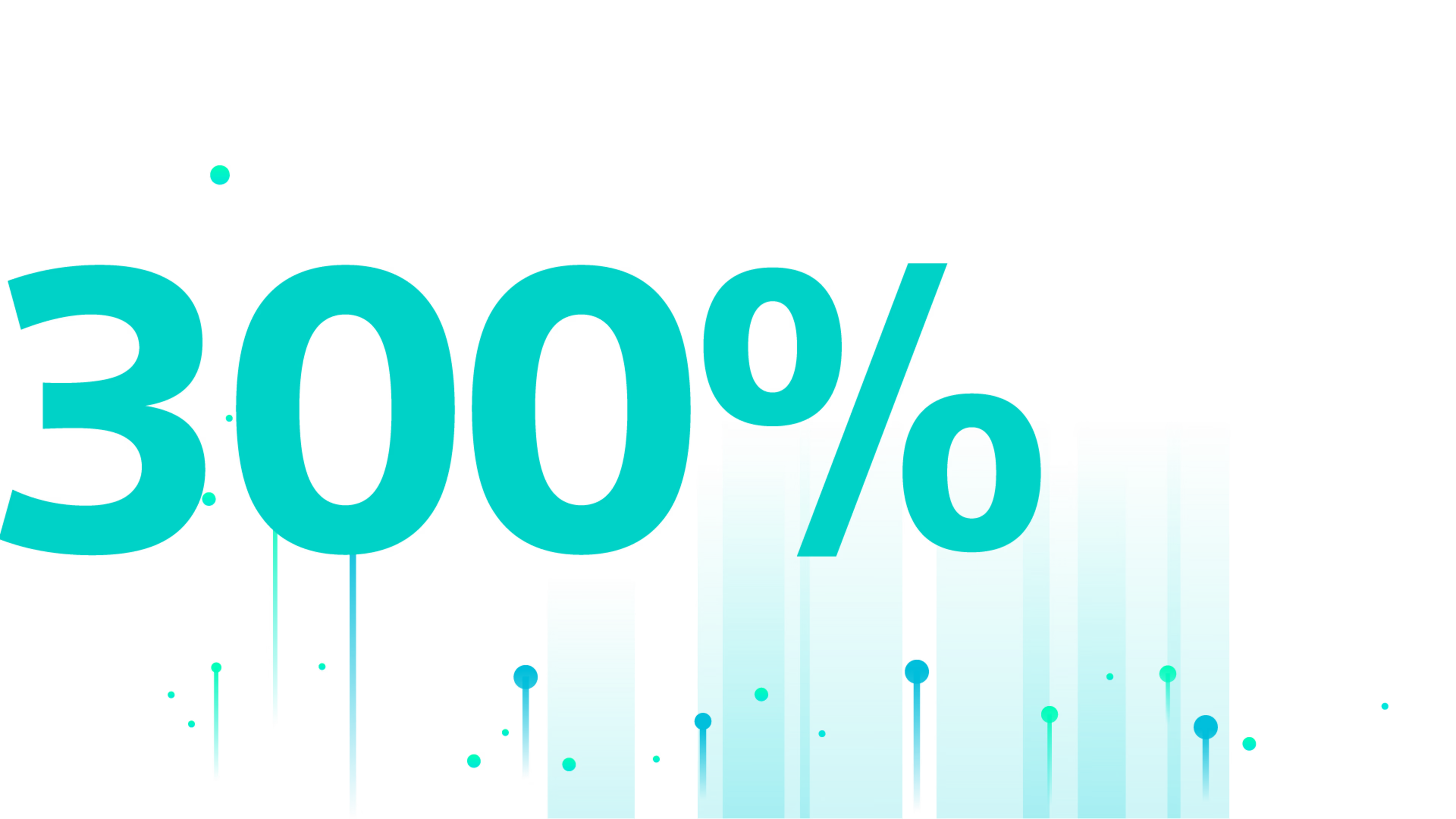
3x more passenger movement predicted globally by 2050 *,**
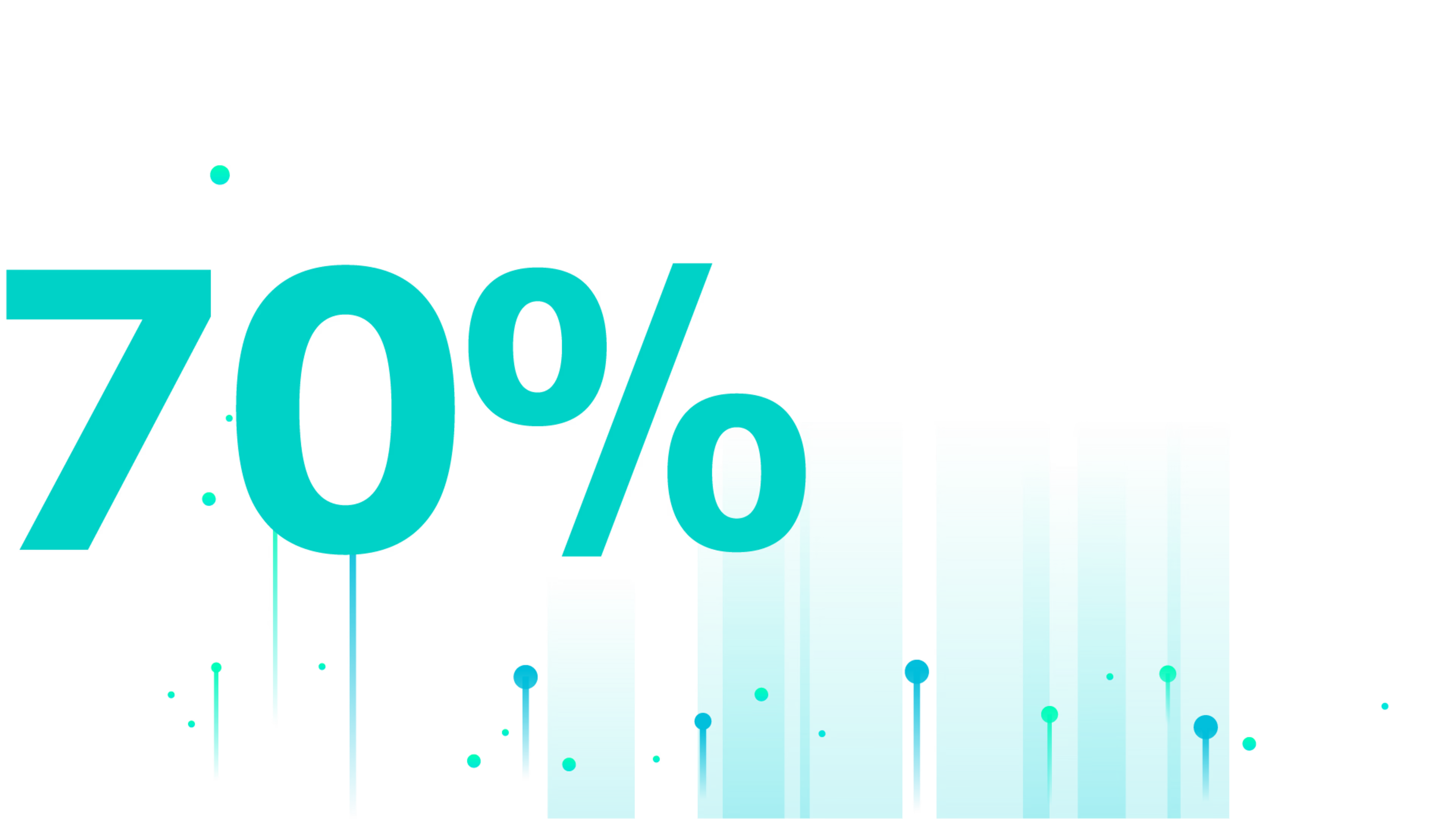
By 2050, 70% of the world’s population will live in cities
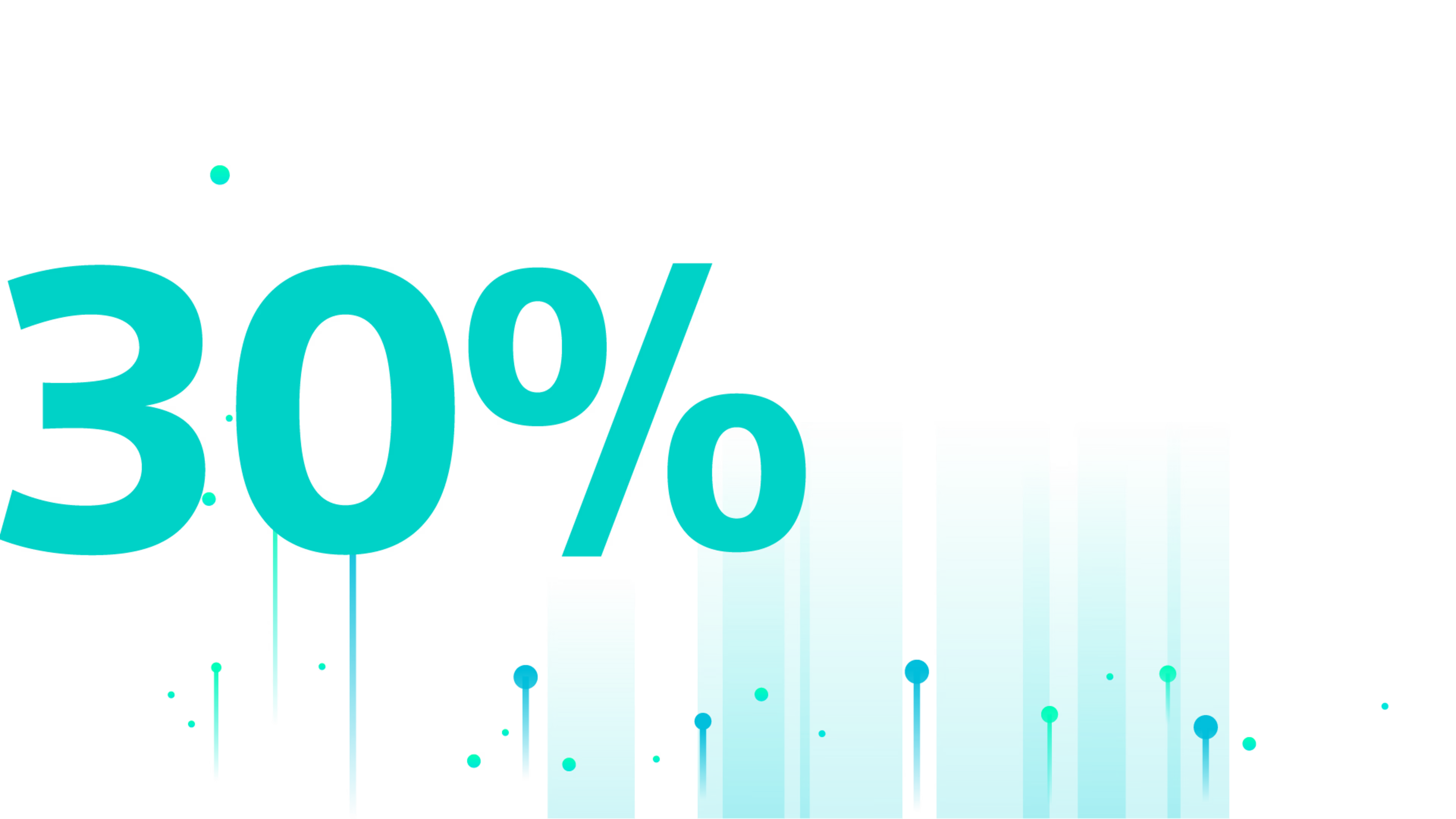
More than 30% of global energy demand from transportation sector **
* The pandemic is predicted not to affect this development in the long run.
** Source: IEA Future of Rail Report.
We contribute to the sustainable development of societies
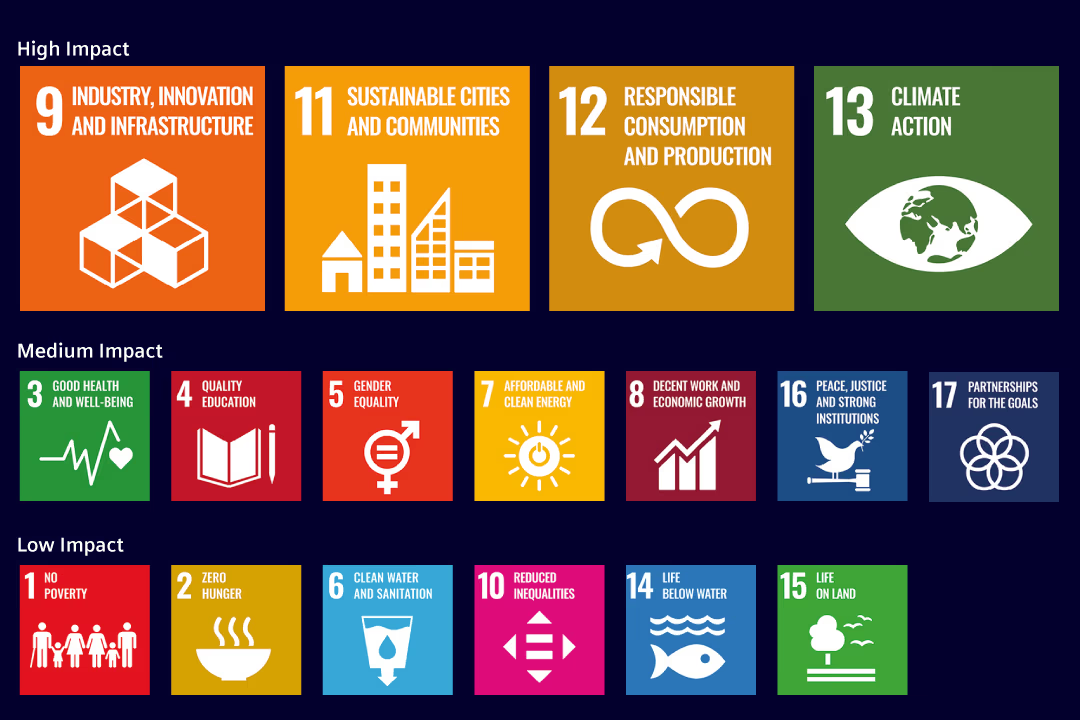
At Siemens Mobility, we define sustainable development as the means to achieve profitable and long-term growth while internally balancing profit, people, and the planet. Therefore, we are contributing to the 17 Sustainable Development Goals (SDGs) of the UN 2030 agenda for sustainable development in four important ways:
- through our products and solutions
- through the responsible management of our own operations
- through our expertise and thought leadership
- through our Corporate Citizenship activities and community engagement

Sustainability in the Supply Chain
Siemens Mobility once again achieves top scores in the latest EU Taxonomy results for fiscal year 2024 and thus matches its strong result from last year despite stricter framework conditions. 100% of the economic activities are taxonomy-eligible and 86% of them are taxonomy-compliant. Siemens Mobility is thus making a significant contribution to climate protection while actively reducing its ecological footprint.
Enabling positive impacts through our portfolio
As a company, we support our customers in generalizing carbon-neutral passenger and freight transport, from door to door, in cities, and in-between: With rolling stock, rail infrastructure, intermodal solutions, rail services, and turnkey solutions. We play our part by utilizing energy-efficient products and accelerating alternative propulsion systems that use battery or hydrogen technology. Our customers also enjoy the benefits of increased asset value through our lifecycle management strategy; this in turn reduces the ecological footprint of their operations.

Velaro Novo – Pushing the boundaries of efficiency
The Velaro Novo has been strictly developed to meet present and future mobility needs. The train concept is impressive for its low maintenance costs, 30% less energy consumption, the reduction of 1,375t CO2 per train and year, and maximized availability – along with improved passenger comfort.
Mireo platform – The evolving role for hydrogen
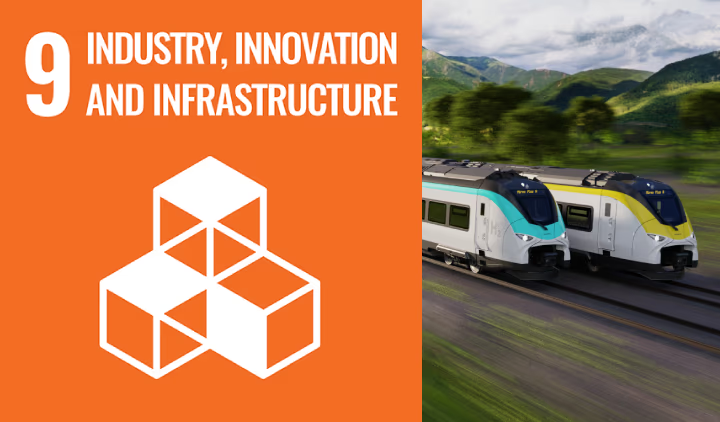
The Mireo regional and commuter train is the Winner of the German Sustainability Award 2021 for combining passenger appeal with environmental friendliness and economy at a high level of design and functionality. Its 25% less energy consumption, 95% recycling rate at the end of the lifecycle, and availability with alternative technologies (hydrogen (H2) and battery drive) make it efficient all along the line.
Additive manufacturing – Sustainable spare part production with 3D printing
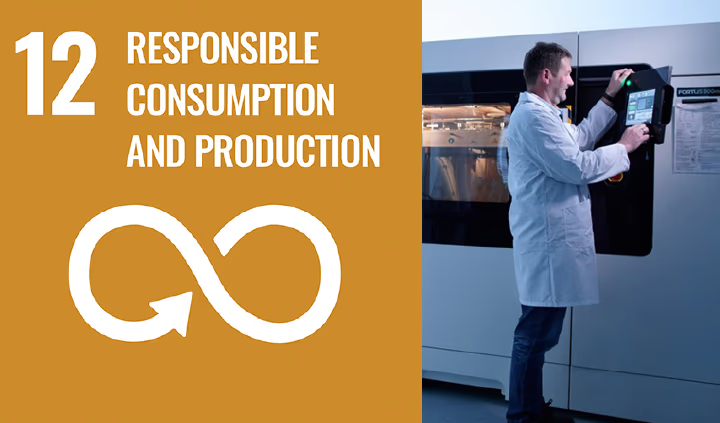
3D printing of complex legacy spare parts opens game-changing opportunities to improve material efficiency and product weight, implement circularity concepts, drive down the CO2 footprint of spare parts, and mitigate CO2 emissions for transportation.
Digital interlocking – Enabling safe rail operations around the globe
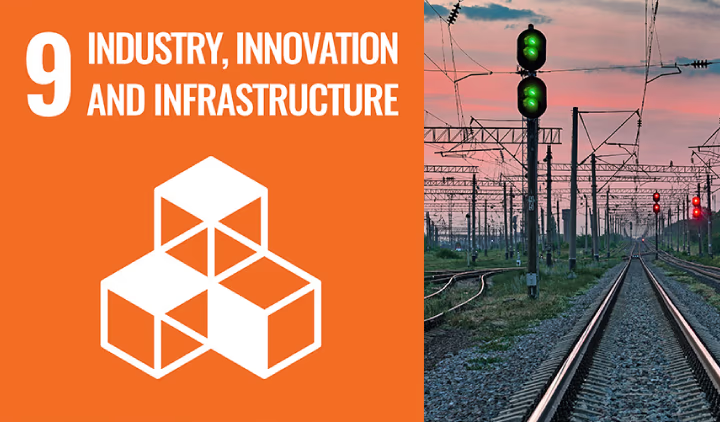
Siemens Mobility’s digital interlocking technology is a milestone in the digitalization of rail infrastructure, ensuring safety, allowing higher capacity, and improving punctuality. This operational efficiency has a positive impact on sustainability.
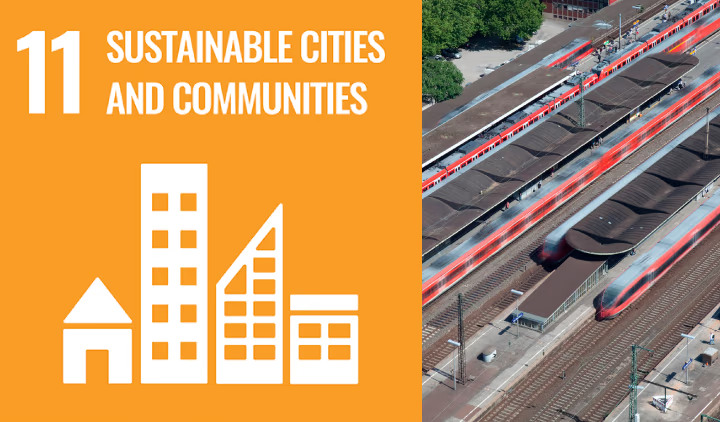
Automated Train Operation – Improving efficiency and reducing costs
Running trains at a higher frequency can be both expensive and challenging to resource with available trains and staff. Automated Train Operations (ATO) systems enable a more economical and efficient operation of passenger and freight trains while improving punctuality, and reducing maintenance and downtime costs.

MaaS – Sustainable movement from the first mile to the last
Mobility as a Service (MaaS) creates smart sustainable mobility ecosystems by seamlessly combining public transport and new, shared mobility services. These serve passengers, mobility providers, and operators alike.
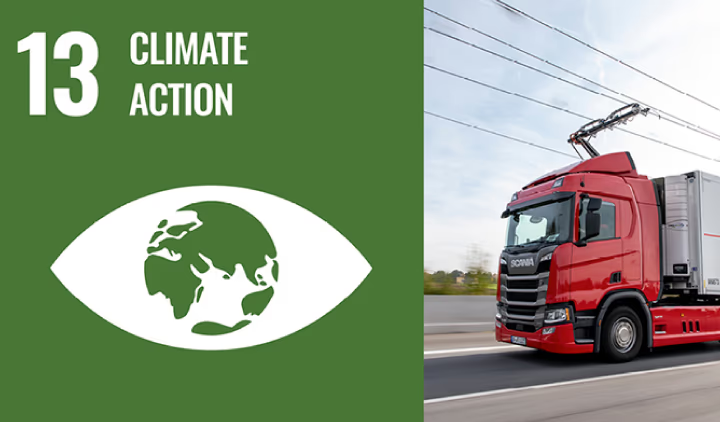
eHighway: Dynamic charging for trucks
With overhead contact lines trucks can be supplied with electric energy while driving. This dynamic charging makes economical road freight without GHG or exhaust emissions possible by using less energy, resources, and time. The technology already exists and is ready to be scaled up globally based on established supply chains. This makes dynamic charging via overhead contact lines an indispensable part of the climate action toolbox
Events, webcasts and podcasts

Save energy costs and CO2 emissions with Sitras® PCI (webinar)
It's in how we electrify infrastructure that we’re setting the benchmark for tomorrow’s mobility – today. The self-commutated IGBT inverter Sitras® PCI enables transmission of train’s braking energy into the superordinated medium-voltage network. At the same time, the increased requirements on power quality are fulfilled.

Battery & Hydrogen Trains (webinar)
Which applications do benefit for getting served with hydrogen technology? What are the use cases for battery trains? Before taking any decision for any of both technologies the criteria that are driving these have to be discussed and agreed. Siemens Mobility invites for even discussing various aspects that need to be considered before a technology is highlighted.

The air that we breathe
Drawing further attention to our joint initiative with the WEF against global air pollution, host Prof. Sally Eaves speaks with Jane Burston, Executive Director and Founder of the Clean Air Fund, and Eva Scherer, Head of Investor Relations at Siemens in the latest episode of the “Moving beyond” podcast

Rethinking mobility solutions (podcast)
In the second episode of “Moving beyond”, host Sally Eaves is joined by BMW Group’s Vice President Sustainability and Mobility, Dr. Thomas Becker, and Michael Peter, Siemens Mobility’s President, to discuss the challenges of transforming mobility into a truly sustainable and fully seamless service.
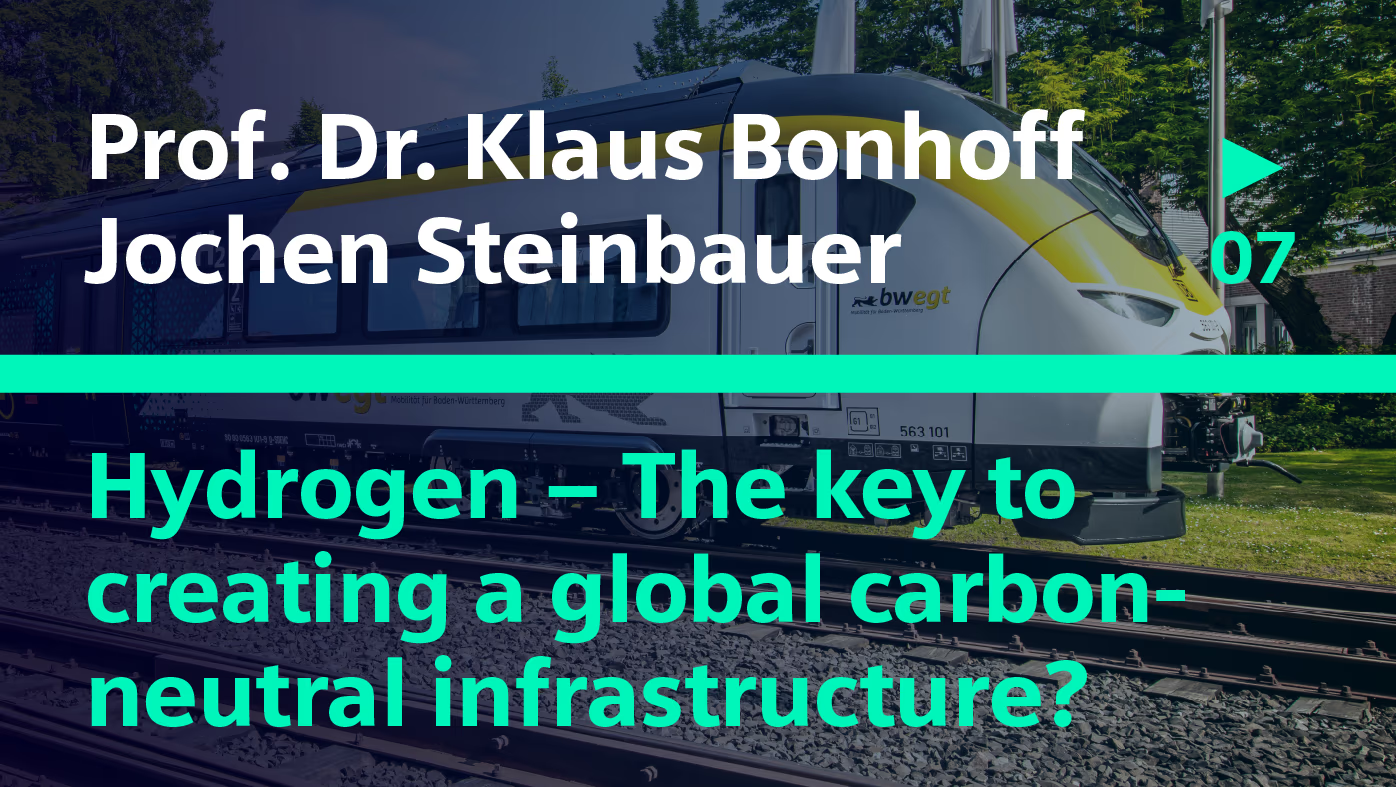
Hydrogen - The key to creating a global carbon-neutral infrastructure?
Could the diesel train soon be a thing of the past? We talk to Prof. Dr. Klaus Bonhoff, Head of Department for Policy Issues at the German Federal Ministry of Transport and Digital Infrastructure (BMVI), and Jochen Steinbauer, Platform Director H2 Technologies for Regional Trains at Siemens Mobility, about the significant benefits of hydrogen technology and the critical role it can play in the energy transition that is now crucial for the world.
Sustainability brochure
Learn more about how we are leading sustainable mobility forward and download our brochure here