Building Information Modeling
Cities are growing around the world. Building new rail infrastructures or expanding existing ones is a challenging endeavor. By aggregating data, rail infrastructure projects can be executed more sustainably and with greater time and cost efficiency. Building Information Modeling creates value even way beyond the planning phase of rail infrastructure projects - and over the entire lifecycle.
Cities are growing around the world. Building new rail infrastructures or expanding existing ones is a challenging endeavor. By aggregating data, rail infrastructure projects can be executed more sustainably and with greater time and cost efficiency. Building Information Modeling creates value even way beyond the planning phase of rail infrastructure projects - and over the entire lifecycle.
Cost and time efficiency
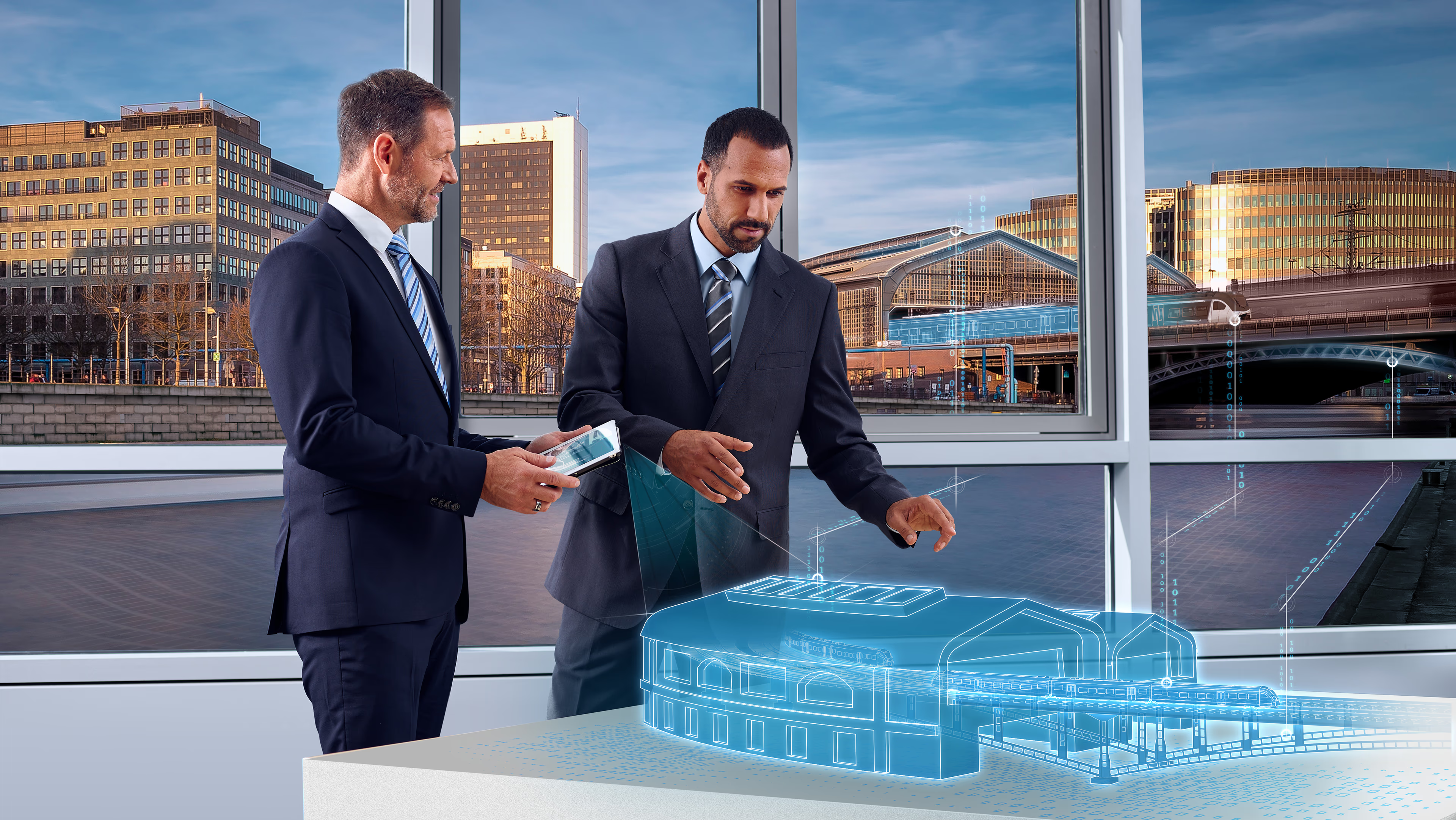
Originating from the construction industry, BIM is a state-of-the-art methodology for full virtual planning and integrating all planning partners and information available while improving planning quality. Additionally, this data provides the basis for efficient maintenance based on full transparency. Siemens Mobility uses BIM to create a digital twin – a virtual model of rail infrastructure projects or parts of it planned for implementation. This involves the use of computer-generated 3D modeling and the information integrated into or linked with the models. Once the model meets all specifications it is tested virtually before it is installed. This is how BIM enables significant productivity gains in all phases of the project.
BIM creates value sustainably over the entire lifecycle
More than just a tool