
Decarbonising transport in Britain for a better tomorrow

Decarbonising the rail industry - listen to the podcast!
How do we go further and faster to decarbonise transport when looking at rail, an already green mode of transport? Find out more in our decarbonisation podcast where the all-female panel from Siemens Mobility, First Group and Costain discuss the challenges we must overcome together as an industry to achieve the UK’s net zero carbon goals.
We need to go further and faster to decarbonise transport in Britain and fight climate change
Decarbonising transport
We know we need to encourage more people to choose lower carbon travel, and to decarbonise Britain’s rail network further and faster in order to meet the ambitious targets of the UK and Scottish governments to remove diesel trains from their networks by 2040 and 2035 respectively.
That’s why Siemens Mobility has developed the digital technologies that will help make it easier and more attractive for people to travel by rail, and the electrification and hydrogen train technologies that will cut the carbon emissions created by running the railway.
The Scottish government’s current decarbonisation plans already include greener new trains for the West Highland lines, the Far North and Kyle of Lochalsh lines and the Stranraer line. A further four railway lines have been highlighted where partial electrification, using green bi-mode trains, could be used as an interim solution to full electrification and help Scotland meet their targets more quickly. These are: the Fife Circle, the Borders Railway, the Highland Mainline and the Aberdeen Mainline. See more on the map.
Making it easier for people to choose low carbon travel
Our digital technologies can make it much easier for passengers to plan their journeys, get up-to-date information and buy tickets for their whole journeys, from the first to the last mile.
And through digitalisation of rail infrastructure, stations and trains, we can collect and harness the data that makes it possible for operators to run their network more efficiently and effectively.
All of this helps make it easier and more appealing for people to choose to get out of their cars and on to trains.
Cutting carbon emissions created by running the railway
Polluting diesel trains still run on much of Britain’s rail network and, under current plans, they could still be operating in 2060, ten years after the UK’s legislative Net Zero date.
So we have developed modern, innovative technologies to electrify more of the rail network more quickly and want to see 300 miles (or 450 track kilometres) more electrified every year.
And we are also pioneering hydrogen train technology and the associated infrastructure so we can replace diesel trains sooner on parts of the network that are too difficult or costly to electrify in the coming years.
UK carbon emissions stats

of the UK’s greenhouse gas emissions are from transport*

of UK transport emissions come from road transportation*

emissions produced by a passenger train compared to a mile travelled in an average petrol car**
*Statista – Transport emissions in the UK **Williams-Shapps Plan for Rail
Speed up electrification and introduce hydrogen trains
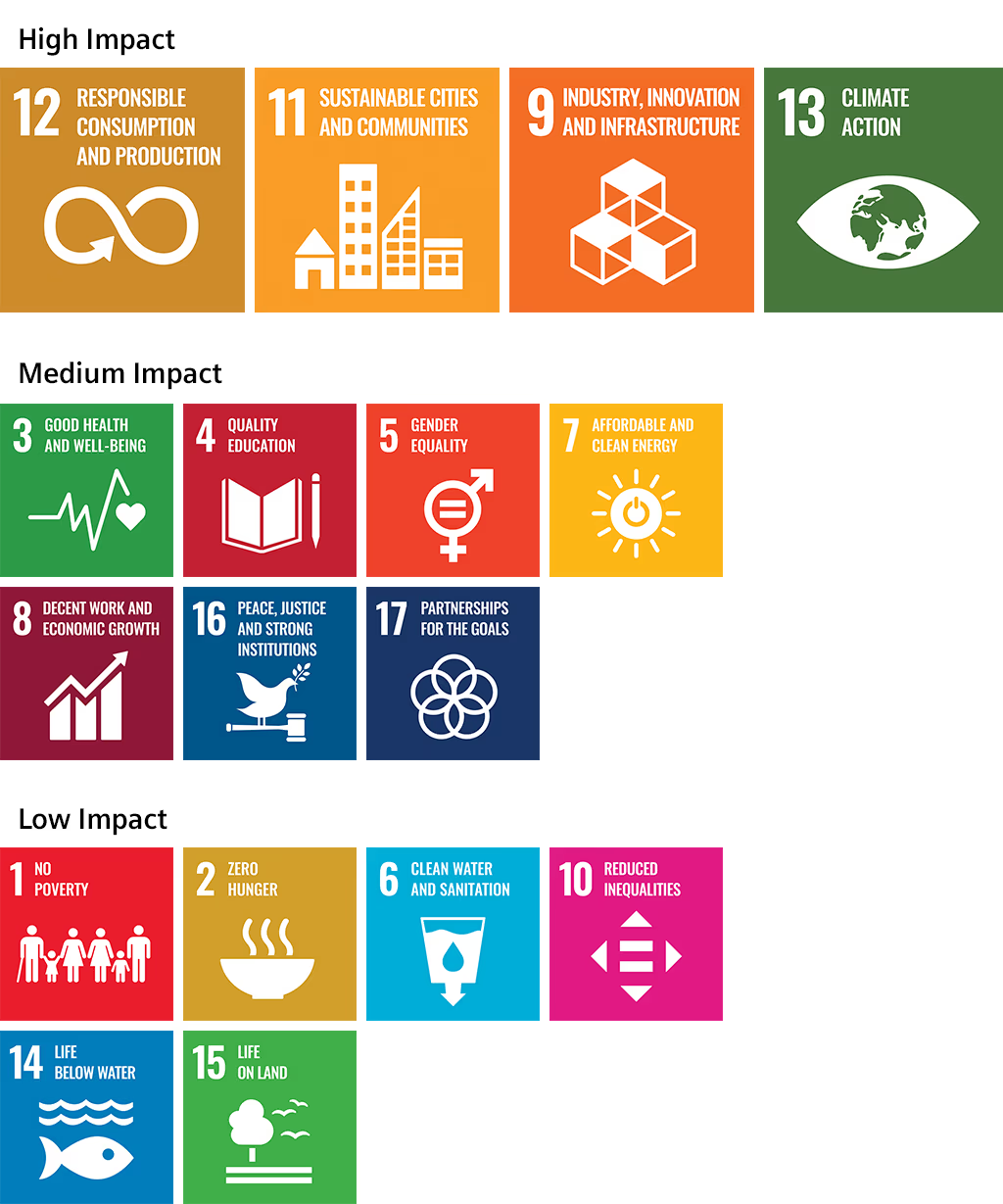
At Siemens Mobility, we define sustainable development as the means to achieve profitable and long-term growth while internally balancing profit, people, and the planet. Therefore, we are contributing to the 17 Sustainable Development Goals (SDGs) of the UN 2030 agenda for sustainable development in four important ways:
- through our products and solutions
- through the responsible management of our own operations
- through our expertise and thought leadership
- through our Corporate Citizenship activities and community engagement
Siemens Mobility Limited Carbon Reduction Plan
Hear from some of our experts about the solutions we can offer for a more sustainable transport network

GBR's Rail Data Service - a joined up approach for rail operations
Paul Baines, Sales Director at Siemens Mobility Limited, Rolling Stock

Mobility as a Service as a means to encourage sustainable travel
Helen Davis, Director of Strategy & Business Development, Siemens Mobility Limited, Rail Infrastructure UKI

The Digital Technology Opportunity
Simon Rennie, Head of Digital, Siemens Mobility Limited, Rolling Stock & Customer Service

Introduce Clean Air Zones to clean up the air we breathe
Noel Frost, Experienced Traffic Enforcement Executive, Siemens Mobility Limited
Enabling positive impacts through our portfolio
As a company, we support our customers in decarbonising transport with rolling stock, rail infrastructure, intermodal solutions, rail services, and turnkey solutions. We play our part by utilising energy-efficient products and accelerating alternative propulsion systems that use battery or hydrogen technology. Our customers also enjoy the benefits of increased asset value through our lifecycle management strategy; this in turn reduces the ecological footprint of their operations.
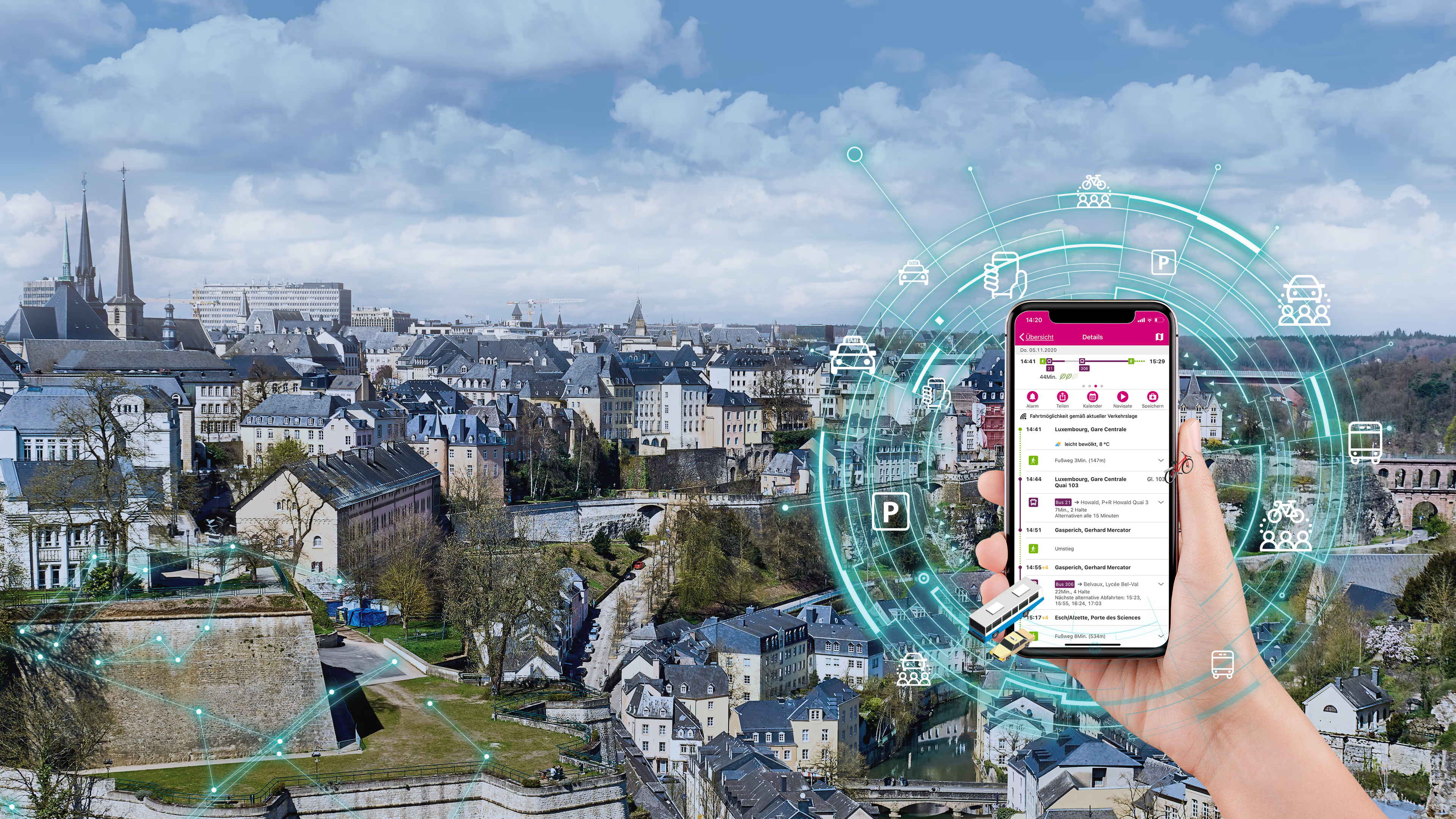
MaaS – Sustainable movement from the first mile to the last
Mobility as a Service (MaaS) creates smart sustainable mobility ecosystems by seamlessly combining public transport and new, shared mobility services. These serve passengers, mobility providers, and operators alike.
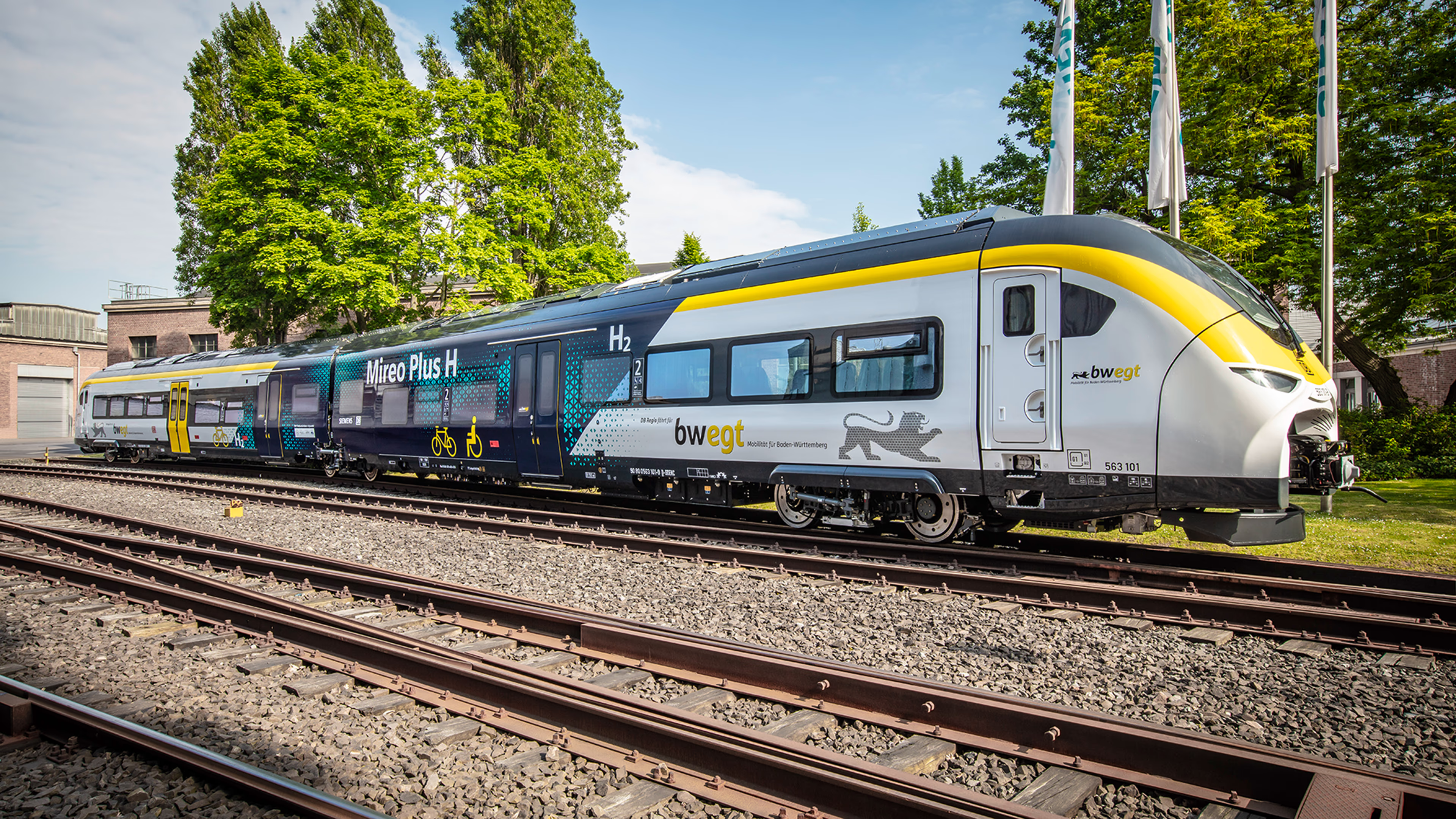
Hydrogen technology for trains – The whole solution from supply chain to rolling stock
We can deliver the whole hydrogen system for rail with our partners Siemens Energy from rolling stock, refuelling infrastructure and the supply chain. In Germany, the hydrogen train has won the German Sustainability Award 2021. Its 25% less energy consumption and 95% recycling rate at the end of the lifecycle make it efficient all along the line.
- Read more

Digital railway – Enabling safe rail operations across the UK
Siemens Mobility’s digital interlocking technology is a milestone in the digitalisation of rail infrastructure, ensuring safety, allowing higher capacity, and improving punctuality. This operational efficiency has a positive impact on sustainability.
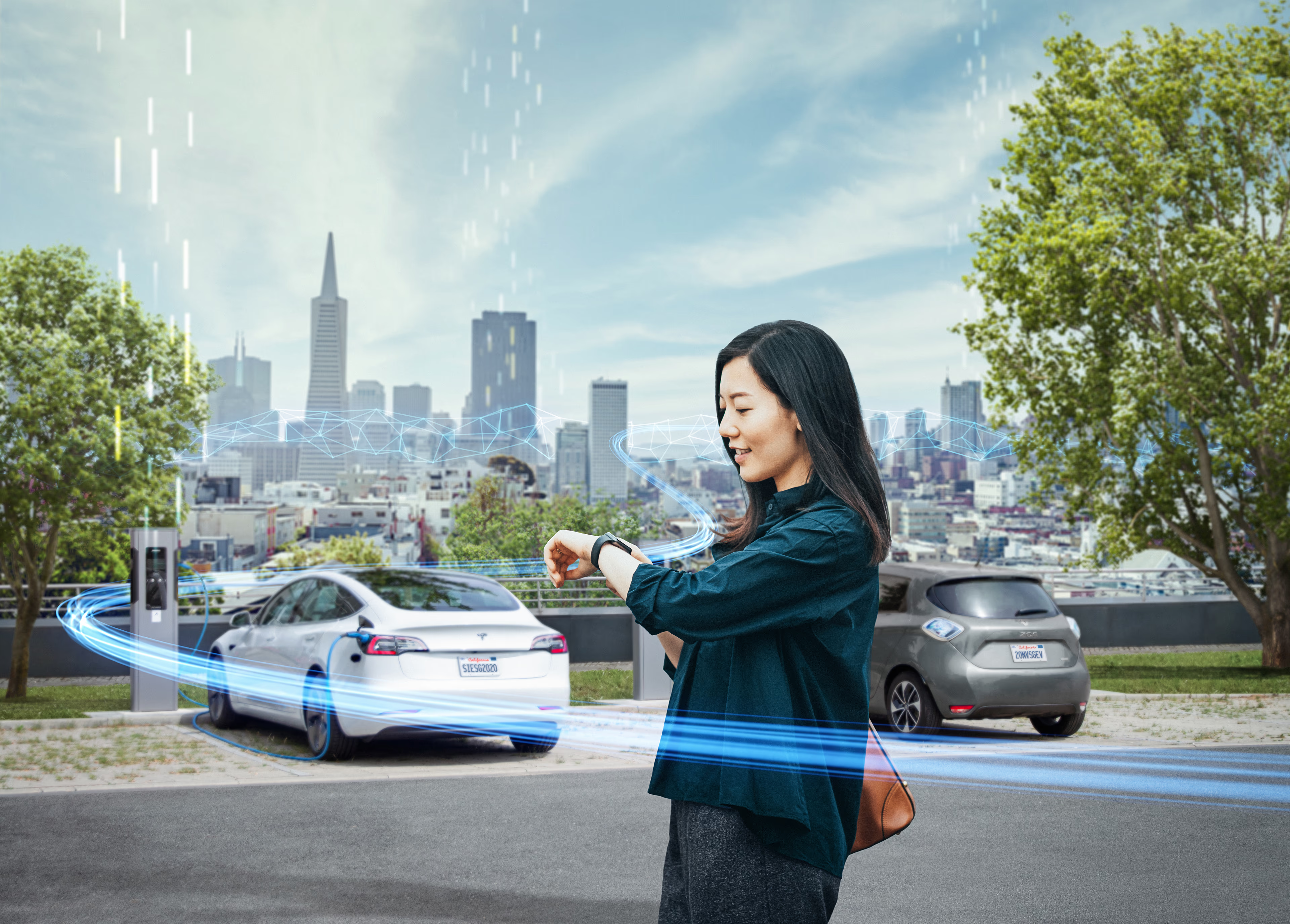
Power to move: Fast-charging technology
Whether you're looking for fast charging, rapid charging, or ultra-rapid charging, Siemens Mobility has EV charging technology and services to suit every requirement, from car park charging, on-street residential, charging plazas, public infrastructure and destinations.
- Read more
Have a look at our recent virtual events for deeper dives on our sustainability topics
Clean air for liveable cities (webcast)
In order to achieve a turn in transportation and make a significant contribution to climate protection, a combination of behavioral changes is needed - and we can all contribute. But it also needs attractive alternatives, such as efficient public transport or good cycling routes, and it needs new and smart technologies to support it all.”

Smart Detection (webinar)
As we move to a more connected and autonomous world, an increased usage of smart traffic detection is required to increase safety and traffic flow. Due to COVID, we have also seen a new mobility trend, which is an increase in the number of pedestrians and cyclists on our roads. Advancements in Artificial Intelligence (AI) and radar technology opens up greater possibilities on who and what we are able to detect.

Battery & Hydrogen Trains - criteria for deciding the more appropriate technology for different use cases (webinar)
Which applications do benefit for getting served with hydrogen technology? What are the use cases for battery trains? Before taking any decision for any of both technologies the criteria that are driving these have to be discussed and agreed. Siemens Mobility invites for even discussing various aspects that need to be considered before a technology is highlighted.