Maximize network capacity with Signaling X
Our integrated technology foundation for the digital transformation of rail infrastructure
Our integrated technology foundation for the digital transformation of rail infrastructure
The technology leap
Rail signaling has continuously evolved over the past century, from mechanical interlockings and relay technology to electronic and computer-based signaling systems, followed by digital signaling technologies. Each generation increased safety, capacity, and operational efficiency. Today, the next technology leap is underway: the transition from hardware-centric signaling systems to software-driven, cloud-ready rail infrastructure.
Meeting growing mobility demands
Managing mainline and urban rail infrastructure requires the seamless coordination of rail operations across extensive networks. As demands for capacity, reliability, and efficiency continue to grow, infrastructure managers need a modernization approach that builds on existing infrastructure while centralizing functions, reducing hardware dependencies, and introducing greater operational flexibility.
Your vision for rail infrastructure
The future of rail is connected, scalable, as well as software- and data-driven. Rather than relying on fragmented systems and dedicated hardware, modern rail networks need a digital foundation that enables centralized operations, seamless integration, and continuous evolution as operational requirements change.
Your Signaling X approach
Achieving this balance requires a new approach to rail infrastructure modernization. With Signaling X, we combine proven rail technologies with modular architectures, standardized software, and digital capabilities to transform infrastructure and operations step by step.
What is Signaling X?
Signaling X is our integrated technology foundation for the digital transformation of rail infrastructure. It brings together safety-critical and non-safety applications, standardized software, open interfaces, and digital capabilities within a modular, cloud-ready architecture. At the core of Signaling X is the Distributed Smart Safe System (DS3), our SIL4-certified, software-based safety platform that allows safety-critical rail applications to run on standard multicore processor computers.
The modular architecture of Signaling X moves applications like European Train Control System (ETCS) Level 2 for mainline and Communications-Based Train Control (CBTC) system for urban rail into centralized signaling data centers. This significantly reduces the amount of physical trackside hardware and cabling footprint required while increasing capacity through more efficient use of existing rail infrastructure.
Critical infrastructure is protected through a secure-by-design architecture, zero-trust principles, and CoreShield cybersecurity solutions. AI-powered diagnostics with RailXplore Fusion combines data from across the rail infrastructure to provide predictive insights and automated analysis for more effective lifecycle management.
But digitalization doesn't stop at the data center. Seturo is our family of smart object controllers that connects the physical trackside assets, such as signals, point machines and axle counters into the Signaling X ecosystem.

How your mainline and urban rail benefit from Signaling X
Signaling X helps operators and infrastructure managers unlock more value from existing infrastructure while creating a scalable foundation for future growth. By combining proven rail technologies with software-defined capabilities, Signaling X improves capacity, efficiency, resilience, and sustainability across both mainline and urban rail networks.
- Increase network capacity by up to 30% through advanced automation technologies, including ATO over ETCS for mainline and CBTC for urban rail.
- Improve punctuality by up to 15% through optimized traffic flow, improved network utilization, and advanced automation.
- Improve energy efficiency by up to 30% through optimized train operations, automation, and intelligently orchestrated energy management.
- Reduce hardware footprint by up to 80% by centralizing signaling functions and consolidating applications on standardized infrastructure.
- Connect systems seamlessly through standardized APIs, interoperable and open standard interfaces – including support for Model Context Protocol (MCP) – that integrate rail applications, existing IT environments, and third-party solutions and AI-driven tools.
- Protect critical rail infrastructure through CoreShield, secure-by-design architectures, zero-trust principles, and continuous cyber resilience measures.
- Ensure 24/7 operations and high system availability through geo-redundant architectures, enhanced resilience, remote updates, and flexible security patching.

Migration for Signaling X for countries
Implementing Signaling X without disrupting your mainline network
Your railway network connects regions, cities, freight corridors, and international traffic flows. Modernizing this infrastructure requires a careful balance between introducing new technologies and maintaining uninterrupted operations.
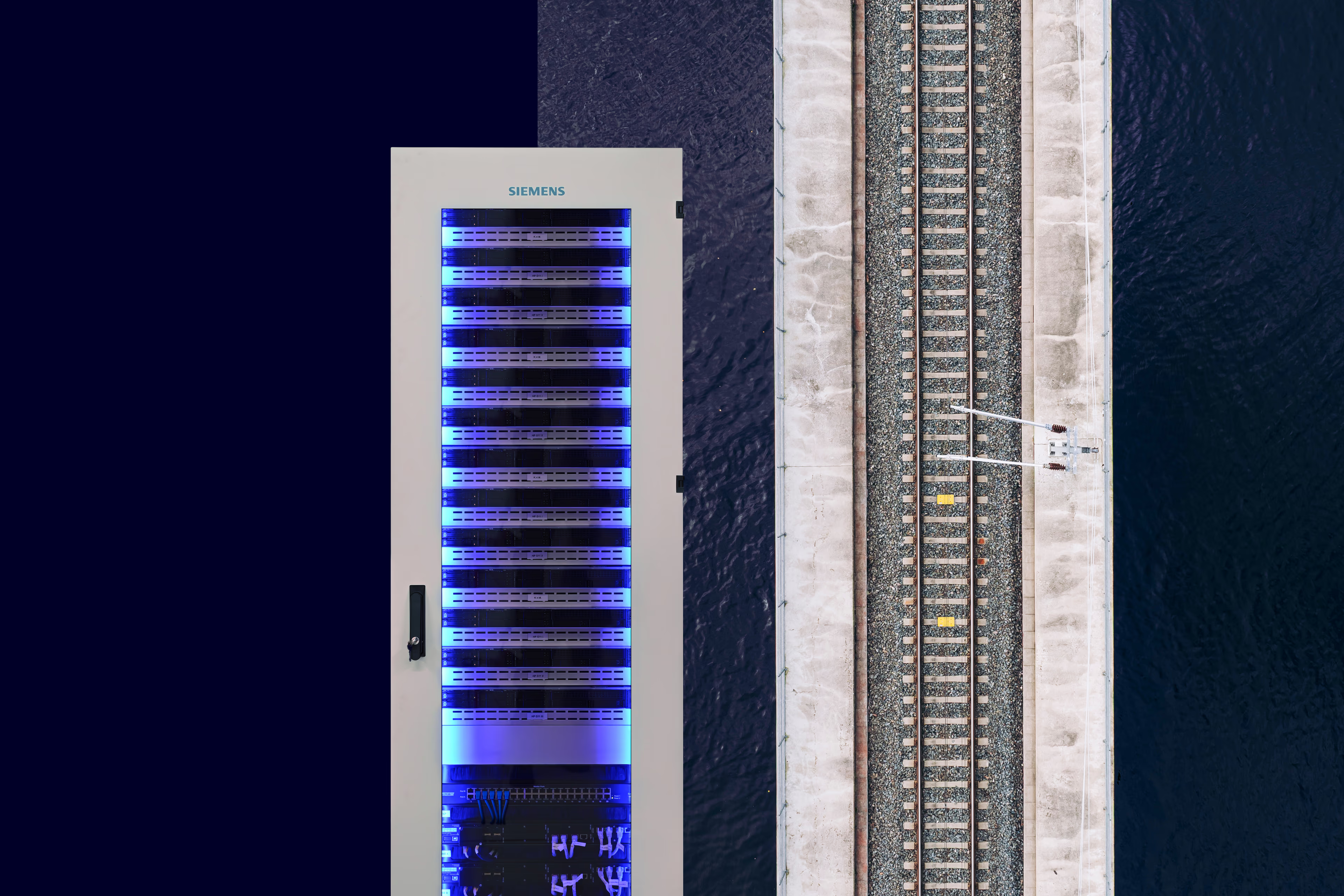
With Signaling X, you can modernize your network step by step. Technologies such as ETCS Level 2 with Hybrid Train Detection (HTD), ATO over ETCS and digital interlockings can be integrated over time, allowing you to increase capacity, efficiency, and automation while building on proven infrastructure and rail signaling applications already in operation.
As your network evolves, signaling functions can gradually move toward centralized operations and Signaling Data Centers. Built on standardized modular software, open, interoperable, standardized interfaces, and commercial off-the-shelf (COTS) hardware, this approach reduces infrastructure complexity and hardware, increases flexibility, and creates a scalable foundation for future innovation.
The result is a practical modernization path that protects existing investments, delivers measurable value throughout the journey, and prepares your mainline railway for software-defined operations.
Migration for Signaling X for cities
Implementing Signaling X without disrupting your urban rail network
Urban rail networks operate in highly dynamic environments where capacity, service availability, and operational efficiency are critical to moving up numbers of passengers every day. With Signaling X, you can introduce new capabilities incrementally while maintaining reliable daily operations. Technologies such as our Communications-Based Train Control (CBTC) system, Trainguard MT, as well as operations control, diagnostics, cybersecurity and passenger information systems can be modernized in phases, enabling continuous improvement without requiring large-scale system replacement.
As applications and functions become increasingly connected, they can be consolidated within a centralized Signaling Data Center. Supported by standardized software, modular architectures, and commercial off-the-shelf (COTS) hardware, this approach simplifies operations, strengthens resilience, and provides the flexibility to evolve with the city around it.
The result is a future-ready urban rail system that delivers greater efficiency, scalability, and operational agility while protecting the investments already made across your urban rail network.
Signaling X for Singapore
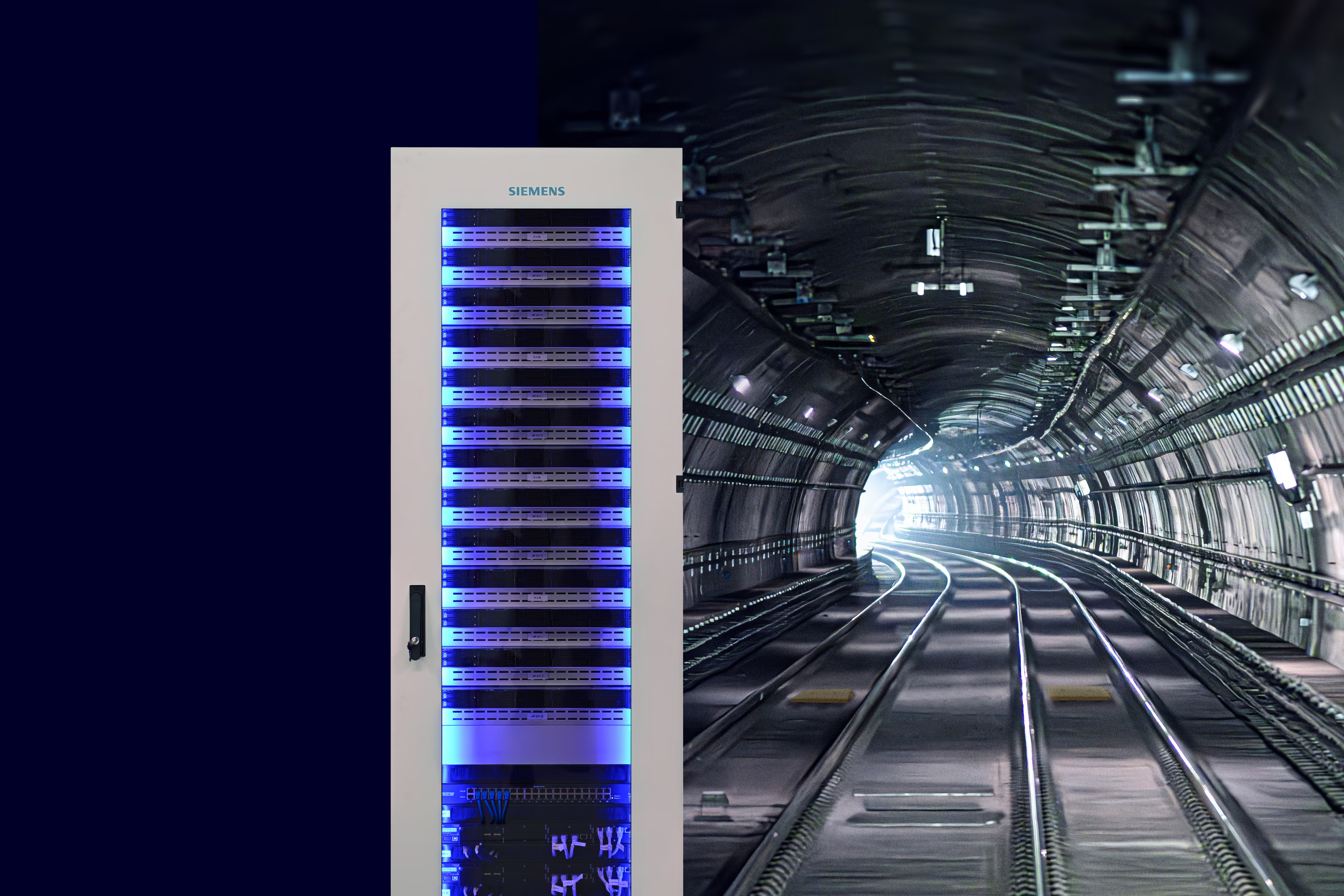
Debuting live at the Singapore Rail Test Center, Signaling X demonstrates how cities can seamlessly maximize metro capacity and efficiency using next-gen CBTC technology.

Signaling X for Finland
Signaling X introduces a cloud-ready, virtualized platform to deploy ETCS Level 2 across the country – for a new era of safety, digital innovation and network capacity.
How to digitalize rail infrastructure
Discover in this webinar:
- Digital transformation strategies for rail infrastructure modernization
- How modern signaling solutions can enhance operational efficiency
- Smart strategies for future-proofing rail infrastructure
- Technology-driven approaches to increase capacity and reliability
Signaling X whitepaper in collaboration with Railway Gazette
This Railway Gazette whitepaper explores how cloud innovation is shaping the next generation of digital rail by enhancing performance and reliability while maintaining the highest level of safety across complex rail networks, such as cities and countries.