Controlguide OCS / TMS
Meeting passengers’ ever-increasing demands. As a rail operator you are faced with several major challenges. Your passengers expect safety and punctuality, traveling comfort and sustainability. At the same time, you have only limited infrastructure and personnel available, so you need to deploy these efficiently. Controlguide OCS helps you cope with the growing complexity of modern-day transport.
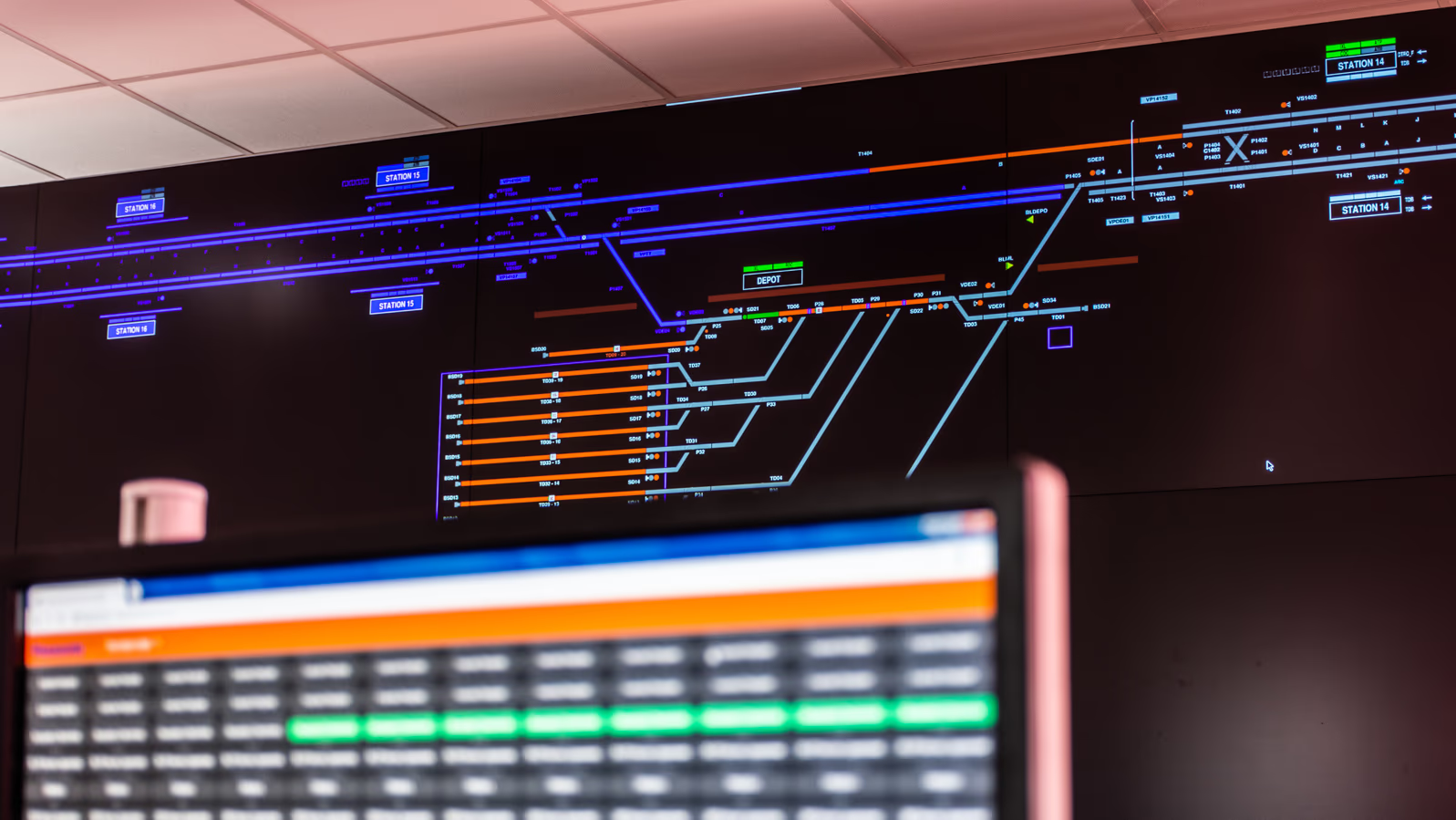
Meeting passengers’ ever-increasing demands. As a rail operator you are faced with several major challenges. Your passengers expect safety and punctuality, traveling comfort and sustainability. At the same time, you have only limited infrastructure and personnel available, so you need to deploy these efficiently. Controlguide OCS helps you cope with the growing complexity of modern-day transport.
Controlguide operations control system (OCS) – the scalable solution
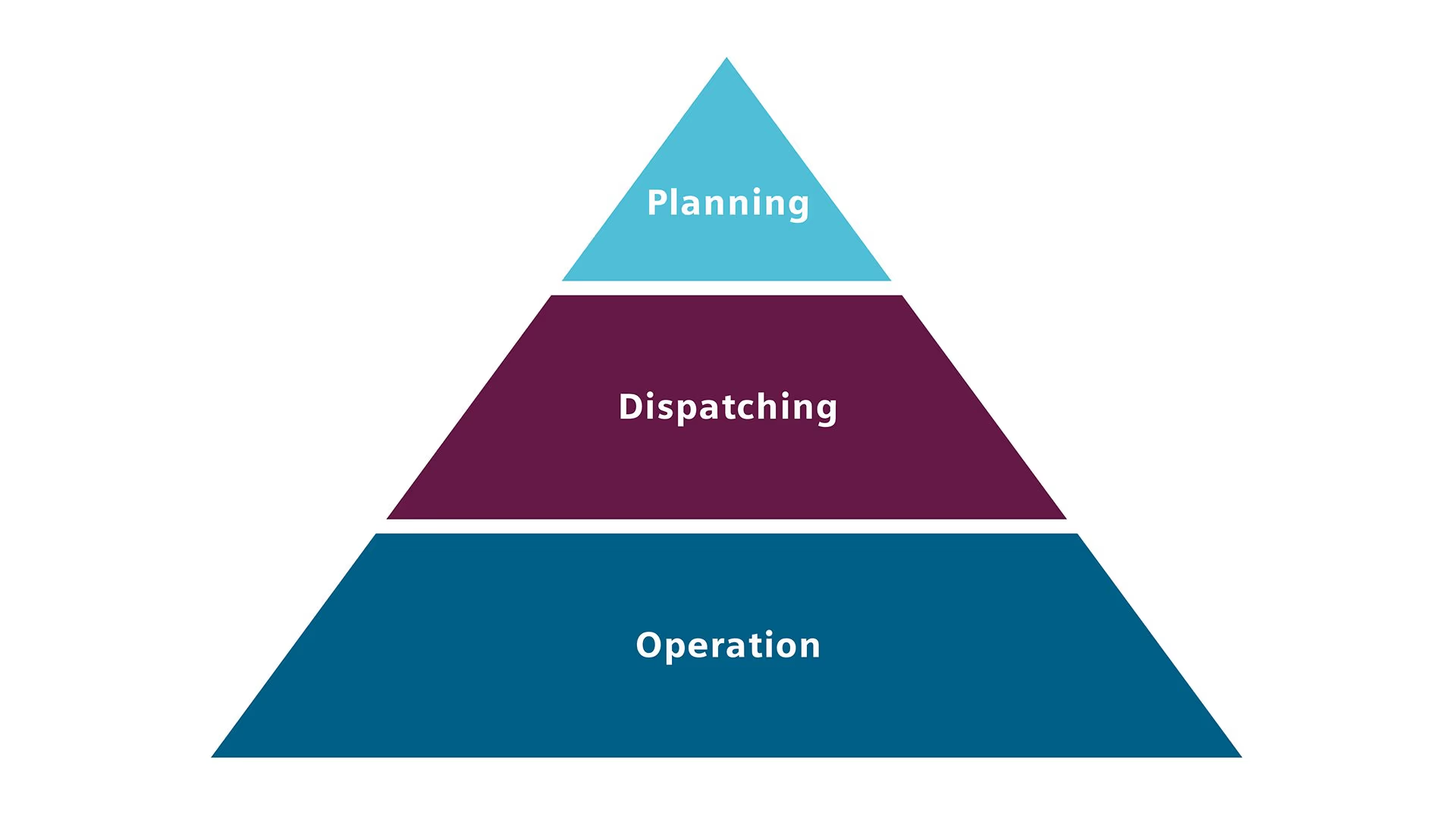
For all levels of operation
In addition to day-to-day operations, the Controlguide OCS product family offers high-performance automation and intelligent dispatching functions for all levels of rail traffic control and operations management. By growing with you step by step, the system supports the flexible design of your work organization and operating sequences for efficient and cost-effective rail services.
Automatic train tracking
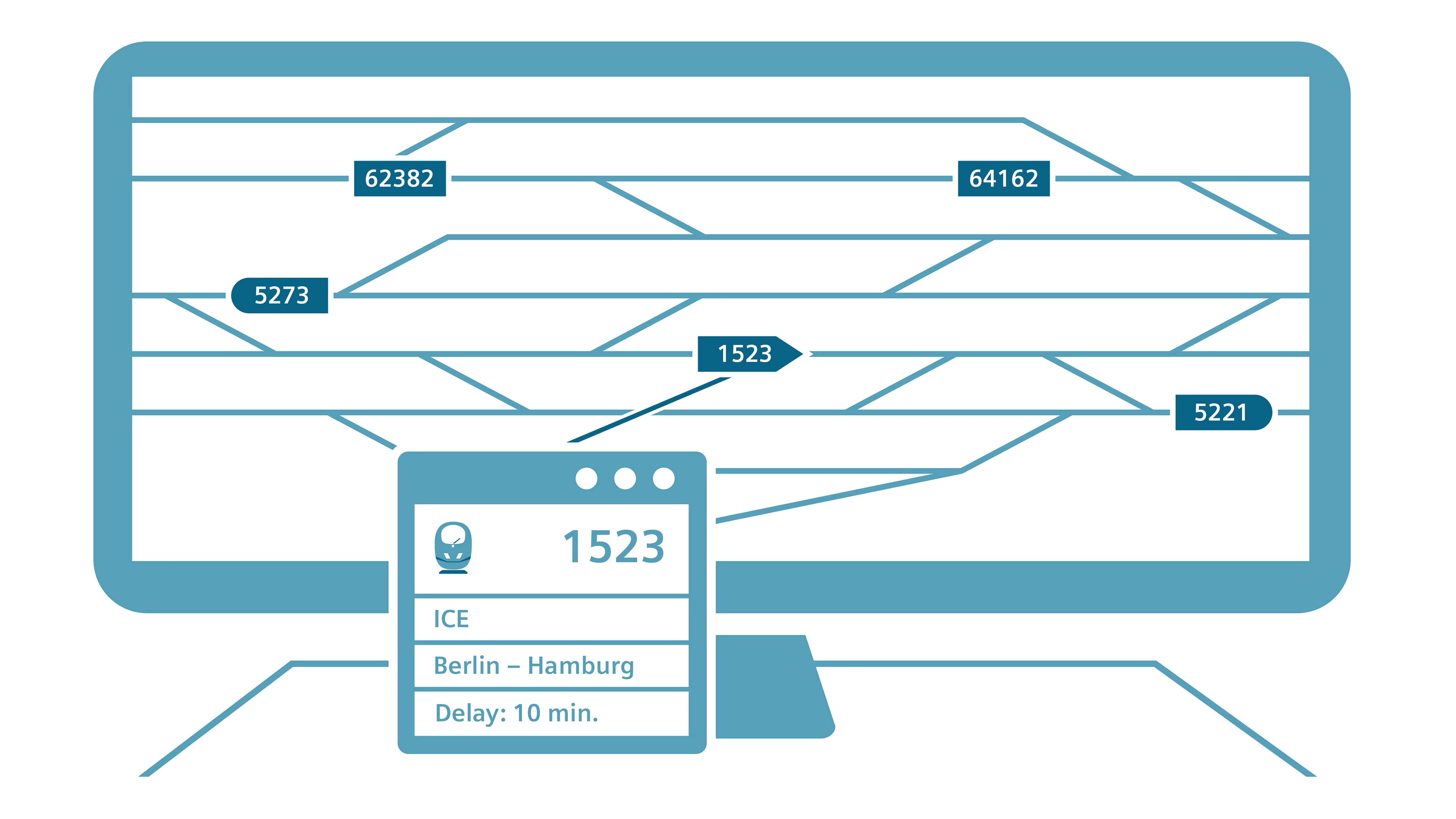
The tracking of individual trains with their train numbers within the network and the provision of information for train locations are prerequisites for centrally operating large rail traffic areas. At all times, Controlguide OCS offers an overview of the current train locations. To do so, it uses the status changes of interlocking elements, such as clear and occupied indications from track vacancy detection equipment, stop and proceed aspects of signals, and point positions. Of course, Controlguide OCS can also use information from other systems (e.g. position indications from state-of-the-art train control systems) for train tracking.
Automatic route setting
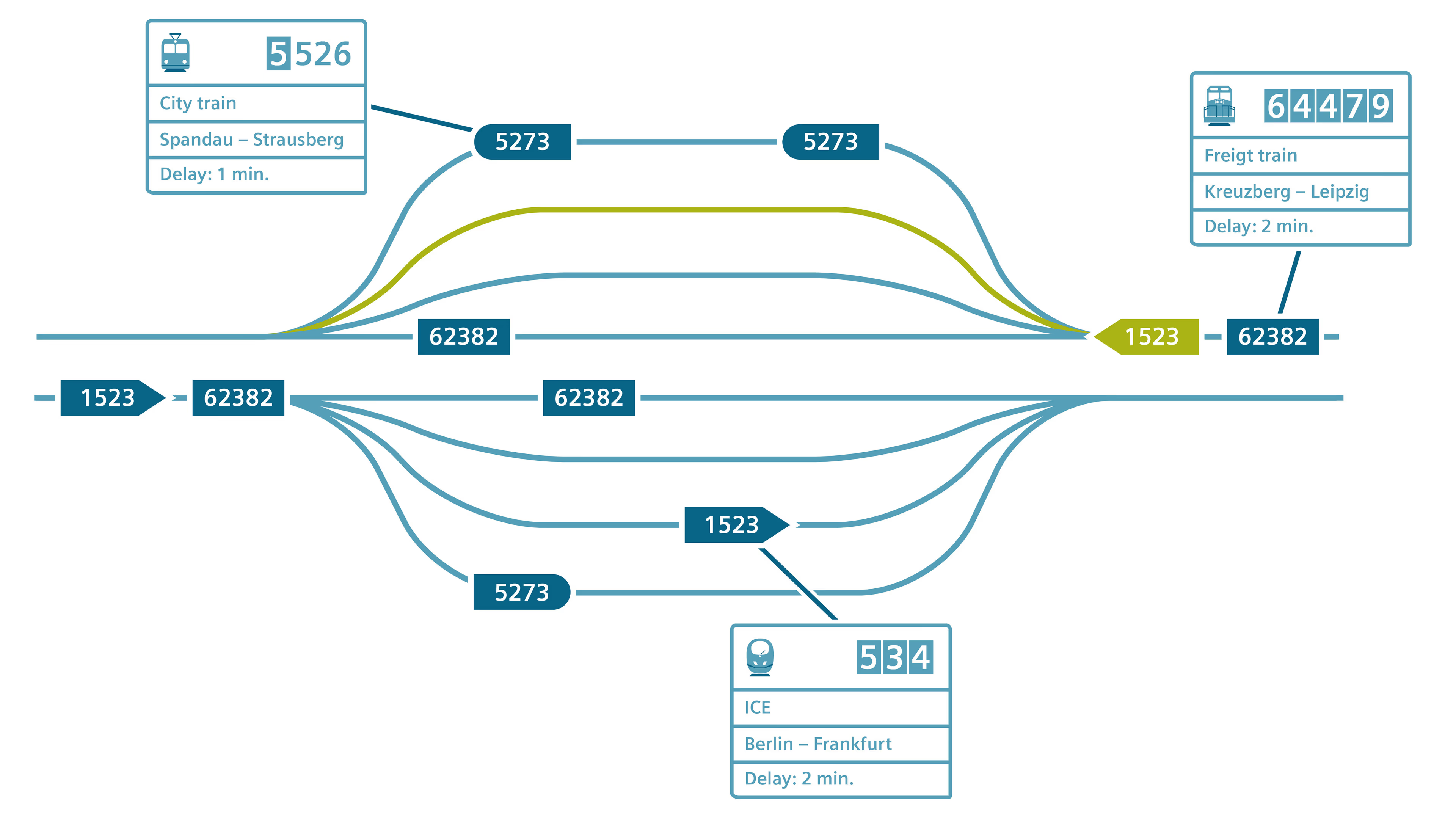
Automatic route-setting requests to the interlocking systems relieve the signal operators of standard actions. Commands are issued on time, as late as possible to prevent tracks or points from being unnecessarily blocked and as early as needed so that unnecessary decelerations or stops are prevented. Controlguide OCS supports various route-setting strategies. It is based on either trip destinations or lines by establishing the route using the train number’s destination code or the timetable with full evaluation of the train number.
Control and display
All information about current operations is displayed by Controlguide OCS in real-time. Different types of interlockings and train control systems, such as ETCS Level 2, can thus be operated and monitored individually on site or centrally for lines and regions or even for entire networks. Controlguide OCS also offers support in maintaining availability in the event of technical faults in the infrastructure. If the operating rules implemented in the signaling and safety system provide for the by-passing of technical faults, the vital control and display feature of Controlguide OCS ensures maximum safety even in the case of the safety-critical operator actions.
Timetable management
Seasonal timetables set up during timetable construction are used to derive production timetables for operations. These production timetables are then adjusted to actual day-to-day operations. Controlguide OCS can be used to manage and modify these production timetables as with special or emergency timetables for exceptional situations. The subsystems are supplied with up-to-the-minute timetable data during runtime.
Timetable deviations
Controlguide OCS determines timetable deviations resulting from current operations and indicates them, e.g. as delay minutes or time/distance diagrams. This means that, together with the current train locations, the relevant information is available for manual dispatching.
Restrictions handling
In the event of any scheduled operational restrictions, local staff can use mobile terminals to request and release track possessions and speed restriction sections. Controlguide OCS ensures that track possessions can only be activated when staff are on site and only released when the maintenance team has safely vacated the location. Controlguide OCS prevents any confusion in setting up and releasing track possessions by correspondence-checking of the planned and actual locations. All measures help to minimize necessary track possession times and provide maximum work safety.
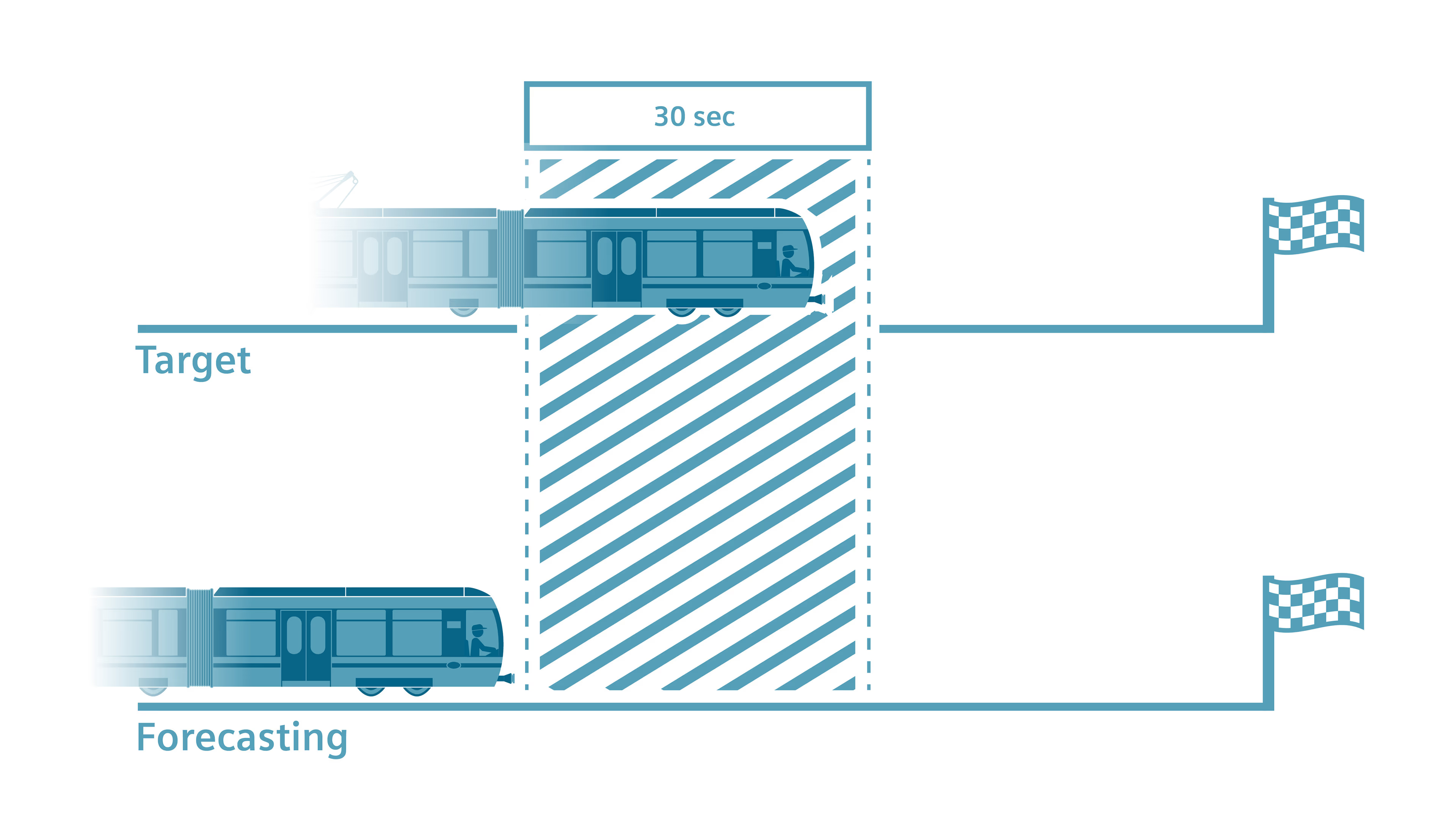
Train forecast
On the basis of current train locations and the original planning specifications, Controlguide OCS uses driving dynamics parameters, topographical line data and timetable data to make reliable train forecasts.
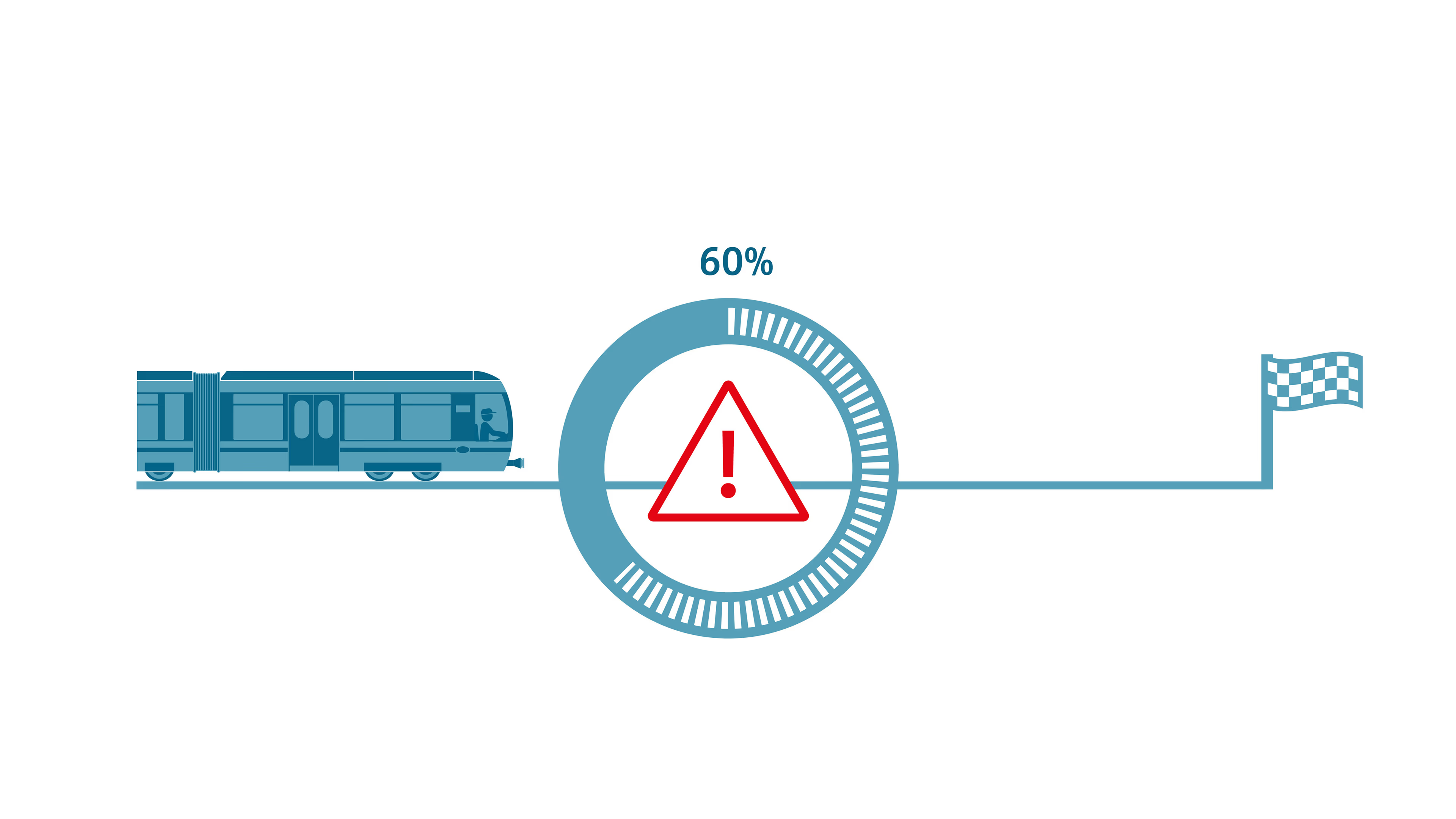
Conflict resolution
Controlguide OCS calculates suitable solutions for detected conflicts in order to exclude or minimize resulting disruptions, particularly due to forecasts following conflicts. The objective is to restore planned operation as fast as possible.
Rule-based conflict resolution
Controlguide OCS enables continuous improvement of rule-based conflict resolution by adjusting the rules on the basis of the customer’s own operational experience. Changing operating sequences can be mapped by new or adjusted rules. Integrated effectiveness monitoring indicates necessary action in the revision of rules.
Automatic train regulation
Automatic train regulation adjusts running and dwell times or speed profiles in order to compensate any deviations from the timetable both quickly and effectively. Controlguide OCS implements headways relating to stations and directions of travel and line-specific sequence controls for optimum operating sequences without manual intervention.
Conflict detection
Controlguide OCS detects conflicts in operating sequences which evolve from current and forecast operations. These conflicts can, for example, be depicted in a time/distance diagram so that the dispatcher is notified in good time of any necessary action.
Optimization-based conflict resolution
Optimization-based conflict resolution is applied particularly in extensive, complex networks with different train priorities and highly interlinked train services. An optimum conflict-specific solution is calculated in line with individually defined key performance indicators.
Effective real-time traffic management - HaCon TPS Online
HaCon’s TPS solutions for train planning and capacity management enable network providers and operators to make the most of their infrastructure and significantly improve their work and business processes regarding operative timetable planning and real-time dispatching.
TPS Online, the new member of the TPS family, has been developed specifically for ad-hoc train dispatching that controls and optimizes everyday rail operations. Short-term disruptions such as delays, broken shunting points or signaling systems can be processed in real time. TPS Online detects conflicts that have an impact on the entire railway network and offers automatic, semi-automatic, and manual conflict resolutions. As a result, dispatchers can now immediately respond to disturbances, for example by advising trains to wait for each other, by redirecting them or by scheduling a change of track.

Timetable construction
A long-term, conflict-free, robust timetable is the basis for operating rail services. Taking into account expected future traffic levels and all operationally relevant factors, train services are mapped to the existing infrastructure. This is the basis for planning fleet and crew demand and their optimum scheduling.
Restrictions planning
Operational restrictions due to construction work or scheduled maintenance can be planned in Controlguide OCS in advance to set up track possessions.
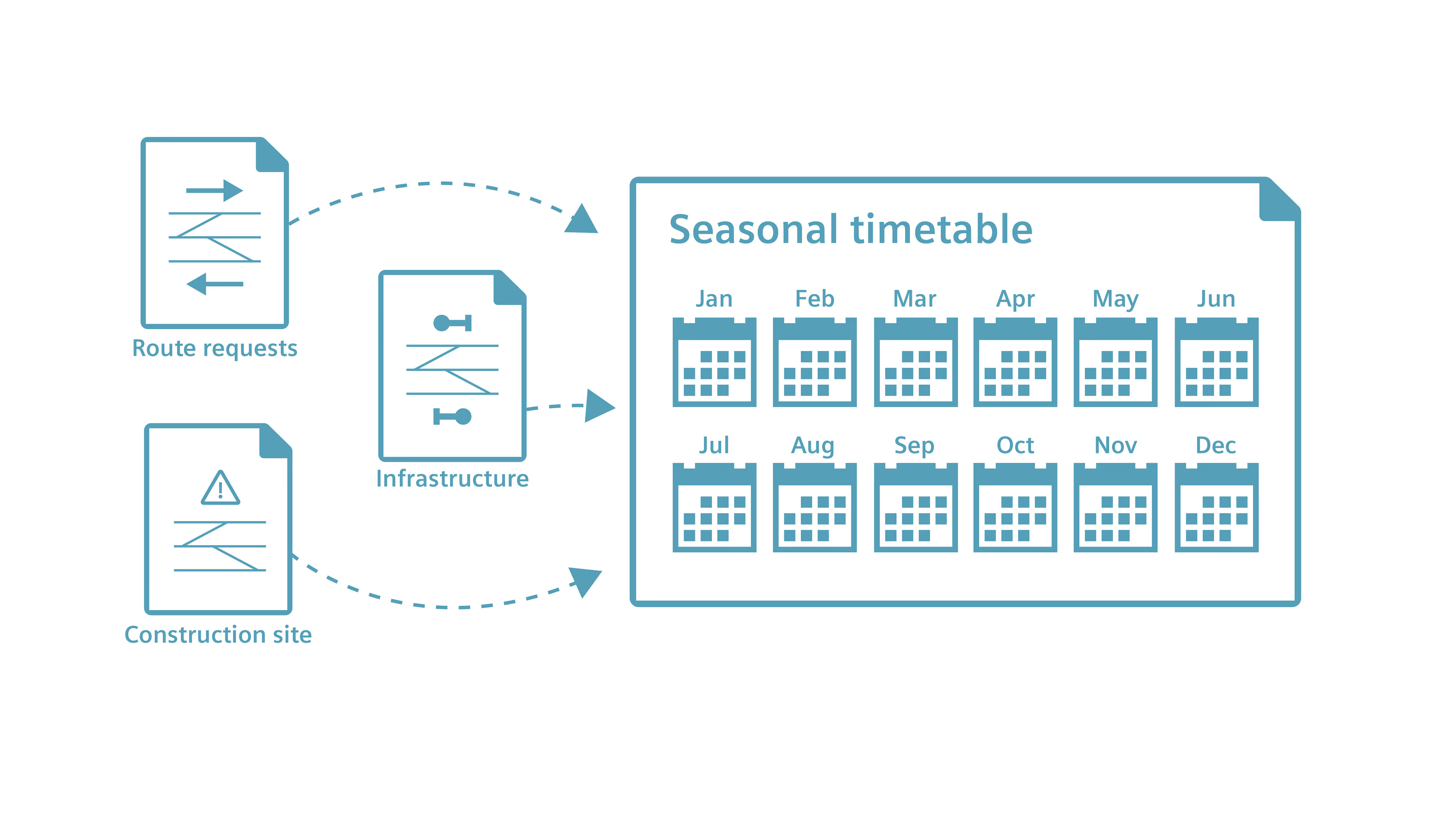
Train & capacity planning - HaCon TPS Offline
HaCon’s TPS solutions for train planning and capacity management enable network providers and operators to make the most of their infrastructure. Our train planning system helps railway infrastructure managers as well as train operating companies to significantly improve their work and business processes regarding operative timetable planning.
As a modular toolbox and high-performance software solution, TPS combines infrastructure, timetable and train path management as well as all interaction. From strategic long-term planning to annual timetables to short-term planning based on real-time data during operation: Benefit from flexible TPS editions and modules. The system can be adapted to a variety of needs in train path and timetable management.
- Timetable management
»» Runtime calculation
»» Seamless integration of closed tracks and speed limitations
»» Automated search for conflict-free train paths and synchronization with current timetable
»» State-of-the-art graphical features:
track infrastructure, graphical timetable, track occupation plan and various output options - Sophisticated data integration via various interfaces
- Static or dynamic access to occupation data
- End-to-end bid-offer process for infrastructure managers and train operating companies
- TPS Online for conflict detection and resolution with comprehensive review and preview functionality
- Integrated simulation functionality
- Capacity analysis according to UIC 406
- European Communication Standard TAF TSI
- railML® certified

Controlguide Iltis N
Iltis N covers the entire range of operator control: From local/central operation of individual interlockings to the entire automation of a nationwide rail network.

Controlguide Vicos
Controlguide Vicos CM is the dispatching system for train formation yards with special operational requirements. It allows smooth and precise operations handling, thanks to early detection of conflict situations and flexible adaptation to timetable changes.

Controlguide OCS Rail 9000
Controlguide OCS Rail 9000 provides an application environment to perform planning and control tasks belonging to both operation and maintenance of railway networks.